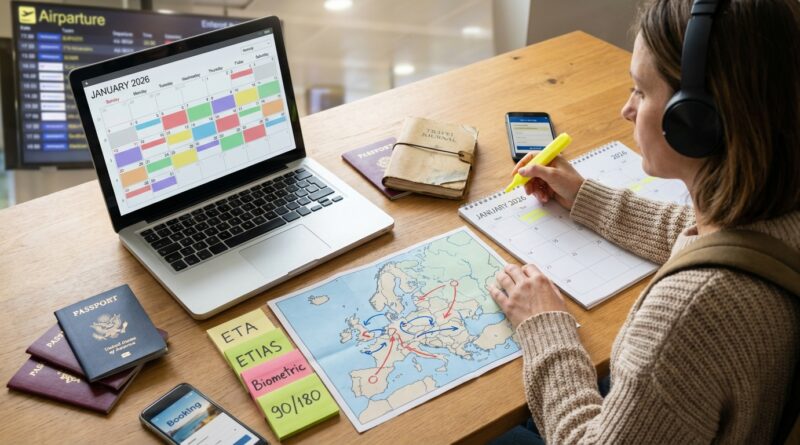
Biometric Borders And ETIAS Fees: The New 2026 Travel Rules Digital Nomads Must Master To Stay Mobile
If you are a digital nomad who has been treating Europe like an easy patchwork of cheap flights, flexible stays and casual border runs, 2026 is going to feel annoyingly different. That frustration is real. A lot of people built travel routines, and even FI plans, around the idea that you could hop between the UK, the Schengen Area and nearby countries with little more than a passport and a rough calendar. Now that assumption is getting shaky. The UK has already started requiring an ETA for many travelers. The EU is preparing ETIAS. Biometric border systems are also starting to replace the old human glance and passport stamp routine. None of this means travel is impossible. It does mean winging it is becoming a more expensive way to move around. The good news is that once you understand the new layers, you can still travel smoothly, keep costs under control and avoid ugly surprises at check-in or at the border.
⚡ In a Hurry? Key Takeaways
- In 2026, many non-European travelers will need a UK ETA and, once live, an EU ETIAS before boarding, even for short visa-free trips.
- Start treating entry permission, stay limits and biometric checks as three separate things. Apply early, track your days carefully and keep proof of onward travel and funds handy.
- The biggest risk is not the fee. It is denied boarding, busted Schengen day counts and last-minute route changes that wreck your budget.
Why this matters more than it sounds
On paper, these systems can look minor. A small fee here. A quick online form there. A facial scan at the airport. No big deal, right?
For holidaymakers, maybe. For digital nomads, long-term travelers and anyone trying to stretch money while staying legally mobile, it is a bigger shift.
The reason is simple. Your travel life probably depends on timing. You might stay 60 days in Portugal, 20 in Croatia, hop to the UK, then reset plans around Schengen rules. If one leg now needs pre-approval, a fee, extra screening or stricter digital records, the old “I’ll figure it out at the airport” style stops being safe.
That is the heart of the new 2026 ETIAS and ETA rules for digital nomads. They add friction to a lifestyle that used to depend on flexibility.
First, keep these three things separate in your head
A lot of confusion starts because travelers mix up three different systems.
1. ETA or ETIAS
These are pre-travel authorisations. They are not full visas. They are permission checks linked to your passport before you travel.
2. Visa-free stay rules
These decide how long you can actually remain in a country or region, such as the Schengen 90 days in any rolling 180-day period for many travelers.
3. Biometric border systems
These are the cameras, fingerprint checks and digital entry-exit records that confirm when you arrived and left.
That distinction matters. Getting an ETIAS, for example, does not give you extra Schengen days. A biometric scan does not replace a required ETA. And a visa-free passport does not mean you can just board without prior approval anymore.
The UK ETA in plain English
The UK has been rolling out its Electronic Travel Authorisation, known as ETA, for travelers who do not need a visa for short visits but do need pre-clearance before coming to the country.
Think of it as a “yes, you can travel” notice tied to your passport. Airlines can check for it before letting you board.
Who should pay attention
If you are a non-visa national who likes to use London, Manchester or Edinburgh as a cheap stop between European stays, this matters to you. It also matters if you use the UK as a non-Schengen base while waiting for your Schengen day count to reset.
What changes for nomads
- You may need to apply before travel instead of just showing up.
- There is a fee, which sounds small until you multiply it across repeated moves.
- If you forget, the problem usually hits at airline check-in, not at immigration.
That last part is the real budget killer. Denied boarding can mean buying a same-day ticket, paying for an extra hotel night and losing a prepaid booking in the next country.
The EU ETIAS, also in plain English
ETIAS is the EU’s planned travel authorisation system for visitors who can enter many European countries without a traditional visa for short stays. It is designed to screen travelers before arrival.
Important point. ETIAS is not the same thing as a Schengen visa. If your nationality already needs a visa, ETIAS is not your shortcut. If your nationality is visa-exempt for short stays, ETIAS is the added pre-travel step you will need once the system is active.
What digital nomads tend to miss
Many nomads hear “travel authorisation” and assume it is mostly admin. But ETIAS works best when your plans are tidy. If your travel style is scattered, with one-way tickets, fuzzy departure dates and six tabs open for backup routes, you need to get more organized.
That is because border systems are moving toward cleaner digital records. The less your trip looks improvised, the easier your life usually is.
Biometric borders are the quiet game changer
This is the part people underestimate.
For years, travelers got away with relying on passport stamps that were messy, faint, missing or inconsistent. Biometric entry systems change that. Your face, fingerprints or other biometric data may be used alongside digital logs to record entries and exits more accurately.
Why this matters for Schengen day counting
If your whole strategy was based on vague stamp math or optimistic memory, those days are ending. Digital records make it easier for authorities to see exactly how long you stayed.
That means:
- Overstays are easier to detect.
- “But I thought my 90 days reset already” becomes a weaker excuse.
- Border runs done at the last minute carry more risk if your count is wrong.
For careful travelers, that is actually good news. Cleaner records can protect you from stamp mistakes. But if you have been free-styling your calendar, it is time to stop.
What this does to the classic nomad budget
The direct fees are only part of the story. Yes, ETA and ETIAS costs add up. But the bigger money issue is friction.
Where the real costs show up
- Extra application fees across repeated trips
- Airport changes because one route is no longer simple
- Longer buffer time between stays
- More expensive refundable tickets
- Short-notice hotel nights when a boarding issue blocks your trip
If your financial independence plan depends on keeping monthly location costs tight, these small changes can quietly push your average spend higher. Not by thousands overnight, but enough to matter over a year of movement.
A simple 2026 plan that keeps you out of trouble
You do not need a law degree for this. You need a repeatable system.
Step 1: Make a list of every country or region you will touch
Do not just list destinations. List transit points too. If your route includes the UK, Schengen countries and maybe a non-Schengen stop like Albania or Serbia, write them all down.
Step 2: Check whether you need pre-travel approval for each one
Ask three questions:
- Do I need a visa?
- If not, do I still need an ETA or ETIAS?
- When should I apply so I am not sweating at check-in?
Step 3: Track your Schengen days like money
Seriously. Put them in a spreadsheet, an app or your calendar. Count every day properly. Entry day counts. Exit day counts. Guessing is how people get stuck.
Step 4: Build in buffer days
If your legal stay ends on the 30th, do not book your departure for the evening of the 30th and hope nothing goes wrong. Leave earlier if you can. A missed flight should not turn into an overstay.
Step 5: Keep a border folder on your phone
Have these ready:
- Passport photo page
- Travel authorisation approval screenshots
- Accommodation bookings
- Onward ticket
- Proof of funds if relevant
- Travel insurance details
This is boring admin. It is also what saves you when airport Wi-Fi is bad and a gate agent asks for proof.
Common mistakes that are about to get more painful
Assuming visa-free means paperwork-free
Not anymore. Visa-free and authorisation-free are no longer the same thing in many cases.
Using the UK as a casual reset stop without checking entry rules
The UK may still be useful as a non-Schengen base, but it is not a frictionless detour if you need an ETA.
Thinking ETIAS gives you more time in Europe
It does not. It helps authorize travel. It does not rewrite your stay limits.
Ignoring biometric records
If your old travel style relied on fuzzy paperwork, digital border records make that much less forgiving.
Booking non-refundable travel before approvals are sorted
This is one of the easiest ways to turn a small admin mistake into a very expensive week.
How to think about border runs now
Border runs are not dead, but they are less casual than they used to be.
If your plan is “I’ll spend almost 90 days in Schengen, pop somewhere else for a while, then come back,” you need to be sure about four things:
- Your day count is accurate
- Your onward destination actually allows you in under its current rules
- You have any needed ETA or similar approval before you fly
- Your budget can handle delays or rerouting
The smart version of a border run in 2026 is planned, documented and padded with a little extra time and cash. The dumb version is buying the cheapest same-week fare and hoping border systems stay old-fashioned. They are not staying old-fashioned.
What a low-stress nomad setup looks like now
If you want to stay mobile without burning money, build your year around fewer surprises.
A better travel rhythm
- Fewer ultra-short hops
- Longer stays in each location
- Applications done early
- Clear records of days spent in Schengen
- Backup destinations outside Schengen with simple entry rules
That kind of setup is not as romantic as “book on Tuesday, fly on Wednesday.” But it is usually cheaper, calmer and easier to sustain if you are aiming for financial independence instead of travel chaos.
At a Glance: Comparison
| Feature/Aspect | Details | Verdict |
|---|---|---|
| UK ETA | Pre-travel approval for many visa-free visitors to the UK, with a fee and passport-linked check before boarding. | Treat it as mandatory trip admin, not optional paperwork. |
| EU ETIAS | Planned EU authorisation for many visa-exempt travelers visiting short-term. It is not a visa and does not extend stay rights. | Useful to have early, but do not confuse it with permission to stay longer. |
| Biometric border checks | Digital entry-exit tracking through scans and recorded border events makes travel history more precise. | Good for accurate records, bad for sloppy day counting and risky overstays. |
Conclusion
Travel in Europe is not closing. It is becoming more structured. That is the key mindset shift. The UK’s ETA rollout, the EU’s ETIAS plans and the spread of biometric border systems all mean the old low-friction style of bouncing around on instinct is getting harder to pull off safely. For digital nomads and FI-focused travelers, this matters because every denied boarding, surprise fee and calendar mistake chips away at both mobility and money. The fix is not panic. It is process. If you plan routes earlier, apply for approvals before you need them, track Schengen days carefully and keep a little budget buffer, you can still move well in 2026. You just cannot rely on vibes and a half-remembered passport stamp anymore. Get organized now, and these new rules become manageable instead of expensive.