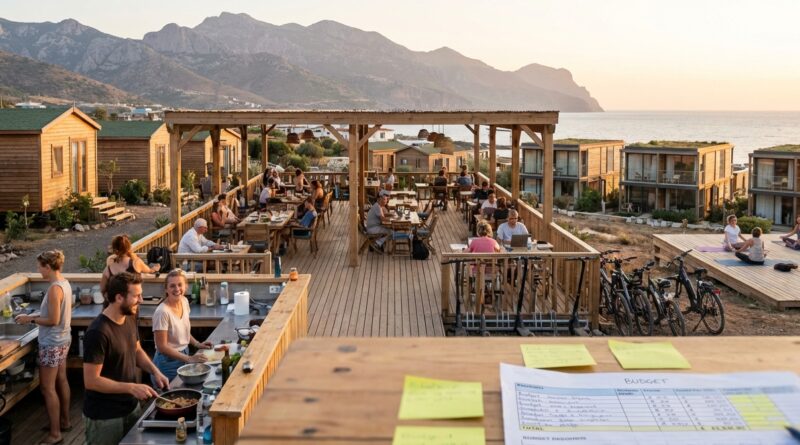
Digital Nomad Villages 2.0: How To Live Cheap, Build Real Community And Still Stay On Track For FI
Lonely Airbnbs get old fast. So do surface level friendships, overpriced brunches and that weird feeling that your “flexible lifestyle” is somehow costing more than the life you were trying to escape. A lot of digital nomads are finding the same thing. The usual hotspots are getting pricier, the social scene can feel forced, and those shiny coliving packages that promise instant community often come with a quiet catch. You pay tourist prices for months at a time and call it freedom. If your real goal is autonomy and financial independence, that math matters.
The good news is that digital nomad villages can work. Some really do offer lower friction, better routines and real friendships. But you need to judge them with a calculator, not just an Instagram brain. The key is to compare total monthly spend, not just rent, and to set a hard cap on what housing plus community can take from your income. Done right, a village can shorten the messy trial-and-error phase of nomad life. Done badly, it becomes an expensive holding pattern.
⚡ In a Hurry? Key Takeaways
- Use a simple rule: keep housing, coworking and community fees under 25 to 35 percent of take-home income if FI is still the goal.
- Always compare a village’s full monthly cost, including events, transport, food inflation and visa runs, against a lean DIY apartment plus coworking setup.
- The best value is usually in places with solid internet, easy visas and non-hype pricing, not the trendiest nomad hubs.
Why digital nomad villages are suddenly everywhere
The pitch is easy to understand. You arrive in a new country and skip the usual headache list. No hunting for decent Wi-Fi. No awkward solo weeks. No guessing which neighborhood is safe, walkable or full of people who also work online.
Instead, you get a room, a desk, events, maybe yoga, maybe surf lessons, maybe “founder dinners,” and a built-in social circle. For a lot of people, especially after a few years of moving around, that sounds like relief.
And to be fair, some of these places are solving a real problem. Community is not fluff. If you are isolated, distracted and constantly resetting your life every month, your income can suffer. Your health can too.
But the search term that matters is not just “best coliving” or “best remote work village.” It is digital nomad village cost of living. That is where the dream either holds up or falls apart.
The hidden cost problem nobody mentions in the brochure
Many village offers look reasonable because they are framed as one monthly number. Say $1,200 or $1,800 a month. That can seem fine if it includes housing, workspace and events.
But bundled pricing hides the real comparison.
You need to ask, “Compared to what?”
A lean DIY setup in the same place might be:
- Studio or room rental: $450 to $900
- Coworking: $80 to $200
- Gym or social hobbies: $40 to $120
- Total: $570 to $1,220
The village version might be double that once you include:
- Mandatory membership or admin fees
- Higher food and coffee spend because you are in a “community” schedule
- Nightly dinners, trips and events you feel weird skipping
- Airport transfers, cleaning fees and deposits
- Visa runs or short stay rules that force travel costs
That gap is what quietly wrecks the FI plan. Not one dramatic mistake. Just 6 months of spending $700 more than you needed to.
The FI filter: a simple numbers-first rule
If financial independence still matters to you, use a hard cap before you get emotionally attached to the idea.
Rule 1: Housing plus coworking plus community should stay under 25 to 35 percent of take-home income
If your income is variable or freelance, use your average over the last 6 to 12 months, not your best month.
A quick guide:
- Aggressive FI mode: 20 to 25 percent
- Balanced lifestyle mode: 25 to 30 percent
- Short-term social reset: up to 35 percent, but only with a set time limit
If a village package pushes you above 35 percent, it needs a very strong reason to exist in your life. Better health, higher income, real collaboration, or a clear personal reset. Not just vibes.
Rule 2: Your total monthly burn should still leave your target savings rate intact
Let’s keep it simple.
If your FI plan needs you to save 40 percent of take-home pay, then any move that drops you to 15 percent for half a year is not a harmless lifestyle choice. It is a delay. Maybe worth it, maybe not. But call it what it is.
Run this formula before you book:
Take-home income – all living costs – taxes set aside – insurance – travel reserve = monthly FI contribution
If that final number makes you wince, do not sign a 3- or 6-month package just because the photos look nice.
How to compare a nomad village with a DIY setup
This is the most useful test I know. Build two columns in a spreadsheet. One for the village. One for a simple apartment-and-coworking version in the same city or region.
Column A: Village total monthly cost
- Rent or package fee
- Coworking or desk fee
- Utilities
- Cleaning
- Deposit spread over stay
- Transport
- Food at actual local prices, not your fantasy budget
- Event and social spend
- Visa and admin costs
- Emergency backup, like mobile data or hotel nights
Column B: DIY total monthly cost
- Apartment or room
- Utilities and internet
- Coworking pass or coffee-shop budget
- Gym, classes or meetups
- Transport
- Food
- Social budget you choose, not one imposed by the group
Then ask three questions:
- How much extra am I paying for the village?
- What exactly do I get for that premium?
- Could I buy those same benefits cheaper on my own?
If the premium is modest and the community is strong, fine. If the premium is huge and mostly funds FOMO, skip it.
What makes a digital nomad village actually worth the money?
A good one usually has five traits.
1. Stable infrastructure
Fast internet. Backup power if needed. Walkable basics. Safe neighborhood. Quiet enough to work. These are boring details, but they matter more than the rooftop movie night.
2. Genuine long-stay pricing
If a place says it supports remote workers but charges high-season tourist rates for three months straight, that is not a village. That is a packaged stay.
3. Optional social life
The best communities do not pressure you to join everything. They make connection easy, not mandatory. You want friends, not a semester abroad schedule.
4. Mixed residents
If everyone arrives and leaves on the same day, the whole place can feel like a rotating camp. Better villages have some long-term residents, some repeat visitors, and ties to local life.
5. Visa and logistics simplicity
If staying legal is stressful or costly, the “cheap” monthly rate stops being cheap very quickly.
Destinations that currently offer a better cost/community balance
Prices move around, so treat these as categories, not promises. But in general, the sweet spot is still found in places with decent infrastructure and less hype than the classic poster-child nomad hubs.
Good value candidates in 2026
- Albania: Low visa friction for many nationalities, coastal and city options, still cheaper than much of Southern Europe.
- Georgia: Long stay potential for many passports, strong café work culture, decent apartments outside the most obvious areas.
- Bansko, Bulgaria: Seasonal, but still one of the clearer examples of community plus lower cost if you avoid peak pricing and constant après-ski spending.
- Chiang Mai, Thailand: Still workable if you stay selective and avoid lifestyle creep. Better for DIY than expensive packaged coliving in many cases.
- Da Nang, Vietnam: Often better value than more saturated hotspots, with strong food value and improving infrastructure.
- Medellín alternatives in Colombia: Think second-tier neighborhoods or nearby cities, where rent inflation has not hit quite as hard.
- Canary Islands shoulder season: Not the cheapest, but can be a good balance of weather, infrastructure and Europe access if you negotiate longer stays.
The common theme is simple. Aim for places where local long-stay living still exists. Avoid spots where every listing has already been repackaged for foreigners with laptops.
How to negotiate without being awkward
Many nomads assume the listed price is final. Often it is not.
Operators would rather fill rooms for 8 to 12 weeks than leave them half empty. Landlords often prefer one stable remote worker over a churn of short bookings. You do not need to play hardball. Just ask clearly.
Try these negotiation angles
- Ask for the long-stay rate, not the monthly rate. “What is your best rate for 8 or 12 weeks paid upfront?”
- Ask what can be removed. If you do not need daily cleaning, classes or airport pickup, ask for an unbundled price.
- Offer a group booking. If you know two or three other nomads, your bargaining power improves fast.
- Target shoulder season. The best discounts often come just before or just after peak demand.
- Ask for extras instead of just lower rent. Better Wi-Fi, larger desk, guest access, meeting room credits, laundry, or airport transfer can still improve value.
The goal is not to “win” the negotiation. It is to bring the total cost closer to local reality.
How to avoid social spending creep
This is the part people underestimate most.
Community can save your sanity. It can also destroy your budget in a very friendly way.
Shared dinners, retreats, day trips, co-working café runs, drinks after events, birthday collections, weekend escapes. None of these seem outrageous on their own. Together, they can add hundreds each month.
Use a “default yes, capped spend” system
Do not make yourself the antisocial budget monk. Just set limits.
- Pick 1 to 2 paid social events per week
- Set a fixed community budget, maybe 5 to 10 percent of take-home pay
- Say yes to free rituals, walks, beach time, potlucks and coworking sessions
- Say no to expensive spontaneity by default
A healthy community should survive your budget boundaries.
A repeatable playbook for staying social and staying on track for FI
Here is the practical version.
Step 1: Define your minimum savings rate
Write down the percentage you need to save this year. Not “ideally.” Actually need.
Step 2: Set your all-in housing and community cap
Use 25 to 35 percent of take-home income depending on your FI pace.
Step 3: Compare village vs DIY in the same destination
Never judge a package in isolation.
Step 4: Test the village short first
If possible, book 2 to 4 weeks before committing to 3 months. Chemistry matters. So does noise. So does the mattress, frankly.
Step 5: Protect your deep work
If the community calendar is so full that your output drops, the package is costing you twice. Once in spending, again in lost income.
Step 6: Reassess monthly
Ask yourself:
- Am I saving what I planned?
- Am I healthier and more focused here?
- Are these friendships real or just proximity-based?
- Would I choose this setup again at the same price?
If the answers are getting worse, do not stay because moving feels inconvenient.
At a Glance: Comparison
| Feature/Aspect | Details | Verdict |
|---|---|---|
| Monthly cost | Village packages can look tidy, but often cost far more than a local apartment plus coworking once events and food creep are included. | DIY often wins on pure value. |
| Community | Villages can reduce loneliness fast, especially for newer nomads or people tired of constant resets. | Worth paying for, but only up to a clear budget cap. |
| FI impact | High packaged pricing and FOMO spending can quietly slash your savings rate for months. | Use a calculator first, then decide emotionally second. |
Conclusion
Digital nomad villages are not a scam, and they are not a magic fix either. They are a tool. Used well, they can give you structure, better friendships and a more sustainable version of location freedom. Used carelessly, they become an expensive substitute for building a simple life that actually supports your financial independence plan. Right now there is a surge of destinations and private operators pitching long stay remote work villages and coliving projects to digital nomads, often bundled with events, wellness and community perks. For someone chasing autonomy, it is very easy to sign a three or six month package that feels affordable month to month but quietly locks you into tourist-level pricing, constant social FOMO spending and zero progress on your runway. The smart move is to stay numbers-first. Cap your housing and community costs, compare every package against a lean DIY option, and negotiate for long stays or group rates where you can. That way you get the upside of community without handing over the future you are working toward.