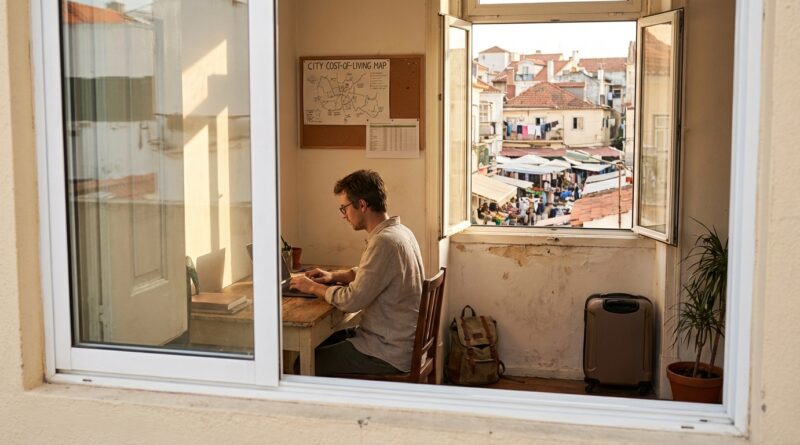
The Geoarbitrage Slowmad: How Staying Longer In One Cheap City Can Cut 5 Years Off Your FI Date
You can be living in “cheap” countries and still save less than you did at home. That is the part nobody likes to say out loud. The problem usually is not the country. It is the constant moving. Flights every few weeks. Short-stay Airbnbs with tourist pricing. New SIM cards. Coworking passes. Grab rides because you do not know the bus system yet. Eating out more because your kitchen setup is awful. It feels adventurous, but your bank account sees chaos. If you are tired of being busy, “free,” and weirdly broke, the slowmad approach is worth a serious look. The basic idea is simple. Stay longer in one well-chosen, affordable city, cut the reset costs, and let routine do the heavy lifting. For many remote workers, that one shift can mean thousands saved each year. In some cases, it can pull a financial independence timeline forward by years, not months.
⚡ In a Hurry? Key Takeaways
- Geoarbitrage works far better when you slow down. Longer stays usually beat constant country-hopping for both savings and sanity.
- Start with 2 to 3 base cities per year, aim for monthly apartment discounts, and track your full moving costs, not just rent.
- Cheap is not enough. Pick cities with good internet, safe neighborhoods, walkability, and a visa setup you can actually manage.
Why the “cheap country” plan often fails
A lot of digital nomads make the same mistake. They compare rent in Chiang Mai, Medellín, Tbilisi, or Ho Chi Minh City to rent in London, Toronto, or San Francisco and think, “Done. I’ve hacked my expenses.”
Then real life shows up.
The apartment is only cheap if you book for a month or more. The flight was not cheap because you booked late. The border run was not cheap. The laundry service, taxis, coworking pass, visa fee, airport meals, and last-minute hotel for two nights all count too.
This is why geoarbitrage digital nomad slow travel financial independence are tied together more closely than people think. The savings do not come only from going somewhere cheaper. They come from reducing friction.
And friction is expensive.
What “slowmad” actually means
Slowmad is just digital nomad life with fewer resets. Instead of changing cities every week or two, you stay put long enough to get local pricing, build routines, and stop making tourist decisions.
That usually means:
One to three months in a city, sometimes longer.
Fewer flights each year.
More monthly rentals, fewer nightly bookings.
More groceries, fewer convenience meals.
Less “I just got here” spending.
It is not about becoming boring. It is about keeping the part of nomad life that feels good and trimming the part that quietly drains your money and energy.
Where the real savings show up
Most people focus on rent because it is obvious. But with slow travel, the real win is the stack of smaller savings that build on each other.
1. Monthly housing discounts
A place listed at $45 a night looks manageable. That is about $1,350 a month before fees. But the same host might offer a monthly rate of $800 to $950. Add fewer cleaning fees and lower service fees, and the difference gets big fast.
If you switch apartments every 10 days, you keep paying the tourist version of housing.
2. Fewer transport costs
Flights, buses, airport transfers, baggage fees, and random overnight stays add up fast. Even “budget” hops can easily run $100 to $400 each time once you count everything.
Do that 12 times a year and you are spending a serious chunk of your FI money just to move your backpack around.
3. Lower food spending
When you first arrive somewhere, you eat like a traveler. You buy coffee on the go. You order delivery because you do not know the neighborhood yet. You eat near tourist zones because they are easy.
By week three, you know where the cheap lunch spot is. You know which grocery store is fair. You know how to get a decent dinner without paying foreigner prices.
4. Better work setup
A stable apartment with a real desk and reliable Wi-Fi saves money too. You may not need coworking. You may not need backup SIMs. You may simply work better, which matters if your income depends on output.
5. Fewer burnout expenses
This one is sneaky. Burnout makes people spend. You book nicer places “just this once.” You take more taxis. You buy treats. You escape to a beach weekend because you are fried. None of that is a moral failure. It is just what tired people do.
Slow travel lowers the chance that your lifestyle needs rescuing every month.
A simple example: how staying longer can cut years off your FI date
Let’s make this concrete.
Say a remote worker earns $4,000 per month after tax.
Fast nomad version:
Average monthly living costs: $2,800
Monthly savings: $1,200
Annual savings: $14,400
Slowmad version:
Average monthly living costs: $2,000
Monthly savings: $2,000
Annual savings: $24,000
That is a difference of $9,600 per year.
Now stretch that over five years, without even assuming investment growth, and you have $48,000 more invested. Add average market growth over time, and the gap gets much larger.
For someone targeting a lean FI number, that can absolutely move the finish line forward by around five years, especially if their spending in retirement is also lower because they have learned to live well on less.
The point is not that every person saves exactly this amount. The point is that small monthly differences become big life differences when repeated consistently.
How to choose a city that actually helps your finances
Not every cheap city is a good slowmad base. Some are cheap for a reason. Others look affordable until you factor in visas, pollution, safety, poor housing stock, or unstable internet.
Look for this mix
Affordable monthly housing. Check 30-day apartment prices, not nightly teaser rates.
Good grocery options. If cooking is hard, your food budget climbs fast.
Walkability or cheap transit. If you need rideshares every day, “cheap” disappears.
Reliable internet and power. Especially if your job is calls, uploads, or client work.
Visa practicality. A city is not financially efficient if you need costly border runs to stay.
Low temptation tax. Some places are cheap to live in but expensive to socialize in.
A good slowmad city feels sustainable by week six, not just exciting on day three.
The hidden math of “reset costs”
Here is the number many nomads never calculate: the cost of starting over.
Every move tends to trigger spending in these categories:
- Transport to the next city
- Airport or station meals
- Short hotel gap nights
- Local SIM or mobile data top-up
- Coworking day passes while waiting for check-in
- Higher food spend during the first week
- Time lost finding basics
Even a “cheap” move can easily cost $200 to $500. If you relocate 10 times a year, that is $2,000 to $5,000 gone before you even talk about the emotional wear and tear.
This is where slow travel becomes a real financial strategy, not just an aesthetic with linen shirts and cafe photos.
How many bases per year makes sense?
For most people, the sweet spot is two to four home bases per year.
A practical model
Ultra-mobile: 10 to 20 cities a year. Fun for a while. Usually expensive and tiring.
Balanced nomad: 4 to 6 cities a year. Better, but still a lot of resets.
Slowmad: 2 to 4 cities a year. Usually the best mix of variety, savings, and stability.
Could you stay in one city all year? Sure. But many nomads prefer a little movement for weather, visas, or simple curiosity. The key is to move on purpose, not because your Instagram feed convinced you that staying put means you are doing it wrong.
How to turn slow travel into a financial independence plan
This is the part that matters. If you do not connect your lifestyle choices to actual numbers, you are just traveling differently, not building wealth faster.
Step 1: Pick your target savings rate
Do not say, “I want to save more.” Say, “I want to save 40 percent of take-home pay,” or whatever number fits your life.
Step 2: Track all-in monthly cost, not just rent
Include flights, visa fees, coworking, transport, food delivery, and those in-between hotel nights.
Step 3: Test one slowmad quarter
Stay in one city for 90 days. Compare your average monthly spend to a quarter when you moved often.
Step 4: Auto-invest the difference
If slow travel saves you $600 a month, do not let that money disappear into nicer brunches. Move it automatically into your FI investments.
Step 5: Build a repeatable city list
Once you find two or three places that work well, reuse them. Familiarity compounds. So do savings.
Common objections, and the honest answers
“But I want freedom.”
You still have it. You are choosing fewer moves, not no moves. Freedom also includes the freedom to not be stressed about money.
“I’ll get bored.”
You might. But boredom is often cheaper than chaos, and usually more productive. Also, cities get more interesting after the first tourist week.
“I travel to see more places.”
Fair. Then be honest that you are optimizing for experience, not maximum savings. That is okay. Problems start when people want both but budget as if frequent moving is free.
“What if I pick the wrong city?”
That can happen. Start with one-month tests, then extend when a place works. Slowmad does not mean locking yourself in forever.
Good signs you should slow down right now
If any of these feel familiar, the slowmad model may be exactly what you need:
- Your savings rate is lower than expected despite living in “cheap” places
- You are tired of researching the next move all the time
- Your work is suffering because every week is setup week
- You spend more on convenience than you admit
- You feel oddly unsettled even though your life looks exciting online
That last one catches a lot of people. Constant movement can feel glamorous and draining at the same time.
At a Glance: Comparison
| Feature/Aspect | Details | Verdict |
|---|---|---|
| Fast city-hopping | More flights, short-stay pricing, frequent resets, higher convenience spending | Best for short bursts, usually poor for saving |
| Slowmad approach | Longer stays, monthly discounts, stable routine, lower transport and food costs | Best balance for geoarbitrage and financial independence |
| City selection | Must include visa fit, internet quality, safety, walkability, and realistic living costs | Cheap alone is not enough |
Conclusion
Right now, cost of living is climbing faster than many remote incomes, and plenty of nomads are quietly changing course. They are staying longer, moving less, and treating geography like a financial tool instead of a constant dopamine hit. That is the real promise of the slowmad approach. Not just a calmer lifestyle, but a bigger gap between what you earn and what you spend. That gap is what funds financial independence. If you can save a few hundred dollars more each month by choosing better cities, booking longer stays, and cutting resets, you do not need a raise, a new visa, or a lucky bull market to make progress. You just need a plan that matches real life. Slow travel will not solve every money problem, but for many digital nomads, it is the cleanest and most immediate way to reclaim margin, reduce burnout, and get to FI years sooner.