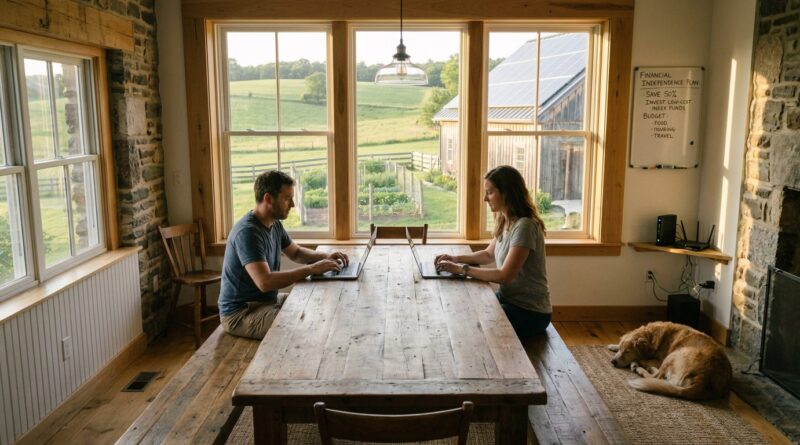
From Tiny Flat To Farmhouse Office: Why Digital Nomads Are Quietly Swapping City Rentals For ‘Forever FI’ Countryside Homes
You can only lose so many apartment bidding wars before it starts to feel ridiculous. A lot of digital nomads are hitting that wall now. The dream was freedom. The reality, in too many cities, is rising rent, noisy neighbors, weak Wi-Fi, and a landlord who still thinks “fully furnished” means one wobbly chair and a mattress from 2011. If your long-term goal is financial independence, that setup starts to look less like flexibility and more like expensive drift. That is why more people are quietly making a different move. Instead of hopping between overpriced rentals, they are looking at small towns, edge-of-town homes, and countryside properties they can actually own. For the right buyer, digital nomad buying a house in the countryside is not about becoming a farmer overnight. It is about locking in housing costs, getting a calmer base, and building a life that finally feels steady enough to support your FI plan.
⚡ In a Hurry? Key Takeaways
- Buying a countryside home can make sense for digital nomads if it lowers housing costs, gives you reliable internet, and fits your FI timeline.
- Start with three checks before you fall in love with any property: fiber internet, access to healthcare and transport, and a local economy that is not fading fast.
- A cheap house is not a bargain if repairs, long drives, weak connectivity, or poor resale value eat the savings.
Why this shift is happening now
Classic nomad hubs used to feel like the smart middle ground. You got cafes, community, decent weather, and rent that still left room for saving. That gap is closing.
Prices have climbed in the obvious cities, then in the second-tier ones, and now even “hidden gems” are filling up fast. Once enough remote workers show up, the same pattern follows. Higher rent. Less choice. More competition. More short-term thinking.
That is pushing people to ask a bigger question. If you already work online and do not need to be five subway stops from a downtown office, why keep renting in places that drain your savings?
For many, the answer is simple. Buy one solid home in a smaller market. Use it as a base. Travel when you want, not because your lease ended or your landlord doubled the rent.
What “forever FI” really means
This is not just about escaping cities. It is about building a home base that works with your financial independence plan.
A “forever FI” countryside home usually means a place that:
- Has lower monthly costs than city renting
- Can support remote work without drama
- Is comfortable enough to stay in for years, not months
- Has a decent chance of holding value or improving
- Lets you live slower without cutting yourself off from the world
That last point matters. You are not buying isolation for the sake of it. You are buying stability.
Why digital nomad buying a house in the countryside can work
1. Your housing cost stops floating upward
Renters in popular hubs live with constant uncertainty. Even if your current place is fine, next year’s price may not be. Ownership changes that. Your costs may still rise through taxes, insurance, and maintenance, but the picture is far more predictable.
2. You can finally design your home around work
Rentals are often compromises. Tiny table. Bad lighting. Thin walls. Spotty internet. A countryside home gives you a chance to set up a proper office, backup internet, better sound control, and maybe even a separate guest room or studio.
3. FI math gets clearer
Financial independence gets easier to plan when your biggest monthly expense is more stable. Instead of wondering what your next lease will cost, you can run real numbers around mortgage payments, upkeep, utilities, and travel.
4. You get more space for the money
In many smaller markets, the price difference is still dramatic. The same budget that gets you a cramped apartment in a major city might buy a detached home, land, storage, and a dedicated office elsewhere.
But let’s be honest, the countryside is not automatically cheaper
This is where people get tripped up. The purchase price can be lower, but the total cost of living might not be.
You may need:
- A car, maybe two if you are a couple
- Higher heating or cooling costs
- Water system, septic, or generator maintenance
- Roof, road, pest, or drainage work
- Longer trips for groceries, healthcare, and flights
So yes, the countryside can save you money. It can also quietly eat money if you buy the wrong property in the wrong place.
How to choose the right countryside base
If you are serious about digital nomad buying a house in the countryside, do not start with photos. Start with a framework.
Check 1: Internet first, romance second
A cute stone cottage means nothing if upload speeds collapse every time it rains.
Ask for:
- Actual fiber availability at the address, not “in the area”
- Real speed test screenshots from inside the house
- Cell coverage from at least two carriers
- Backup internet options, such as 5G or satellite
If your income depends on Zoom, cloud tools, large file uploads, or reliable calls, this is not a small detail. It is the whole game.
Check 2: Stay within reach of a real town
Most people do better in “rural-ish” places than truly remote ones. A good setup is often 15 to 30 minutes from a decent town, not 90 minutes from the nearest pharmacy.
Look for access to:
- Groceries and basic services
- Healthcare and dental care
- A train station or practical route to an airport
- Hardware stores and tradespeople
- Cafes or coworking, if that matters to you
Check 3: Stress-test the local economy
This one gets skipped far too often. A home is not just a place to sleep. It is also an asset in a living local market.
Ask these questions:
- Is the population stable, shrinking, or growing?
- Are younger families moving in, or mostly moving out?
- Are there local employers, schools, and services that keep the area alive?
- Are homes selling, or sitting for months?
- Is the town becoming a remote-work magnet, or fading quietly?
You do not need a boomtown. You just want signs of life, demand, and basic resilience.
Check 4: Know the weather and infrastructure reality
Every region has its own version of “you should have known.” Flood plains. Wildfire risk. Harsh winters. Mud roads. Water shortages. Storm outages.
Read local insurance notes. Check flood and fire maps. Ask neighbors what actually happens each year. Locals will often tell you more in ten minutes than a glossy listing ever will.
Check 5: Buy for your real life, not your fantasy life
Many people picture a giant old farmhouse with character. Character is lovely. Character can also mean endless repairs.
Be careful with:
- Huge lots you do not want to maintain
- Older homes with hidden structural issues
- Places that need “just a few updates”
- Charming remoteness that becomes annoying by month three
If you work full-time online, a boring, well-built home with fiber and good insulation may beat the dreamy fixer-upper every single time.
How to plug the home into your FI numbers
This is the part that turns a lifestyle idea into a sound decision.
Use the full monthly cost, not just the mortgage
Add up:
- Mortgage or opportunity cost if paying cash
- Property taxes
- Insurance
- Utilities
- Maintenance reserve
- Transport costs
- Internet and backup internet
- Travel costs if you still plan to roam part of the year
Then compare that total to your current average annual rental spend, including deposits, moving costs, Airbnb gaps, coworking, storage, and the random fees that come with temporary living.
Run three scenarios
Do not just model the best case. Use:
- Best case, lower maintenance and stable income
- Base case, normal repairs and modest travel
- Bad case, one major repair plus a slow work year
If the deal only works in the best case, it probably does not work.
Think about resale before you buy
This sounds backward, but it protects you. Even if you plan to stay for years, life changes. A good countryside buy should still appeal to the next buyer. That usually means decent access, solid internet, practical layout, and no weird deal-breakers.
Common mistakes people make
Buying too remote, too soon
It is smarter to test an area first. Rent nearby for a month or two if you can. Try grocery runs. Try work calls. Try a rainy week. The fantasy can change quickly once you live the logistics.
Underestimating maintenance
A house is not a landlord-free apartment. It is a system. Roof, plumbing, drainage, heating, appliances, paint, pests, and all the rest. Set aside money every month.
Ignoring community fit
You do not need nightlife, but you do need some sense of belonging. Some small towns are welcoming to newcomers and remote workers. Some are polite but closed off. Spend time there and pay attention.
Assuming cheap means smart
The cheapest home in the region is often cheap for a reason. Bad road access. No jobs nearby. No internet. Long decline. Expensive repairs. Low resale demand.
A simple shortlist system that actually helps
When comparing homes, score each one from 1 to 5 in these categories:
- Internet reliability
- Distance to town and healthcare
- Total monthly cost
- Maintenance risk
- Local market strength
- Travel convenience
- Quality of life
If a house scores high on beauty and low on almost everything else, that is your answer.
Who this move is best for
This path tends to work well for:
- Remote workers with stable income
- Couples or solo buyers tired of annual rent shocks
- People who want a home base but still travel part-time
- FI-minded buyers who value predictable living costs
It is less ideal if your work depends on constant in-person networking, if you hate driving, or if you genuinely thrive on dense city life every day.
At a Glance: Comparison
| Feature/Aspect | Details | Verdict |
|---|---|---|
| Housing cost stability | Buying can replace rising city rent with more predictable monthly costs, though taxes and maintenance still matter. | Strong plus for FI, if the total budget is realistic. |
| Work-from-home practicality | A good countryside home can offer space, quiet, and a real office, but only if fiber and backup internet are solid. | Worth it only with proven connectivity. |
| Long-term value | Some small-town markets are heating up, but weak local economies and poor access can hurt resale. | Buy the area first, then the house. |
Conclusion
If you are worn out from inflated rents and temporary living, this shift makes a lot of sense. Rural and small-town property markets are heating up as remote workers and digital nomads leave high-cost suburbs and cities. That means the window for buying an affordable, quiet, fiber-connected base is not staying wide open forever. The smart move is not to rush. It is to use a clear framework. Check connectivity, study the local economy, run the full FI math, and pick a place built for your real day-to-day life. Done well, digital nomad buying a house in the countryside can help you move before prices climb further, avoid a costly mistake, and finally step off the hamster wheel of short-term rentals.