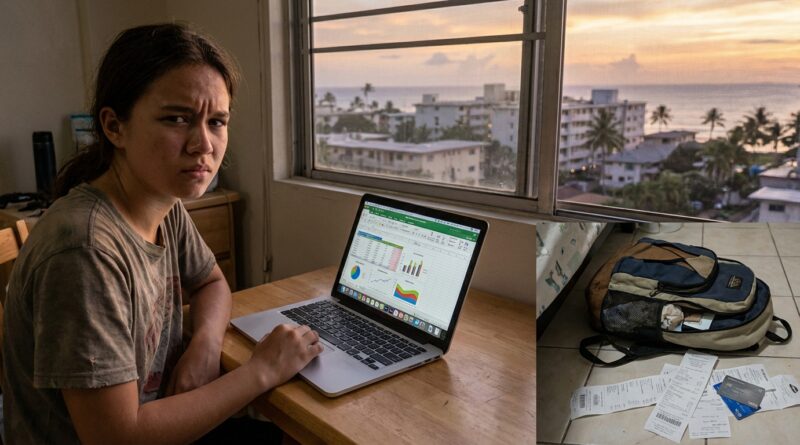
The $1,500 Remote Income Trap: How ‘Cheap’ Nomad Life Is Quietly Delaying Your Financial Independence
You are not crazy for wanting out. Rents are up, layoffs keep rolling through decent companies, and plenty of people are looking at the digital nomad life as the escape hatch. The problem is that a lot of “just go for it” advice leaves out the ugly part. If you start with $5,000 in savings and $1,500 a month in shaky online income, a “cheap” country does not magically make your money stress disappear. It often just hides it for a few months. Then come the surprise visa runs, emergency flights, laptop replacements, weak work months, and credit card balances that quietly grow interest while your financial independence timeline slips further away. The real question is not “Can I survive abroad?” It is “How much money to start digital nomad without ruining financial independence?” That is a math problem, not a vibe. And once you run the numbers honestly, your best move becomes much clearer.
⚡ In a Hurry? Key Takeaways
- You usually should not start full-time nomad life on just $5,000 saved unless your income already covers your full monthly costs plus taxes, insurance, and a buffer.
- A safer starting point is 6 to 12 months of realistic total spending, plus reliable income that beats your monthly burn by at least 20 to 30 percent.
- The biggest danger is not one dramatic disaster. It is months of small shortfalls, credit card interest, and lost investing time that quietly delay financial independence by years.
The trap looks cheap because the internet only shows the rent
People see videos about $700 apartments in Chiang Mai, Medellín, or Da Nang and think they have found a financial loophole. Sometimes those prices are real. What is not shown as clearly is the full monthly stack of costs.
You still need flights, health insurance, visas, coworking or backup internet, phone service, higher short-term rent, banking fees, gear replacement, taxes, and some kind of emergency fund. If your income is inconsistent, you also need enough cash to survive the slow months without borrowing.
That is where the remote income trap starts. The lifestyle feels affordable on paper, but in real life you are one bad month away from putting groceries, lodging, or a last-minute flight on a credit card at 22 percent APR.
The real question is not “Can I scrape by?”
The better question is this: can your nomad plan protect both your current life and your future financial independence?
If the answer depends on perfect health, no laptop issues, no missed client payments, no family emergencies, and no bad exchange-rate swings, then the plan is too thin.
Financial independence is built on margin. Margin in your budget. Margin in your savings rate. Margin in your stress level so you can do good work and keep earning. A nomad setup that removes all that margin may lower your rent for a while, but it can still make you poorer in the long run.
What “enough money” actually means
Rule 1: Your income should beat your true monthly spend
Not your fantasy spend. Your true spend.
Take your expected monthly costs abroad and include:
- Housing
- Food
- Local transport
- Health insurance
- Coworking or backup internet
- Phone and software
- Taxes
- Flights averaged monthly
- Visa fees averaged monthly
- Emergency fund contributions
- Fun money, because total deprivation never lasts
Then add 20 to 30 percent. That extra room is what keeps a rough month from turning into debt.
If your realistic monthly spend is $1,800, your income should not be $1,800. It should be closer to $2,200 to $2,400, and ideally stable.
Rule 2: Your savings should cover a real emergency runway
This is the part many people skip.
If you are employed with a stable remote job, you may be okay with 6 months of total expenses. If you freelance, rely on content income, or have client churn risk, 9 to 12 months is much safer.
That runway should cover your full life, not just “cheap country” spending. Ask yourself what happens if you need to go home fast, stay in a hotel for a week, replace your laptop, or cover a medical deductible.
For many people, that means a minimum cash cushion of $10,000 to $20,000, not $5,000.
Rule 3: You still need to invest while traveling
This is the silent killer of FI plans. People stop investing because “I’m keeping things flexible right now.” Then one year turns into three.
If your nomad setup lowers your cost of living but also drops your savings rate from 30 percent to 5 percent, you did not hack the system. You slowed your path to financial independence.
A simple framework to test your plan
Use this four-part check before you book anything long term.
1. Base monthly burn
Add up your realistic monthly living costs in the country you want. Be conservative.
2. Income reliability score
Rate your income:
- High reliability: salaried remote job, long contract, predictable pay
- Medium reliability: repeat freelance clients, but some month-to-month risk
- Low reliability: new business, creator income, one client, or “I’ll figure it out”
The less reliable your income, the bigger your cash runway should be.
3. FI protection amount
Decide the minimum you must keep investing every month to avoid drifting off course. Even $500 to $1,000 a month matters if you are trying to build wealth over time.
4. Disaster test
Could you handle all of these without debt?
- A month with no income
- A $1,500 laptop replacement
- A sudden $1,200 flight home
- A security deposit loss or scam
- A medical issue before insurance reimbursement
If two of those happening together would wipe you out, you are starting too thin.
Three realistic scenarios
Scenario 1: The shaky launch
Savings: $5,000
Income: $1,500 per month, inconsistent
Monthly spend abroad: $1,350 advertised, $1,850 real
At first this feels workable. Then you hit one slow month and one travel surprise. Maybe a visa run and a higher-than-expected Airbnb bill add $600. Now you are short. You put it on a card. Next month income dips again. Suddenly your “cheap life” is financed by debt.
This is the danger zone. Not because it is impossible, but because it has no shock absorbers.
Scenario 2: The stable but stalled version
Savings: $12,000
Income: $2,400 per month, fairly stable
Monthly spend abroad: $1,900 real
Monthly investing: $100
This person can probably stay afloat. But they are barely building wealth. If they were previously investing $1,000 a month while living at home or with roommates, this move may still hurt their long-term FI date, even if it feels emotionally better in the short term.
That does not mean “don’t go.” It means go in with your eyes open. You may be buying freedom now at the cost of freedom later.
Scenario 3: The financially solid launch
Savings: $18,000
Income: $3,200 per month, stable
Monthly spend abroad: $2,000 real
Monthly investing: $700
This setup has room. There is cash buffer, ongoing investing, and some ability to absorb normal problems without panic. This is much closer to what a sustainable nomad plan looks like.
How a “cheap” move can quietly delay FI by years
Let’s make this concrete.
Say staying put would let you invest $1,200 a month. Maybe it is boring, but it is stable. Now say moving abroad cuts your apparent costs, yet because income is shaky and travel expenses pop up, you only invest $200 a month for three years.
That is a difference of $1,000 a month. Over 36 months, you invested $36,000 less. Add lost market growth on top, and the gap gets bigger.
Then add one $4,000 credit card balance that takes a year or two to clear because your cash flow is tight. That interest is money not compounding for your future.
This is why the question “how much money to start digital nomad without ruining financial independence” matters so much. The damage often comes from drift, not disaster.
When staying put for 6 to 12 more months is actually the smart move
It is not failure to delay the move.
If another 6 to 12 months in your current city lets you do one or more of these, the wait may be worth it:
- Build your emergency fund from $5,000 to $12,000 or more
- Lock in a raise or better remote job
- Pay off high-interest debt
- Line up recurring freelance clients
- Test your income remotely before going abroad
That delay may shorten your overall path to freedom, even if it feels frustrating now.
When relocating does make financial sense
Sometimes moving abroad is the right call. Especially if your current city is crushing you with rent and your remote income is already stable.
A move can help if:
- You reduce costs by a meaningful amount, not just a little
- You keep or improve your savings rate
- You maintain health coverage and emergency reserves
- You pick a place with reliable infrastructure for your work
- You have enough buffer to leave if the location is not a fit
The best nomad moves are not desperate jumps. They are planned transitions.
A practical starting target for 2026
There is no one perfect number, but here is a good sanity check for most people:
- Minimum safer savings: 6 months of total realistic spending if income is stable
- Better savings target: 9 to 12 months if income is freelance, self-employed, or uncertain
- Income target: at least 120 to 130 percent of your real monthly burn
- Debt rule: ideally no revolving credit card debt before you go
- FI rule: keep investing something meaningful every month
For many new nomads, that means not launching full time until they have roughly $10,000 to $20,000 saved and income that has already been proven for several months. Not because you need to be rich. Because you need room to breathe.
If you insist on starting with less, lower the risk
Maybe you are still going. Fair enough. If so, tighten the plan.
Keep a home base option
If possible, stay with family, sublet short term, or avoid selling everything right away. Total one-way bets are expensive when plans change.
Choose one country, not constant movement
Slow travel saves money. Border hopping burns cash fast.
Bring income before ambition
Do not count future course sales, future clients, or future channel growth as current income. Count only money that is already arriving.
Protect your tools
Your laptop is your paycheck. Budget for backup storage, repairs, and eventual replacement.
Use a hard floor
Pick a savings number you will not cross. For example, if your cash falls below $7,500, you stop traveling and regroup. That keeps “temporary squeeze” from becoming debt.
At a Glance: Comparison
| Feature/Aspect | Details | Verdict |
|---|---|---|
| Starting with $5,000 savings | Possible only if income is very stable, costs are truly low, and you have backup support. For most people it is too thin once emergencies, taxes, and travel surprises show up. | High risk |
| Monthly income vs. monthly burn | If income only matches your spending, one weak month can push you into debt. A 20 to 30 percent cushion is much safer. | Needs buffer |
| Impact on financial independence | Lower costs help only if you still invest consistently and avoid high-interest debt. Otherwise the move can quietly delay FI by years. | Watch the long game |
Conclusion
There is a big wave of people in 2026 trying to escape layoffs, stagnant salaries, and brutal rent by going nomad with as little cash as possible. I get the appeal. But the internet often glamorizes the leap and focuses on visas, cafes, and cheap apartments, not the hard math that decides whether this move helps or hurts you. The honest answer is that starting too lean can create constant money anxiety, force credit card use, and quietly push your financial independence date further away. The good news is that this is fixable with planning. Run the numbers on your real monthly costs, build a proper runway, protect your ability to keep investing, and compare your options clearly. Sometimes the best move is to stay put and save. Sometimes it is to negotiate a raise. Sometimes it is to relocate, but only after the numbers work. Freedom is still the goal. Just make sure the path to it is not draining your future to pay for your present.