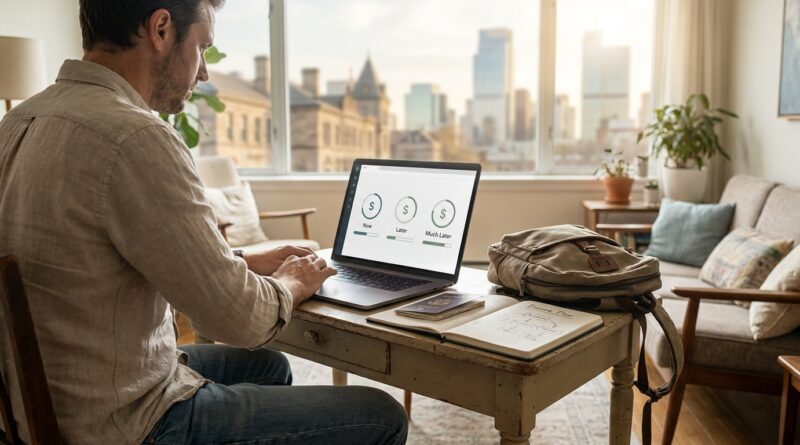
The New ‘Retirement Gap’ For Digital Nomads: How To Build A Pension When No One Is Doing It For You
You can be earning good money from a beach apartment in Portugal or a coworking loft in Mexico City and still have that cold, annoying thought in the back of your mind. What happens when I want to stop? That fear is real. A lot of remote workers traded office politics for freedom, but also lost the boring grown-up stuff that quietly mattered, like employer pension contributions, matched retirement plans, and disability cover. Nobody warns you properly about that part. So retirement planning for digital nomads often gets pushed aside until one tax surprise, one health issue, or one bad client drought makes it feel urgent. The good news is this is fixable. You do not need to become a finance nerd. You just need a simple system. Think of it as building your own private pension, one small automatic step at a time, in a way that travels with you.
⚡ In a Hurry? Key Takeaways
- Retirement planning for digital nomads starts with one thing: building your own automatic pension because no employer is doing it for you.
- Set a target savings rate, open the right tax-friendly or taxable investment account for your home country, and automate monthly investing into broad, low-cost index funds.
- Keep part of your money outside the market in cash reserves, so a crash or burnout does not force you back into work at the worst possible time.
The real problem is not travel. It is irregular structure.
Most nomads are not broke because they love freedom too much. They are underprepared because the systems that help regular employees save do not exist for them.
In a normal job, money disappears into retirement before you can spend it. There may be an employer match. There may be payroll tax records. There may even be HR emails nagging you to sort it out.
When you work for yourself, or hop between contracts and countries, none of that happens. Every month you have to choose to save. Every year you have to sort taxes. Every move creates new confusion.
That is why retirement planning for digital nomads feels harder than it should. It is not because you are bad with money. It is because you are doing the whole back office job yourself.
First, stop thinking of retirement as an age
For nomads, retirement usually does not mean golfing at 65. It often means having options.
Maybe you want to work part time at 45. Maybe you want to stop freelancing at 50. Maybe you want enough invested that you can take a year off without panic. That is the better frame.
So your goal is not just “retire someday.” Your goal is to build a pot of money that can eventually produce income without depending on your daily effort.
Your private pension has four parts
1. A tax home and clear paperwork
This part is dull. It is also the foundation.
You need to know where you are tax resident, what retirement accounts are available to you there, and whether you are still paying into any state pension or social insurance system. Many nomads skip this because they assume “I travel a lot” means the rules do not apply. Sadly, tax offices do not find that charming.
If you are a US citizen, for example, you may still be able to use accounts like an IRA or Solo 401(k), depending on your income and business setup. If you are from the UK, Canada, Australia, Germany, or elsewhere, your local options will differ. The point is simple. Start with your passport country and tax residency first. Do not begin with random Reddit advice from someone in another legal system.
2. A monthly savings rate
This matters more than picking the perfect fund.
A good starting target is 15 to 25 percent of income for long-term investing if you started fairly early. If you are behind, or want more flexibility sooner, 30 percent or more may be needed.
That sounds painful until you remember something important. A lot of nomads earn well but bleed money through constant moving, short-term rentals, flights, visas, gear upgrades, and “I deserve it” spending after stressful projects.
That is why Slowmad Money: How Staying Put Longer Can Quietly Add 5–10 Years To Your Financial Independence Timeline hits a nerve. Moving less often can quietly free up a surprising amount of cash for your future.
3. An investment account that you actually use
This is where people freeze. They spend months trying to find the best account, then open nothing.
Use this order:
- If your home country offers a tax-advantaged retirement account you can legally use, start there.
- If those accounts are unavailable or too restrictive for your situation, use a standard taxable brokerage account.
- If you run a business, check whether self-employed retirement accounts exist for you.
Perfect is not required. Consistent is.
4. A simple investment mix
You do not need to outsmart the market. You need a boring, repeatable plan.
For many people, that means broad, low-cost index funds or ETFs. Think total stock market funds, global index funds, and, if you want less volatility as you get older, some bond exposure.
A very simple example could be:
- 80 percent in a global stock index fund
- 20 percent in a bond index fund
If you are younger and can handle bigger market swings, you might hold more stocks. If market drops keep you awake at night, hold more bonds or cash. The best plan is the one you can stick with when headlines get ugly.
A step-by-step pension plan you can start this week
Step 1. Work out your “freedom number”
How much yearly spending would let you live comfortably without full-time work?
If you spend $30,000 a year, a rough rule of thumb says you may need around 25 times that amount invested, or $750,000, for long-term financial independence. This is not a guarantee. It is a planning shortcut. But it gives you a target.
Step 2. Pick a savings percentage
Choose a number today. Not “whatever is left over.” An actual percentage.
Examples:
- 15 percent if you are getting started
- 20 to 30 percent if you want solid progress
- 30 percent plus if you are catching up
Step 3. Build a two-layer safety net
Retirement money is not emergency money.
You need both:
- An emergency fund in cash, usually 6 to 12 months of basic expenses for nomads with variable income
- A long-term investment account for your private pension
This matters because if the market crashes and you also need rent money, you may be forced to sell investments at the worst moment.
Step 4. Automate contributions
This is the whole trick.
Set up an automatic transfer every time you get paid, or on the same date each month. If your income is uneven, use a two-account system: income lands in one account, then a fixed amount moves to investments monthly.
Automation removes the monthly debate with yourself.
Step 5. Invest in plain funds, then leave them alone
Choose one to three diversified funds. Keep fees low. Rebalance once or twice a year if needed. Then go outside.
You do not need to monitor your pension from a hammock every afternoon.
What if you are already late?
First, you are probably not as late as you think.
Second, panic usually makes people do silly things. They chase crypto, stock tips, property schemes, or expensive “wealth coaches.” Most of the time, the boring answer still wins.
If you feel behind, do these three things:
- Raise your savings rate by 5 percent
- Cut one major recurring cost, usually housing or constant travel
- Increase income for one focused season, then direct the extra money into investments
That combination can change your timeline more than picking a “hotter” fund ever will.
Common mistakes digital nomads make
Confusing income with security
A good month is not a retirement plan. High income with no system often turns into expensive drift.
Ignoring taxes until they bite
If you do not know where you owe tax, which forms matter, or what retirement accounts you are allowed to use, get help. One hour with a cross-border tax professional can save years of mess.
Keeping too much cash forever
Cash feels safe. Over long periods, inflation quietly eats it. Emergency fund money should stay liquid. Long-term pension money needs a chance to grow.
Investing without understanding currency risk
If you earn in dollars, spend in euros, and invest in a different currency again, your future lifestyle can be affected by exchange rates. You do not need to obsess over this, but it is worth being aware of.
Thinking state pensions will sort everything out
Maybe you will qualify for some government support later. Maybe not. Maybe it will be enough. Maybe definitely not. Build your plan as if public support will be a bonus, not the main engine.
How much should you aim to save if you move around a lot?
A practical rule for retirement planning for digital nomads is to save more than a comparable office worker, not less.
Why? Because your life often includes:
- Less predictable income
- More admin mistakes
- Higher health and insurance uncertainty
- No employer match
- More temptation to spend on lifestyle experiences
If you can manage it, 20 percent should feel like the floor, not the dream.
Do you need a financial adviser?
Sometimes yes. Often for setup, not ongoing hand-holding.
A good adviser or tax professional can help if you:
- Have multiple citizenships or residencies
- Own a company
- Move money across borders often
- Are unsure which retirement accounts you can legally use
- Need help building a tax-efficient drawdown plan
But you do not need to outsource all thinking. Even if you hire help, you still want to understand the basic shape of your own system.
If you only do one thing this week, do this
Open or identify your long-term investment account, set an automatic monthly contribution, and choose a plain diversified fund.
That is it.
Not the perfect account. Not the perfect spreadsheet. Not a 14-tab research project.
One account. One transfer. One fund. Start.
At a Glance: Comparison
| Feature/Aspect | Details | Verdict |
|---|---|---|
| Employer pension vs nomad pension | Employees often get automatic contributions and sometimes matching. Nomads must set up and fund everything themselves. | Self-built systems take more effort, but they are portable and fully under your control. |
| Tax-advantaged account vs taxable brokerage | Tax-advantaged accounts can lower taxes but may have eligibility rules. Taxable accounts are more flexible and widely available. | Use the tax-friendly option first if you can. If not, a regular brokerage account is still a strong backup. |
| Saving cash vs investing long term | Cash protects you in emergencies, but invested money has a better chance of growing over decades. | Keep both. Cash for stability, investments for future freedom. |
Conclusion
The digital nomad world spends a lot of time talking about visas, cheap cities, and pretty work spots. Fair enough. Those things are fun. But the quieter truth is that nobody is paying into your future except you. That can feel heavy, especially when online forums are full of people confused by taxes, unsure which accounts to use, and worried they have already lost valuable years. The upside is that retirement planning for digital nomads does not need to be fancy to work. A clear system beats a clever one. Know where you are tax-resident. Pick the right account you can actually use. Set a savings rate. Automate it. Invest simply. If you do that, you are no longer just drifting between destinations and hoping it all works out. You are building a location-independent pension that travels with you, and that alone can make this week feel a lot safer.