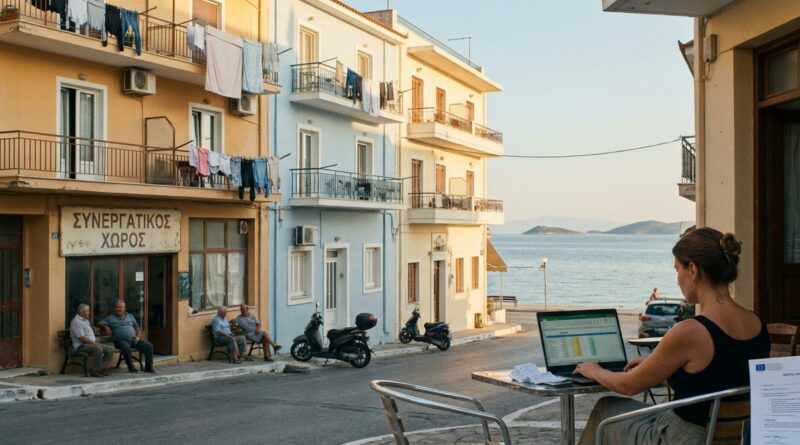
Greece’s New €3,500 Rule: How To Use the ‘Expense Lock‑In’ Trick To Turn a Digital Nomad Visa Into a FI Shortcut
You are not imagining the tension here. Greece keeps showing up as the dream move for remote workers, but the new €3,500 monthly income rule can make financially independent people wonder if the whole thing is a trap. You move for freedom, then suddenly your rent jumps, every coffee is in a tourist district, and your careful FI plan starts bleeding money. Worse, you may also feel uneasy about the local backlash. Plenty of Greeks are worried that another wave of foreign renters will push housing even further out of reach. That makes this more than a visa question. It becomes a math question, a values question, and a lifestyle question. The good news is that Greece’s digital nomad visa can still work as a shortcut toward financial independence if you use it like a system, not a fantasy. The trick is what I call an expense lock-in. You decide your budget first, lock in the biggest costs early, and refuse to let the postcard version of Greece rewrite your numbers.
⚡ In a Hurry? Key Takeaways
- The €3,500 income rule does not automatically make Greece a bad FI move. It only works if your actual spending stays well below your verified income.
- Your best move is to lock in housing, utilities, and a monthly spending cap before arrival, ideally outside the hottest tourist zones.
- If you want Greece without becoming part of the rent problem, choose less pressured cities, sign fair long-term leases, and live more like a resident than a short-stay visitor.
Why the €3,500 Rule Feels Bigger Than It Looks
On paper, €3,500 per month sounds simple. If you meet it, you qualify. But for anyone focused on financial independence, that number does something sneaky. It can nudge you into thinking you should spend at that level too.
That is where lifestyle creep starts. You tell yourself the nice apartment is fine because you “had to show higher income anyway.” Then it is airport taxis, brunch spots aimed at foreigners, island weekends, and a coworking space you barely use. A year later, Greece did not lower your burn rate. It raised it.
So the real question is not, “Can I qualify?” It is, “Can I keep my annual spending lower in Greece than where I live now, after the novelty wears off?”
The “Expense Lock-In” Trick
This is the whole strategy in one sentence. Use the visa to secure location freedom, then lock your recurring costs before your daily habits expand to fill the scenery.
Think of it like fixing the big three:
- Housing
- Utilities and connectivity
- Your weekly living pattern
If those three stay stable, Greece can become a very useful base. If they drift, the visa becomes an expensive costume for a life that is not actually helping your FI timeline.
What to lock in before you arrive
Start with a hard monthly cap. Not a vague target. A real number.
For example:
- Rent: €700 to €1,100
- Utilities plus internet: €150 to €250
- Groceries: €250 to €400
- Eating out: fixed cap, maybe €150 to €250
- Local transport: €30 to €100
- Health, phone, misc: €150 to €300
If you can build a comfortable life under, say, €1,600 to €2,200 a month, then the €3,500 threshold starts looking useful rather than scary. You are qualifying at one level while living at another. That gap is what protects your FI math.
Which Greek Base Cities Make the Math Work?
Not every Greek city is a good fit for this. Athens can work, but it is easy to overpay if you default to the most international neighborhoods. Santorini and Mykonos are obvious “no” choices for anyone serious about controlled spending. The Instagram tax is real.
Better options usually share three traits. They have year-round life, decent transport, and less tourist pressure.
Thessaloniki
Probably the most practical starting point for many people. It is big enough to feel alive, easier on the budget than the flashiest parts of Athens, and has strong everyday-city energy. Good for people who want cafes, transit, universities, and a real local economy.
Patras
Often overlooked, which is part of the appeal. It is not trying to be a lifestyle brand. That can be good news for your wallet.
Larissa
Less romantic in the marketing-brochure sense, more useful in the “can I live well without tourist pricing?” sense. For FI-minded readers, that matters more.
Crete, but carefully
Crete can work if you pick a normal city area and avoid paying a premium for peak-season locations. Chania is gorgeous, but prices can drift fast. Heraklion can be more practical.
Athens, but neighborhood matters
Athens is not one market. It is many. If you go there, compare ordinary residential districts against the trendy zones remote workers tend to cluster in. A 20-minute metro difference can mean a huge savings over a year.
How to Run the Numbers Before You Apply
This is where many people get lazy. Do not estimate from vacation memories. Build a Greece budget the same way you would test an early retirement plan.
Step 1: Compare your current all-in monthly cost
Add up housing, utilities, groceries, transport, subscriptions, health costs, taxes tied to residency decisions, and social spending. Use your real average from the last 6 to 12 months.
Step 2: Build a “boring Greece” budget
Not a honeymoon budget. A rainy Tuesday budget. Assume you are cooking often, working normal hours, and not treating every weekend like a travel reel.
Step 3: Add a tourism surge buffer
Some categories will rise, especially if you are in a seasonal area. Add 10 to 15 percent to the categories most likely to creep.
Step 4: Stress-test the exchange rate and income continuity
If your income is in dollars, pounds, or another currency, run a bad-case scenario. If your client income drops for three months, does the plan still work?
If Greece is not at least modestly cheaper than your current base after this exercise, it may still be a great life choice. It is just not an FI shortcut.
Housing Is the Whole Game
If you only remember one thing, make it this. Housing will decide whether this move helps or hurts your long-term freedom.
The expense lock-in trick works best when you secure a long-term lease at a fair local rate rather than hopping through furnished short lets. Short stays are where many nomads quietly torch their savings.
What to aim for
- A 12-month lease, with renewal language clear from day one
- If possible, a two-year fixed-rate arrangement or a capped increase clause
- Unfurnished or lightly furnished if it cuts monthly costs enough to matter
- A non-tourist building with year-round residents
What to ask before signing
- Are utilities separate, and what are typical winter and summer bills?
- Is internet already installed, and what speed is actually available?
- Is the property used for short-term rentals part of the year?
- Can the landlord commit in writing to renewal terms?
The point is not to squeeze every euro. The point is predictability. Financial independence loves boring bills.
How to Avoid “Accidental Luxury” Spending
Living abroad can make ordinary splurges feel harmless. That is why you need guardrails.
Use a resident budget, not a visitor budget
Set a fixed number of restaurant meals per week. Choose a grocery store you can walk to. Use public transit or a monthly pass before you decide you “need” ride-hailing all the time.
Create a tourist-season rule
During peak months, prices and temptation both go up. Decide in advance that summer spending does not rise just because everyone around you is in holiday mode.
Separate exploration money from living money
Keep a distinct monthly or quarterly travel pot. If island trips come from the same bucket as rent and food, your budget gets blurry fast.
How to Use the Visa Renewal Options to Reduce Churn
One of the hidden costs of the nomad life is constant resetting. New deposits. New furniture. New SIM card. New mistakes. It is exhausting, and it is expensive.
If Greece gives you a clean path to stay longer, use that stability. The more often you move, the more likely you are to fall back into convenience spending. Renewing in place can be a real FI advantage because you spread moving costs over a longer period and keep your routines steady.
This also helps with community. You are less likely to act like a passing tourist if you know you are staying long enough to care about the place.
How Not to Be “That” Gentrifier
This part matters. A cheap personal win that makes local housing worse is not really a clean win.
Choose less pressured neighborhoods and cities
If a district is already choking on short-term rentals and fast rent growth, ask whether you need to be there. Often, the answer is no.
Rent like a resident
Long-term leases are usually healthier for local housing than bouncing through tourist inventory. Paying a fair market rate is different from bidding up a scarce apartment because your foreign income can absorb it.
Spend in local businesses that serve locals too
Grocers, bakeries, repair shops, neighborhood cafes. It sounds small, but it changes your relationship to the place.
Learn the basics
You do not need perfect Greek. You do need some effort. Even a little language and local awareness can lower friction and make you less likely to stay in the foreigner bubble where prices are highest anyway.
Who This Strategy Works Best For
The sweet spot is someone who:
- Already earns above the visa threshold
- Is more interested in reducing long-term burn than showing off a glamorous lifestyle
- Can commit to one base for at least 12 months
- Is willing to live outside the most hyped neighborhoods
If that is you, Greece digital nomad visa financial independence can fit together surprisingly well. Not because Greece is magically cheap, but because the visa can help you build stability in a place where your day-to-day costs may still land below your home-country baseline.
When Greece Is Probably the Wrong FI Move
Be honest with yourself if any of these are true:
- You want a constant holiday atmosphere
- You know you will bounce between islands and furnished rentals
- You tend to socialize through expensive restaurants and bars
- Your income only barely clears the threshold
- You are counting on “figuring it out later”
That is not a moral failure. It just means this is a lifestyle choice, not an optimization play.
A Simple Quarterly Checklist
If you are thinking of applying this quarter, use this short checklist:
- Confirm you cleanly meet the €3,500 monthly income requirement
- Build a base-case and worst-case Greece budget
- Pick 3 cities, not 1 dream location
- Compare long-term rent listings in each
- Set a hard all-in monthly spending cap before booking anything
- Plan how long you want to stay, and whether renewal helps your timeline
- Choose a living style that does not put you in direct competition with the most stressed local housing pockets
At a Glance: Comparison
| Feature/Aspect | Details | Verdict |
|---|---|---|
| Income threshold | €3,500 per month is clear and usable, but only helpful if your actual spending stays far below it. | Good for higher earners. Risky for borderline applicants. |
| Best FI tactic | Lock in rent, utilities, and routine spending before lifestyle creep kicks in. | This is the move that makes or breaks the plan. |
| Community impact | Lower-pressure cities and fair long-term rentals reduce the chance of adding to local housing strain. | Important if you want the move to feel sustainable, not extractive. |
Conclusion
Greece is not a cheat code. It is a tool. That is the useful way to read the current headlines. Yes, the country now has a clearer path for digital nomad and financially independent applicants, with that €3,500 monthly requirement sitting right out in the open. And yes, there is real excitement around Greek cities that want remote workers without wrecking local life. But the FI crowd should care less about the hype and more about the setup. If you pick the right base city, lock in long-term housing at sane rates, use renewal options to cut moving churn, and put firm limits on lifestyle drift, Greece can absolutely support a lower-burn, more autonomous life. If you do not, you may just recreate a more expensive version of the life you were trying to escape. The smart play is simple. Use the visa to buy stability, not status. Keep your spending plan tighter than the scenery is pretty. That is how Greece becomes part of your financial independence path, instead of a very beautiful detour.