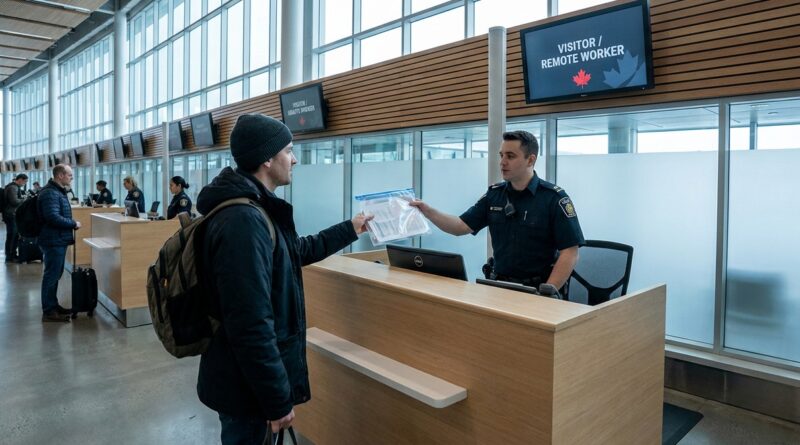
Canada’s New Digital Nomad Crackdown: How To Prove Your Income Is ‘Foreign’ And Keep Your FI Plan Alive
Plenty of digital nomads are frustrated right now, and honestly, it makes sense. Canada used to feel simple. You arrived as a visitor, rented a place for a while, opened your laptop, and carried on. The updated guidance that took effect on May 26 changed the mood fast. Border officers are now looking much more closely at whether your work is really tied to clients, employers, and money sources outside Canada. If you cannot show that clearly, your “easy base” can turn into a stressful airport interview, a denied entry, or a tax mess you did not budget for. For anyone building toward financial independence, that is not a small hiccup. A blown season in Canada can mean higher housing costs, canceled bookings, and lost momentum. The good news is that this is fixable. You just need better paperwork, cleaner payment trails, and a simple story that matches what your documents show.
⚡ In a Hurry? Key Takeaways
- Canada’s newer digital nomad scrutiny means a visitor entry is not enough by itself. You may need to prove your income, clients, and business ties are outside Canada.
- Bring a clear proof packet. Contracts, invoices, client letters, foreign bank statements, company registration, and tax records all help.
- If your documents suggest you are serving Canadian clients or earning inside Canada, you could face entry problems and possible tax exposure.
What changed, in plain English
The big shift is not that Canada suddenly “invented” rules about visitors working remotely. It is that officers now appear to be applying the line much more strictly. The question is no longer just, “Are you visiting?” It is also, “Who pays you, where are they based, where does the money land, and are you doing work that belongs in Canada?”
That matters because many nomads have messy setups. Maybe your LLC is in the US, one client is in Germany, one is in Australia, and your Stripe account pays out to Wise. That can still be fine. But if you cannot explain it simply, it can look fuzzy at the border.
And fuzzy is the enemy here.
What “foreign income” really means for a digital nomad
For practical purposes, border officers want to see that your money comes from outside Canada and that you are not entering the Canadian labor market. In normal human language, that means:
- Your employer or clients are outside Canada.
- Your contracts are with non-Canadian entities or people.
- Your invoices are billed to non-Canadian addresses.
- Your payments are sent from foreign businesses or foreign payroll systems.
- Your main bank or business accounts are outside Canada, or at least clearly tied to non-Canadian earnings.
- You are not advertising yourself locally in Canada or taking on Canadian customers while there.
If your setup includes Canadian clients, Canadian payroll, or regular work for businesses operating in Canada, that is where the risk rises fast.
The documents you should prepare before you fly
1. A one-page income summary
This is the most useful thing you can make. One page. Clean and boring. List your employer or top clients, their country, the kind of work you do, and where payments go. Think of it as the cheat sheet that helps an officer understand your situation in 20 seconds.
Include:
- Your legal name and passport number
- Business name, if you use one
- Client or employer names
- Country of each client or employer
- Month-to-month average income
- Bank account country where income is received
- A short line stating you do not seek work from Canadian businesses while in Canada
2. Contracts or employment letters
If you are employed, get a letter from HR or your manager saying:
- You work remotely
- Your employer is based outside Canada
- Your salary is paid from outside Canada
- Your role does not require entering the Canadian labor market
If you freelance or consult, bring signed contracts with your active clients. Those should show client addresses outside Canada and payment terms.
3. Recent invoices and proof of payment
This is where many people get caught off guard. A contract says one thing. Money flow proves it.
Bring recent invoices, ideally from the last three to six months, plus matching proof that those invoices were paid. That could be:
- Bank statements
- Wise account history
- PayPal business statements
- Stripe payout summaries
Highlight the sender name, payment date, and country if visible.
4. Foreign bank statements
If your income lands in a Canadian bank account, expect more questions. That does not automatically doom you, but it weakens the clean “foreign income” story. A foreign account receiving your business income is easier to explain.
Bring statements that show:
- Account holder name
- Regular incoming payments
- Business names or payroll sources
- Account country
5. Business registration and tax documents
If you run a company, carry proof it exists and where it is based. That could be:
- Articles of incorporation
- Business registration certificate
- EIN or tax ID confirmation
- Recent tax return or accountant letter
You do not need to hand over your life story. You do need enough to show your economic base is elsewhere.
How to structure your contracts so they help, not hurt
If your current contracts are vague, now is the time to clean them up.
What your contracts should say
- The client’s legal name and non-Canadian address
- The service is provided remotely
- Payment is made in a foreign currency when possible
- The governing business relationship is outside Canada
- No requirement to perform work physically in Canada
What to avoid
- Using your temporary Canadian address as your business address
- Contracts that mention serving “North American operations” if that includes Canadian on-site support
- Open-ended language that makes it sound like you can be assigned local Canadian work
- Canadian client addresses if you are trying to enter as a visitor working only on foreign income
Small wording choices matter. At a border desk, a sloppy contract can create a big headache.
Banking and payment setup that looks cleaner to officers
This is not just paperwork. It is pattern recognition. Officers look for a simple money trail.
The stronger setup usually looks like this:
- Foreign clients
- Foreign invoices
- Foreign business or personal bank account receiving payments
- Clear records showing you are paid from outside Canada
The weaker setup looks like this:
- Mixed Canadian and foreign clients
- Payments from random platforms with no obvious sender details
- Funds landing in Canadian accounts
- No invoices or contracts to match the deposits
If possible, separate personal spending from business income. That makes your documents much easier to read. One account for business receipts. Another for personal use. Simple wins.
What to say if a border officer asks how you support yourself
Do not improvise. Do not overexplain. Do not say, “I kind of freelance online and do a few things.” That sounds chaotic, even if your business is perfectly legitimate.
Use a short, plain answer:
“I work remotely for clients outside Canada. My income is paid by companies based in the US and Germany, and I have documentation showing my contracts and payment history. I am visiting Canada temporarily and I am not seeking Canadian work.”
That is clear. Calm. Easy to follow.
Red flags that can trigger extra scrutiny
- You say you are “moving” to Canada when you mean visiting
- You have one-way travel with no onward plans
- You carry resumes tailored to Canadian employers
- Your LinkedIn says you are “open to work” in Toronto or Vancouver
- Your recent invoices are to Canadian companies
- Your mail, bank, and phone setup all point to Canada as your real base
- You cannot explain where your money comes from
None of these guarantee trouble. But stack a few together and you may get a longer interview.
Do not ignore the tax angle
This is the part many nomads hate, because it is less dramatic than a border denial and often more expensive later. Entry permission and tax status are not the same thing.
You can be allowed into Canada as a visitor and still create tax questions if your stay gets long, your ties get stronger, or your work starts looking more Canadian than foreign. The exact outcome depends on residency tests, tax treaties, your home country, and how your business is set up.
So think in two tracks:
- Border track: Can you show your income is foreign and that you are not entering the local job market?
- Tax track: Could your length of stay, clients, or business structure create filing duties or residency risk?
If you are staying for an extended period or earning serious money, this is worth a quick chat with a cross-border tax professional. That is not fearmongering. It is cheaper than cleaning up a bad surprise later.
A smart “proof packet” checklist
Put this in a cloud folder and also save an offline copy on your phone or laptop:
- Passport and travel itinerary
- Proof of onward travel or departure plans
- Accommodation bookings
- One-page income summary
- Employer letter or active client contracts
- Three to six months of invoices
- Three to six months of payment proof
- Foreign bank statements
- Business registration documents
- Recent tax return or accountant letter
- A short written explanation of your work setup
Keep it organized. Label files clearly. “Invoice_ClientA_March2026.pdf” is much better than “scan004finalfinal.pdf”.
If your setup is messy today, here is how to fix it
Start with the basics
- Update contracts with full client addresses
- Standardize invoices
- Use one main payout route
- Keep a separate account for business income
Clean up your online footprint
- Remove “open to work in Canada” if that is not your plan
- Do not advertise local Canadian services while entering as a visitor
- Make sure your website and LinkedIn match your actual business model
Reduce mixed signals
- Avoid signing new Canadian clients before entry if your case is already borderline
- Do not describe yourself as “based in Canada” unless that is legally true
- Keep your tax home and business base easy to identify
What this means for your FI plan
If you are chasing financial independence, this matters more than it first appears. Slow travel works partly because you reduce friction. Fewer emergencies. Fewer forced moves. More predictable spending.
A denied entry can blow up all of that. You might lose prepaid rent, pay peak-season airfares, need last-minute accommodation somewhere else, and waste time rebuilding your work setup. Even if you get in, poor planning can leave you anxious for weeks.
The fix is pretty boring. Better records. Cleaner systems. Fewer gray areas. That may not feel glamorous, but it protects your runway.
At a Glance: Comparison
| Feature/Aspect | Details | Verdict |
|---|---|---|
| Proof of foreign income | Best shown with contracts, invoices, employer letters, and matching foreign payment records | Essential. Do not rely on verbal explanations alone. |
| Banking setup | Foreign accounts and clear payout trails are easier to explain than mixed or Canadian-linked deposits | Cleaner is safer. |
| Canadian client exposure | Working for or seeking Canadian clients can raise both border and tax questions | Highest risk area. Get advice before you assume it is fine. |
Conclusion
Canada’s updated digital nomad guidance is already catching people off guard, especially slowmads and first-timers who assumed a visitor stamp was the whole story. It is not. If you want to keep Canada in your rotation, the smart move is to treat your border file like a small business audit. Show where your clients are, where your money comes from, and where it lands. Keep your contracts tidy. Keep your banking trail simple. And do not brush off the tax side if you plan a long stay. Done right, this is manageable. More important, it can save you from denied entry, surprise tax risk, and expensive reroutes that wreck both your travel plans and the FI timeline you have worked hard to build.