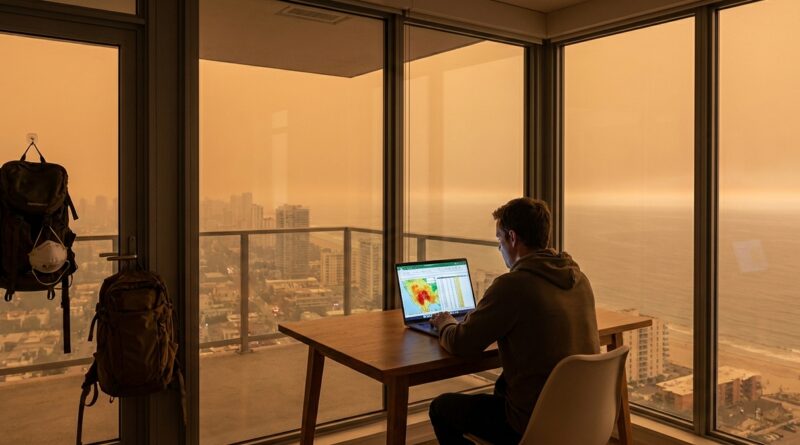
The New ‘Climate Shock Budget’: How Digital Nomads Can Protect Their FI Plan From Wildfire Smoke, Flooded Cities and Flight Chaos
You can do everything “right” as a digital nomad, book the cheaper apartment, fly on off days, keep your spending tight, and still get punched in the wallet by wildfire smoke, flood closures or a city-wide heat emergency. That is the frustrating part. Climate risk no longer feels like bad luck. It is a real budget category, and if you ignore it, one messy week can wreck months of progress toward financial independence. The good news is that this is fixable. You do not need to predict every disaster. You just need a climate risk budget for digital nomads that assumes disruptions will happen and prices them in before they do. Think of it like adding a shock absorber to your FI plan. A little extra planning now can save you from panic bookings, overpriced hotels, missed work days and surprise medical costs later.
⚡ In a Hurry? Key Takeaways
- A climate risk budget for digital nomads should cover relocation cash, flexible flights, air quality gear, insurance gaps and 7 to 14 days of emergency housing.
- Start by adding 5 to 15 percent to your monthly base budget, depending on season and region, then keep that money separate from your normal travel fund.
- The goal is not perfect forecasting. It is staying healthy, mobile and financially calm when smoke, floods or airport chaos hit your current base.
Climate risk is now part of the math
If you are building toward FI, you already know small recurring costs matter. A few bad habits compound. So do a few smart safeguards.
What has changed in 2026 is that climate disruption is no longer occasional background noise. It is hitting major nomad hubs in ways that cost real money. Flights get canceled. Trains stop. Apartments lose power. Air quality gets bad enough that you cannot comfortably work outside or even open a window. A cheap month abroad can turn expensive fast.
That means your travel budget needs a new line item. Not “miscellaneous.” Not “hopefully this never happens.” A specific climate risk budget for digital nomads.
What goes into a climate shock budget
1. Emergency relocation money
This is the big one. If your city becomes unhealthy or hard to move around in, you may need to leave early. That can mean a last-minute flight, train or bus, plus a few nights in a hotel while you reset.
A practical starting point is enough cash to cover:
- One same-week one-way flight or train ticket
- Three to seven nights of backup lodging
- Local transport to get out fast
For many nomads, that means setting aside $800 to $2,500 per person, depending on your region. Southeast Asia might sit at the lower end. Western Europe, North America or Australia usually need more.
2. Air quality and heat protection
Smoke and extreme heat create sneaky costs. You may need a better room, a coworking pass with strong air conditioning, masks, medicine, extra laundry, or even an air purifier.
Budget for:
- N95 or FFP2 masks
- Portable air purifier, if you stay in one place for a while
- Extra indoor workspace costs
- Hydration and basic health supplies
This often runs $50 to $300 for a short disruption, more if you need gear in a hurry.
3. Flexible booking premiums
The cheapest ticket is often the most fragile ticket. Same with no-refund apartments. In a calm year, that gamble may work. In a messy climate year, it can backfire.
Sometimes paying 8 to 20 percent more for flexibility is the smarter financial move. It is not wasted money if it saves a full rebooking later.
4. Insurance gaps
Many travelers assume insurance handles everything. It does not. Some policies exclude known weather events, delay coverage until after long waiting periods, or pay out only for specific disruptions.
Before you buy or renew, check:
- Trip interruption coverage
- Natural disaster evacuation rules
- Air quality or respiratory-related medical coverage
- Accommodation coverage during delays
- Rental car or baggage delay clauses
If the policy is vague, assume the gap is yours to fund.
A simple formula for your climate risk budget
If you want a numbers-first rule, use this:
Monthly climate buffer = 5 to 15 percent of your total monthly nomad budget
Use the lower end if you are in low-risk seasons, have strong insurance, stay in one country, and book flexible lodging. Use the higher end if you are moving often, visiting flood-prone or wildfire-prone areas, or relying on cheap nonrefundable travel.
Here is a rough guide:
- $1,500 monthly budget: add $75 to $225
- $2,500 monthly budget: add $125 to $375
- $4,000 monthly budget: add $200 to $600
Keep this money separate from your normal spending account. If it sits mixed in with restaurant money and weekend trips, it will disappear.
How to decide whether a city needs a bigger buffer
Look at timing, not just price
A city can look affordable on paper and still be expensive in practice if you land there during smoke season, flood season or peak heat. This is where many nomads get caught. They optimize for rent, then pay for chaos.
If you are already comparing destinations, it helps to think in layers. Cost of living matters. So does seasonal risk. That is also why pieces like Lisbon And Bali Are Pricing Out Nomads: How To Build A ‘Cost‑Of‑Living Barbell’ Plan Before You Move are worth reading alongside your travel budget. A place can be cheap or expensive, but the real question is what it costs when conditions go bad.
Ask these five questions before booking
- What is the city’s main climate risk in the month I will be there?
- How easy is it to leave quickly by train, bus or low-cost flight?
- Are there backup neighborhoods or nearby towns with similar costs?
- Will I need AC, sealed windows or indoor workspace to function?
- How expensive does lodging get during sudden disruptions?
If you cannot answer these, your budget is not finished yet.
Build a two-layer emergency fund
Many nomads keep one emergency fund for everything. That is better than nothing, but it can create stress. If one flood-related relocation eats half your cushion, now your laptop replacement or medical issue is competing for the same money.
Layer 1: Climate cash
Keep enough for a fast exit and short reset. Usually 7 to 14 days of disruption costs.
Layer 2: True emergency fund
This is the bigger reserve for job loss, major health issues, family emergencies or a longer break from travel.
Separating these funds makes decision-making easier. You can act quickly without feeling like every evacuation is raiding your entire FI plan.
How to reduce the odds of a very expensive week
Book “escape routes,” not just destinations
When you choose a base, choose your backup base too. If your first city gets hit by smoke or flooding, where can you go within six hours, and what will it cost?
That simple habit changes everything. You stop reacting like a tourist and start planning like someone protecting long-term freedom.
Do not stack fragile bookings
A nonrefundable apartment plus a basic-economy flight plus no insurance is not frugal. It is exposed.
If all three fail at once, your cheap month was never really cheap.
Store a “go folder” on your phone
Keep screenshots or offline copies of:
- Insurance policy numbers
- Passport and visa documents
- Nearest backup lodging options
- Airline and train support contacts
- Medical notes and prescriptions
This will not lower prices, but it can stop panic and bad choices.
What this means for your FI plan
The point of financial independence is not just to retire early. It is to have more control. Climate disruption chips away at control when your money is too tightly optimized.
If your savings rate depends on every month going exactly to plan, your system is brittle. A better setup is slightly less efficient, but much stronger. You budget for the real world, not the ideal one.
That may mean traveling a little slower, paying more for flexible terms, or holding a larger cash cushion than your old spreadsheets liked. That is fine. Resilience is part of the return.
At a Glance: Comparison
| Feature/Aspect | Details | Verdict |
|---|---|---|
| Emergency relocation fund | Covers last-minute transport, 3 to 7 nights of lodging, and local transit during a sudden move. | Essential. This is the core of a climate risk budget for digital nomads. |
| Flexible bookings | Usually costs more upfront, but can prevent full losses when flights or housing plans break down. | Often worth the premium in high-risk seasons and locations. |
| Insurance plus health gear | Insurance may help with delays or interruption, while masks, purifier access and indoor workspace reduce day-to-day health and work disruptions. | Useful, but read the fine print and expect some out-of-pocket costs. |
Conclusion
Extreme heat, smoke and floods are disrupting major cities again this week, and digital nomads usually feel the hit early through canceled flights, sudden moves and health costs that were never in the original spreadsheet. The fix is not fear. It is pricing reality properly. A clear, numbers-first climate risk budget for digital nomads turns chaos into a manageable cost instead of a financial ambush. If you adjust your itinerary choices, insurance, booking style and emergency savings now, you give your FI plan a much better shot at surviving the next ugly headline without blowing up your momentum. That is practical autonomy. Not perfect safety, but a calmer, stronger way to stay mobile.