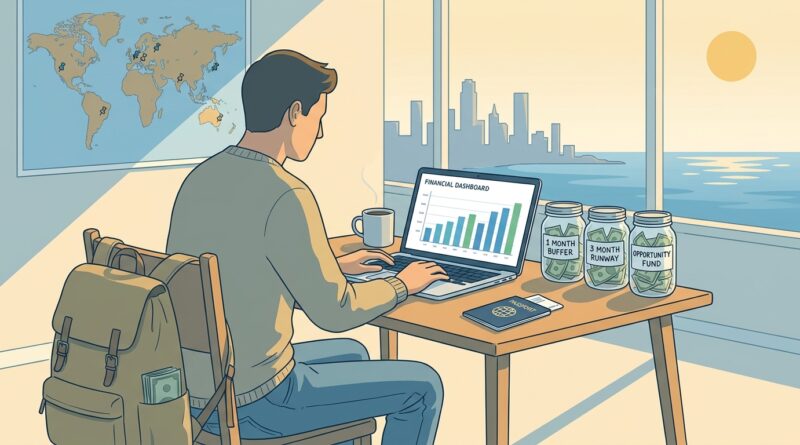
From Side Hustle To Safety Net: How Digital Nomads Can Build a ‘Travel-Proof’ Emergency Fund In 90 Days
You do not feel “free” when your bank balance can be knocked flat by one late invoice and a surprise dentist visit. That is the part of digital nomad life people skip on Instagram. A lot of full-time travelers are one canceled flight, one broken laptop, or one slow-paying client away from panic. If that sounds familiar, you are not bad with money. You are probably just running a mobile life without a real shock absorber. The good news is you do not need a perfect budget or a huge salary to fix it. You need a short, focused plan. A digital nomad emergency fund is not about becoming boring. It is what lets you keep traveling when life gets expensive, messy, or delayed. Here is a practical 90-day way to build that cushion without putting your whole life on pause.
⚡ In a Hurry? Key Takeaways
- A digital nomad emergency fund should cover at least 2 to 3 months of bare-bones travel and living costs, plus a flight-home buffer.
- The fastest 90-day plan is simple: cut optional spending, raise income for one short sprint, and automate weekly transfers into a separate savings account.
- Your fund is there for real shocks only, like medical bills, urgent flights, visa problems, stolen gear, or delayed client payments. Not beach clubs and weekend splurges.
Why nomads need a bigger buffer than they think
A regular emergency fund is already important. A digital nomad emergency fund matters even more because your life has more moving parts.
Your rent may change every month. Flights can jump in price overnight. Visa runs cost money. Border rules shift. Clients can pay late. And if your laptop dies in Chiang Mai or Lisbon, you cannot just “deal with it next paycheck” if all your work depends on that machine.
That is why a travel-proof fund needs to do more than cover groceries and rent. It also has to protect your mobility.
What “travel-proof” actually means
A travel-proof emergency fund should cover:
- Basic housing
- Food
- Phone and internet
- Insurance
- Coworking or work essentials
- A last-minute flight or relocation cost
- One urgent medical or gear problem
Think of it as your “keep my life running” money. Not your investing account. Not your fun budget. Not your next country fund.
How much should your digital nomad emergency fund be?
For most nomads, a good starter target is:
- Minimum: 2 months of bare-bones expenses
- Better: 3 months of bare-bones expenses
- Safer if freelance income is uneven: 4 to 6 months
If 3 to 6 months sounds impossible right now, do not freeze. Start with a 90-day goal that gets you to your first real cushion.
Your 90-day target formula
Add up these numbers:
- 30 days of stripped-down living costs
- 30 days more for income delays
- One emergency flight or border change buffer
- One urgent repair or medical deductible amount
Example:
- Low-spend monthly basics: $1,400
- Second month of basics: $1,400
- Flight-home or relocation fund: $800
- Laptop repair or medical buffer: $400
90-day starter goal: $4,000
That number is a lot more useful than a vague promise to “save more.”
Step 1. Figure out your true survival number
This is where a lot of people get tripped up. They use their current spending, which includes nice-to-haves, and call that their baseline.
Do this instead. Look at the last 60 to 90 days and split expenses into two piles.
Keep these in the “must pay” pile
- Accommodation
- Food
- Transportation you actually need
- Phone, data, Wi-Fi
- Insurance
- Debt minimums
- Work tools and software
Move these to the “pause if needed” pile
- Fancy Airbnbs
- Bars and nightlife
- Extra tours
- Shopping
- Multiple subscriptions
- Constant flights between countries
Your emergency fund should be based on the first pile, not the whole lifestyle picture.
Step 2. Open a separate account and make it annoying to touch
If your emergency money sits beside your daily spending, it will start to look available. That is human nature.
Put it in a separate high-yield savings account or a second bank account that is easy to fund but not linked to your card for casual spending. You want one or two business days of friction. Not a brick wall, just enough pause to stop “I deserve this upgrade” withdrawals.
If you earn in one currency and spend in another, try to keep at least part of your fund in the currency you are most likely to need in a crisis. For many nomads, that is often USD, EUR, or their home-country currency.
Step 3. Build your 90-day sprint plan
Now we get practical. The fastest way to build a digital nomad emergency fund is not one magic trick. It is three moves used together for 12 weeks.
Move 1. Cut costs for one season, not forever
You are not trying to become a monk. You are trying to buy peace of mind fast.
For the next 90 days:
- Stay longer in one place to cut transport costs
- Choose a simpler apartment
- Cook more often
- Pause low-value subscriptions
- Use public transit instead of ride shares
- Skip “treat yourself” spending that does not actually matter much
If you are about to move to a new base, run the numbers first. That matters even more with visa fees and setup costs rising. Our piece on South Korea’s New Digital Nomad Visa Just Got Easier: How To Run The Numbers Before You Jump is a good reminder that a cool destination can still be a financial strain if you do not price out the full picture.
Move 2. Add one short-burst income stream
This is where “side hustle to safety net” really kicks in. Do not build an entire second business in 90 days. That is too slow and too messy.
Instead, pick one income booster you can start this week.
- Upsell current clients with a small recurring service
- Offer a one-off audit, setup, or strategy session
- Take one extra freelance project with a clear end date
- Sell old gear or unused courses, domains, or software licenses
- Raise rates for new clients, even modestly
Short-term income is perfect for emergency fund building because every extra dollar has a job.
Move 3. Automate weekly transfers
Monthly transfers are easy to delay. Weekly transfers feel smaller and happen more often.
Set an automatic transfer every week on the day after your usual client payments hit. If your income is random, use a percentage rule instead:
- Transfer 15 to 30 percent of every payment into your emergency account
Do not wait to “see what is left.” What is left is usually not much.
A simple 90-day savings roadmap
Here is a no-theory template you can use.
Days 1 to 7
- Calculate your bare-bones monthly number
- Set a 90-day savings target
- Open a separate account
- Cut 3 to 5 optional expenses
Days 8 to 30
- Save your first 25 percent of the target
- Sell something or take one quick project
- Move to weekly savings transfers
Days 31 to 60
- Reach 50 to 70 percent of the target
- Review spending leaks, especially food delivery, transport, and booking fees
- Keep all extra income going into the fund
Days 61 to 90
- Finish the starter cushion
- Create clear rules for what counts as an emergency
- Plan your next milestone, usually month 3 or month 4 of coverage
What counts as a real emergency?
This matters because people often save well, then slowly raid the fund for “special” expenses that are not actually emergencies.
Use the fund only for things like:
- Delayed or lost client payments that affect bills
- Medical treatment or urgent prescriptions
- Emergency flights
- Sudden visa or border problems
- Stolen phone or laptop when you need it for work
- Family emergencies
Not for:
- Cheaper booking mistakes you could have avoided
- Festivals, tours, and nightlife
- Stretching for a nicer apartment
- Impulsive flights because you are bored
If your income is unpredictable, do this differently
Many nomads are freelancers or contractors. That means your emergency fund is doing two jobs. It covers true emergencies and income timing gaps.
Use a two-bucket system
Keep:
- Bucket 1: Income buffer for slow client payments, around 1 month of expenses
- Bucket 2: True emergency fund for medical, travel, or gear shocks
You can keep them in the same bank account if needed, but track them separately. That way one late invoice does not eat the money you needed for an emergency flight home.
Common mistakes that leave nomads exposed
1. Saving in an account tied to your debit card
If it is easy to swipe, it is easy to spend.
2. Counting credit as an emergency fund
Credit can help in a short-term jam. It is not the same as cash. Debt plus travel stress is a nasty combo.
3. Ignoring annual and travel-specific costs
Visa fees, insurance renewals, taxes, and flights are not surprises. They need their own sinking funds so your emergency fund stays intact.
4. Building the fund too slowly
Saving a little is better than nothing. But if you are one bad month from going home broke, speed matters. That is why a focused 90-day sprint works so well.
At a Glance: Comparison
| Feature/Aspect | Details | Verdict |
|---|---|---|
| Starter fund target | 2 months of bare-bones costs, plus a flight or relocation buffer and one urgent repair or medical amount | Best first goal for most nomads in 90 days |
| Fastest way to build it | Combine short-term spending cuts, one extra income stream, and automatic weekly transfers | Most practical and realistic method |
| Best place to keep the money | Separate savings account with mild friction, ideally in a stable currency you may need in a crisis | Safer than mixing it with daily spending |
Conclusion
A digital nomad emergency fund is not just a money goal. It is what keeps one bad month from ending your whole setup. With flight prices whipsawing, new visa fees, and clients tightening budgets, too many location-independent workers are closer to “game over” than they realize. The fix does not need to take years. A concrete 90-day plan gives you something far more useful than vague financial advice. It gives you breathing room. Build the first cushion now, protect your financial independence timeline, and make sure you can keep saying yes to long-term travel without gambling your future every month.