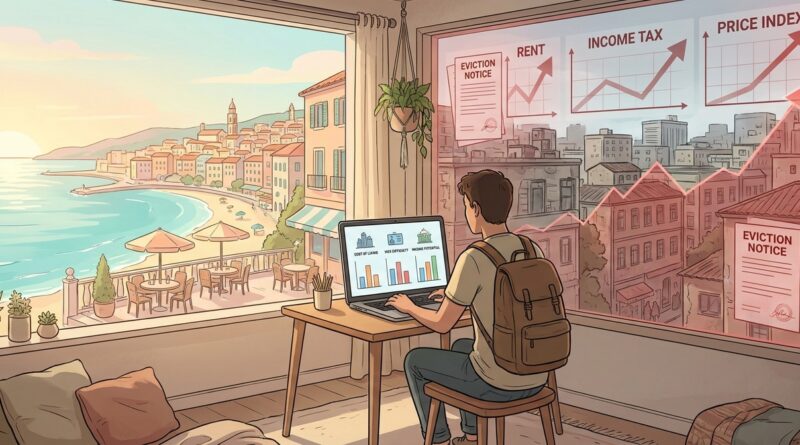
The New ‘Geo-Arbitrage Trap’: Why Chasing Cheap Cities Can Quietly Kill Your FI Plan
You can feel the panic in digital nomad groups right now. One city gets called “the next affordable base,” then six months later rents jump, visa rules tighten, and suddenly the math that looked great on Instagram stops working. That is the geo arbitrage trap in 2026. People are moving for lower sticker prices without checking whether the move actually improves their savings rate, tax picture, visa stability, and path to financial independence. That frustration is real, especially if you already did the “smart” thing and left an expensive city once before. The hard part is that cheap coffee, low rent screenshots, and sunny apartment tours do not tell you what matters most. They do not show your real monthly burn, your safe savings margin, or how many extra years a bad move can add to your FI plan. If you want geo arbitrage digital nomad cost of living 2026 decisions to work, you need numbers, not vibes.
⚡ In a Hurry? Key Takeaways
- Moving to a cheaper city only helps FI if it clearly raises your savings rate after rent, taxes, visas, flights, insurance, and lifestyle creep.
- Compare cities using your own “all-in monthly cost” and “months to break even,” not social media price lists.
- A city with slightly higher rent but stable visa rules, better healthcare, and fewer surprise costs can be the safer FI choice.
The old geo-arbitrage playbook is breaking
For years, the idea was simple. Earn in a strong currency. Live somewhere cheaper. Save the difference. Repeat until FI gets closer.
That still can work. But the easy version is fading.
Popular nomad hubs are seeing double-digit rent increases. Digital nomad visa income thresholds are climbing. Coworking, short-term rentals, and imported-food lifestyles have gotten more expensive. At the same time, many remote workers are not getting matching raises. So the spread between “what you earn” and “what you keep” is getting squeezed.
That is why a move that looks clever on paper can quietly slow your FI timeline instead of speeding it up.
Why social media gives a warped picture
Most online posts focus on the fun numbers. Cheap lunches. Low taxi fares. Beachside apartments that were available for one week in low season.
They often skip the expensive parts:
- Security deposits and agency fees
- Seasonal rent spikes
- Visa renewals and legal paperwork
- International health insurance
- Higher taxes or tax filing complexity
- Extra flights home
- Backup internet and coworking costs
- Moving every few months because long leases are hard to get
Those costs matter because FI is not built on cheap smoothies. It is built on consistent surplus cash.
The number that matters most is your savings rate
If you remember one thing, make it this. A city is not “cheap” if it does not improve your savings rate.
Let’s say you bring in $5,000 a month after business expenses but before personal spending.
City A, the “cheap” hotspot
Your monthly costs look like this:
- Rent: $1,400
- Utilities and internet: $120
- Food: $550
- Transport: $120
- Coworking: $180
- Insurance: $200
- Visa and admin, averaged monthly: $150
- Flights and resets, averaged monthly: $250
- Miscellaneous: $430
Total monthly spend: $3,400
Monthly savings: $1,600
Savings rate: 32%
City B, not as trendy but more stable
- Rent: $1,650
- Utilities and internet: $110
- Food: $500
- Transport: $70
- Coworking: $120
- Insurance: $200
- Visa and admin, averaged monthly: $40
- Flights and resets, averaged monthly: $80
- Miscellaneous: $380
Total monthly spend: $3,150
Monthly savings: $1,850
Savings rate: 37%
City A looked cheaper. City B actually gets you closer to FI.
The hidden costs that wreck the plan
1. Visa thresholds are rising
This is a big one. Some countries now require proof of income that is much higher than what many freelancers, contractors, and remote employees can comfortably show every single month. That means the “cheap city” may not even be available to you long term, or it may force you into legal and financial gymnastics.
If your work situation already feels shaky, read The New Remote Work Reality: Why ‘Work From Anywhere’ Jobs Are Quietly Disappearing (And What To Do Instead in 2026). It explains why many people cannot assume unlimited location freedom anymore.
2. Rent inflation hits nomad hubs fast
The first wave of nomads finds a bargain. The second wave finds a “great value.” The third wave finds prices that are no longer a bargain at all.
If a neighborhood is heavily promoted in expat groups, assume the market already knows. Short-term landlords are not asleep. They are watching demand too.
3. Cheap places can create expensive habits
This sounds backward, but it happens all the time. People save on rent, then spend more because everything feels affordable. More cafe meals. More flights. More weekend trips. More nights out because “it is only $20.”
Your FI plan does not care that each purchase felt small. It only sees the total.
4. Currency and tax surprises
A city can look attractive until exchange rates move against you. Or until you realize being there long enough changes your tax obligations. Or until local bank transfers, ATM fees, and foreign card charges quietly stack up.
None of this is dramatic. That is why it is dangerous.
A simple framework to compare any two or three cities
You do not need a giant spreadsheet with 40 tabs. You need a clean scorecard.
Step 1: Calculate your all-in monthly cost
Use real numbers for each city:
- Housing
- Utilities
- Internet and phone
- Food
- Transport
- Healthcare and insurance
- Coworking or backup workspace
- Visa costs, divided monthly
- Flights, divided monthly
- Taxes or compliance costs
- Fun money
- Buffer for inflation or surprises
Then compare that total against your actual income, not your best month, your average month.
Step 2: Check your FI savings rate
Use this simple formula:
Savings rate = monthly savings ÷ monthly income
If your move does not improve this number in a clear, durable way, it may not be worth it.
Step 3: Score visa stability
Ask:
- How long can I legally stay?
- What income proof is required?
- How often do rules change?
- Would one weak income month put my status at risk?
A lower-cost city with unstable legal footing is not really lower risk.
Step 4: Add a friction score
This is the human side. Give each city a score from 1 to 5 for:
- Time zone fit with your work
- Internet reliability
- Healthcare access
- Safety
- Ease of renting
- Language barrier
If a city constantly makes work harder, your income can drop. Then your “cheap” city becomes very expensive.
Step 5: Calculate break-even time
Moving costs money. Flights, deposits, setup costs, gear, maybe overlapping rent.
If a move costs $3,000 and only improves your monthly savings by $150, your break-even point is 20 months. That is too long for many nomads, especially if rents are rising fast.
If another move costs the same but improves savings by $500 a month, you break even in 6 months. Much better.
Red flags that a “cheap hub” is no longer cheap for you
- Rent takes more than 30 to 35 percent of your take-home income
- You need short-term rentals for more than three months
- Visa income requirements are above your reliable average income
- You need frequent visa runs or border resets
- Your coworking, transport, and flight costs erase the rent savings
- You save less than you did in your previous base
- You are relying on “I will spend less once I settle in” without proof
If two or three of those are true, pause before booking.
What a smarter FI-first move looks like
A better move is often less exciting online. It may not be the hottest nomad city. It may not have the most content creators talking about it.
But it usually has these traits:
- Rent that is stable, not just temporarily low
- A visa path you can realistically maintain
- Good enough healthcare and internet
- Lower moving friction
- A routine that supports work, not constant travel spending
- A clear boost to your savings rate
That is boring. Boring is good. Boring is how FI happens.
At a Glance: Comparison
| Feature/Aspect | Details | Verdict |
|---|---|---|
| Headline cost of living | Social posts usually show rent, food, and fun, but skip visa fees, insurance, flights, and setup costs. | Useful starting point, not enough to make the decision. |
| All-in monthly cost | Includes housing, admin, taxes, transport, workspace, and hidden recurring costs. | This is the number that should drive your city choice. |
| FI impact | The best city is the one that raises your savings rate and keeps your income stable over time. | A slightly pricier but steadier base often wins. |
Conclusion
The real problem in geo arbitrage digital nomad cost of living 2026 is not that cheap cities no longer exist. It is that the easy shortcut no longer works the way people think it does. Social feeds show low sticker prices, but underneath that, visa income rules are rising, rents in old bargain hubs are climbing fast, and many remote-friendly jobs are not keeping up with inflation. So “just move somewhere cheaper” is no longer a reliable FI strategy by itself. The fix is simple, even if it takes a bit more discipline. Rank the cities you are considering by your own all-in numbers, your real savings rate, and your legal and work stability. Do that, and you give yourself a much better shot at choosing a base that helps, not hurts. One careful decision now can save you years on the road to FI.