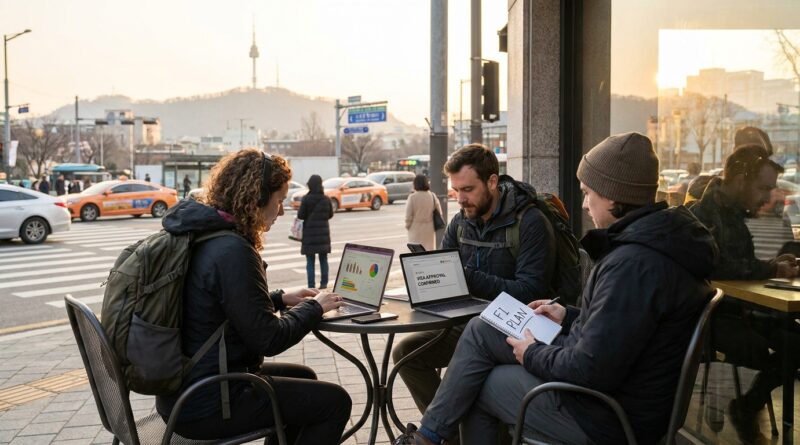
South Korea’s New Digital Nomad Visa Just Got Easier: How To Run The Numbers Before You Jump
You see one viral reel about Seoul cafes, fast trains, and spotless streets, and suddenly your brain is planning a one way flight. I get it. South Korea looks like the rare digital nomad option that feels organized, safe, and exciting at the same time. But this is exactly where people mess up. They compare South Korea to cheap beach hubs, forget rent deposits, underestimate health insurance and visa paperwork, then wonder why their savings rate falls apart six months later. If you are chasing FI, the question is not “Can I make it work?” It is “What does this do to my runway, my monthly burn, and my margin for error?” The good news is that South Korea’s updated digital nomad visa rules make the move more realistic for remote workers than before. The less fun news is that “more realistic” does not always mean “financially smart.” Before you book anything, run the numbers like a grown-up with goals, not like a tourist with good Wi-Fi.
⚡ In a Hurry? Key Takeaways
- South Korea’s easier digital nomad visa is attractive, but it only makes sense if your after-tax income still supports your target savings rate after rent, insurance, and currency swings.
- Build a Korea test budget using three cases. Best case, expected case, and ugly case. Include housing deposits, visa fees, and at least a 10 to 15 percent won exchange buffer.
- If moving to Seoul cuts your FI progress too hard, consider a shorter trial stay or a lower-cost city like Busan before committing to a full visa plan.
Why this visa is suddenly everywhere
The timing makes sense. South Korea wants more remote talent. Remote workers want something more stable than the usual “cheap paradise” sales pitch. And people who are tired of inflation, shaky visas, and random infrastructure problems are looking for a place that feels solid.
That is why the search term south korea digital nomad visa 2026 cost of living for remote workers is about to get busy.
South Korea offers a lot that appeals to the practical nomad crowd. Strong internet. Reliable transit. Big-city energy. Good healthcare. A deep cafe and coworking culture. Plenty to like.
Still, “good place to live” and “good place for your FI plan” are not always the same thing.
First, what changed with the digital nomad visa?
The fine print can shift, so always check official government sources before applying. Broadly, the recent changes have made the visa easier or more appealing by lowering friction around eligibility, stay planning, or supporting documents compared with the earlier rollout.
That matters because the old story with many remote worker visas was simple. They looked great on YouTube, then hit you with income thresholds, odd document rules, tax confusion, and expensive insurance requirements.
South Korea seems to be trying to smooth some of that out.
But easier paperwork does not change the core math. Your life in Korea will still be priced in Korean won, and your FI plan is still built on cash flow.
The real question: what will Korea do to your savings rate?
If you are mid-journey to FI, your savings rate is the engine. A move that cuts your savings rate from 45 percent to 20 percent is not a lifestyle tweak. It is a major change to your timeline.
Start with this simple formula
New monthly savings rate = (after-tax income – total Korea monthly spending) / after-tax income
That is it. Not glamorous, but very useful.
Now fill in the spending side honestly.
Your Korea monthly spending should include:
- Rent
- Housing deposit or key money impact
- Utilities
- Mobile phone and home internet
- National or private health insurance
- Groceries
- Eating out and coffee
- Transit
- Coworking, if needed
- Visa fees and document costs, spread monthly
- Flights home or regional travel, spread monthly
- FX buffer for currency swings
Most people remember rent and food. They forget deposits, paperwork costs, and exchange-rate pain.
What the cost of living looks like for remote workers
South Korea is not the cheapest nomad option in Asia, especially if you want Seoul and your own place. It can still work well, but only if your income is strong enough.
Seoul versus Busan
Seoul is the obvious draw, but it is also where your budget gets tested hardest. A small studio in a central or popular area can cost far more than social media suggests, especially if you want flexible terms as a foreigner.
Busan can be the smarter middle path. You still get urban life, transit, and strong infrastructure, but often with lower housing costs and a slower pace.
Rough monthly budget ranges
These are ballpark planning numbers for a solo remote worker in 2026-style pricing, not promises.
- Frugal, outside prime Seoul areas or in Busan: $1,600 to $2,200
- Comfortable, modest Seoul setup: $2,300 to $3,200
- Comfortable central Seoul with flexibility and lots of eating out: $3,300 to $4,500+
Those numbers can move fast depending on housing. That is the line item to watch.
The housing trap that catches people off guard
If you know anything about Korean housing, you have probably heard about large deposits. Even when you use shorter-term foreigner-friendly rentals instead of a standard local lease, you often pay a premium for that flexibility.
So you can get squeezed in one of two ways.
- Big deposit, lower monthly rent
- Smaller deposit, much higher monthly rent
For FI-minded readers, the deposit issue matters more than it first appears. Even if you get that money back later, it is still cash tied up and not earning elsewhere. If you need to park several thousand dollars just to get housed, that affects your liquidity and emergency planning.
Ask these housing questions before signing anything
- How much is the deposit?
- What utilities are excluded?
- Is the contract foreigner-friendly and visa-friendly?
- How long is the minimum stay?
- What are the penalties for leaving early?
- How close is it to a subway line or bus route?
Do not ignore taxes just because the visa says “digital nomad”
This part is boring, and it can also get expensive.
Your tax outcome depends on your citizenship, tax residence, employer setup, contract type, and how long you stay. Some people assume that if they are paid abroad, everything stays simple. That is not always true.
You need to check:
- Whether your home country taxes worldwide income
- Whether time spent in Korea changes your tax residence status
- Whether your employer allows long-term overseas work
- Whether your visa has restrictions around local economic activity
If you are a contractor, this is even more important. A tax surprise can wipe out any lifestyle upside fast.
Run three scenarios before you go
This is the numbers-first part most people skip.
Scenario 1: Best case
You find good housing, the won stays favorable, your income is stable, and you like the lifestyle enough to avoid expensive weekend escapes.
Scenario 2: Expected case
Rent is slightly higher than planned. You spend more on cafes, transport, and eating out. A few setup costs hit in the first two months.
Scenario 3: Ugly case
The won moves against you, your employer localizes pay or cuts bonuses, housing is more expensive than expected, and you make one unplanned trip home.
If the ugly case blows up your emergency fund or drops your savings rate below your comfort line, the move may still be possible, but it is not low-risk.
A simple example
Let’s say your after-tax monthly income is $5,500.
- Current monthly spend at home: $2,700
- Current monthly saving: $2,800
- Current savings rate: 51%
Now model Korea.
- Expected Korea spend: $3,600
- New monthly saving: $1,900
- New savings rate: 35%
That is not necessarily bad. But it means your FI path just slowed down. Maybe that trade is worth it. Maybe it is not. At least now you know.
Currency swings matter more than people think
If you earn in dollars, euros, pounds, or another currency and spend in won, exchange rates can quietly change your monthly life.
Do not build your budget around today’s most favorable rate. Build in a buffer.
A practical rule
Add a 10 to 15 percent cushion to your Korea monthly budget if your income is not in won.
If your budget only works when exchange rates stay perfect, then your budget does not really work.
Paperwork is easier now, not effortless
This is where excitement often turns into stress. You still may need proof of income, employment documentation, insurance, passport validity, clean records, and application-specific forms. There can also be translation, apostille, and timing issues.
That does not mean “do not go.” It means start early and keep a checklist.
Your pre-application checklist
- Proof of remote employment or self-employment
- Income records that clearly meet the requirement
- Valid health insurance that meets visa rules
- Passport validity beyond your stay
- Emergency fund separate from moving costs
- Housing plan for the first one to three months
Who this visa makes the most sense for
It is a strong fit if you are:
- Earning a solid remote income that is not likely to be localized downward
- Okay with a moderate to high urban cost of living
- Looking for structure, safety, and infrastructure over rock-bottom prices
- Able to absorb setup costs without touching your emergency fund
It is a weaker fit if you are:
- Barely meeting the income threshold
- Dependent on keeping your savings rate extremely high
- Prone to lifestyle inflation in expensive, exciting cities
- Unsure about tax consequences or employer approval
If you want to test Korea without wrecking your plan
You do not need to go all in immediately.
Try one of these safer approaches
- Do a one to three month scouting trip first
- Start in Busan instead of Seoul
- Use a hard monthly cap and review spending weekly
- Keep your home base until you know your true Korea burn rate
- Do not sign a long housing deal until you understand the neighborhood and commute patterns
This is not fear talking. It is just what good planning looks like.
At a Glance: Comparison
| Feature/Aspect | Details | Verdict |
|---|---|---|
| Visa appeal | Easier access than before, strong infrastructure, attractive for stable remote work | Good opportunity, but not an automatic yes |
| Cost of living | Higher than many Asia nomad hubs, especially in Seoul and for flexible housing | Works best for higher earners |
| FI impact | Can slow savings rate if you underprice rent, taxes, insurance, or FX risk | Run best, expected, and ugly case budgets first |
Conclusion
South Korea’s relaxed digital nomad visa rules are going to get a lot of hype, and some of that hype is deserved. For remote workers who want stable infrastructure, strong transit, and a more grounded alternative to the usual beach-town loop, it is a real option. But if you are building toward FI, excitement is not enough. You need a clean budget, a currency buffer, a housing plan, and a clear view of how the move changes your savings rate. That is the whole game. If the numbers still work after you stress test them, great. Go enjoy Seoul or Busan with confidence. If they do not, you just saved yourself from turning a trendy visa into a long, expensive detour. That is the point. Ride the opportunity if it fits, but do not let internet excitement talk you out of your own math.