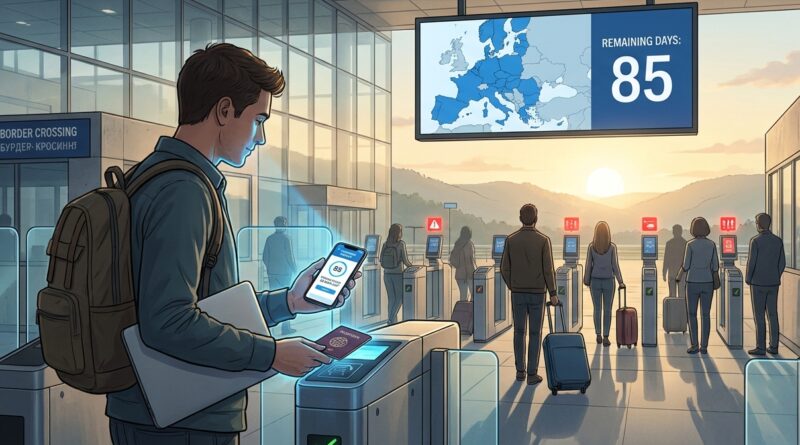
Schengen’s New Biometric Border Rules: How To Keep Your Nomad Life Legal Without Blowing Up Your FI Plan
You could get away with being a little fuzzy on Schengen days before. A border agent might glance at your passport stamps, ask a question, and wave you through. That comfort blanket is going away. From April 2026, the Schengen Entry/Exit System will log non-EU travelers electronically, including biometric data and exact entry and exit dates. If you are an American, Brit, or other non-EU nomad who has been doing the classic 90 days in, 90 days out routine with a rough spreadsheet and good intentions, this matters a lot. One bad count will not just be an awkward conversation at passport control. It can create an automatic overstay flag, trigger fines, and make future entries harder. If your financial independence plan depends on low-friction travel, cheap base hopping, and keeping residency options open, you need a cleaner system now. The good news is this is manageable if you stop treating Schengen timing like a travel hack and start treating it like compliance.
⚡ In a Hurry? Key Takeaways
- The Schengen Entry/Exit System from 2026 means your days in the zone will be counted automatically, so guessing your 90/180 total is no longer safe.
- Use a rolling 180-day tracker, keep a same-day travel log, and plan buffer days instead of aiming for exactly 90.
- This protects you from fines, entry problems, and forced moves that can blow up a lean FI or digital nomad plan.
What actually changes in 2026
The big shift is simple. Border control moves from messy passport stamps to a shared digital record.
Under the Schengen Entry/Exit System, non-EU travelers entering or leaving participating countries will have their crossings logged. The system is built to record when you entered, when you left, and whether you stayed longer than allowed. It also uses biometric data, such as fingerprints and a facial image, to tie those records to you.
For the average traveler, this may just mean a different line at the airport and a camera at the kiosk. For a digital nomad, it means the old gray areas get much smaller. If you have been relying on faded stamps, confusing land crossings, or “close enough” date math, that approach becomes risky fast.
Why nomads should care more than vacationers
A tourist who visits Paris for 10 days each summer probably will not feel much pain. A nomad spending three months in Spain, six weeks in Germany, a month in Portugal, then trying to re-enter through Italy absolutely will.
Your lifestyle often depends on flexibility. Cheap flight pops up. You take it. A sublet opens in Lisbon. You stay an extra week. A friend invites you to Croatia, then you swing back into Schengen through Slovenia. That casual movement is exactly where problems start, because the 90/180 rule is not based on calendar months. It is a rolling count.
And once the system is fully live, border staff do not need to “figure it out” from your passport. The computer will do the math.
The 90/180 rule, in plain English
Here is the version to remember.
You can spend up to 90 days in the Schengen Area within any rolling 180-day period, unless you have a visa or residence permit that gives you different rights.
“Rolling” is the part that trips people up. It does not reset on January 1. It does not reset every time you leave. Every day you are in Schengen, officials can look back 180 days and count how many of those days were spent inside the zone.
A quick example
Let’s say you spend:
January 1 to February 28 in Spain. That is 59 days.
April 1 to April 30 in Italy. Now you are at 89 days in the previous 180-day window.
If you pop back into France on May 10 thinking, “New month, new trip,” you may already be out of room.
This is why people get caught. The rule feels simple until you move around a lot.
What counts as a real risk now
Before, many travelers treated Schengen compliance like something you could explain later. That is a bad bet now.
Real risks include:
- Automatic overstay flags in the system.
- Fines at the border.
- Extra questioning on later trips.
- Denied entry.
- A future visa or residency application getting a harder look.
- Sudden need to leave your base country and find new housing fast.
If you are building a financial independence lifestyle, forced moves are expensive. Last-minute flights cost more. Short-notice apartments cost more. Storage, pet logistics, tax advice, and legal help cost more. Even a small compliance mistake can turn into a very non-small money problem.
The other squeeze: rising digital nomad visa income floors
There is another reason not to wing this. Several countries have raised, or are expected to keep raising, income requirements for digital nomad and related long-stay visas. So if you overstay under the tourist rules and think, “Fine, I’ll just switch to a nomad visa somewhere,” that backup plan may be harder or pricier than it used to be.
You may need higher monthly income, bigger savings, private insurance, cleaner documentation, and a more stable paper trail than a lot of lean-FI travelers prefer.
That means legal travel discipline matters more. If you can stay compliant on the front end, you keep more options open on the back end.
The low-admin method that actually works
You do not need a complicated legal dashboard. You need a boring, reliable routine.
1. Track every Schengen day in one place
Pick one system and stick to it. A spreadsheet is fine. A dedicated Schengen calculator app is fine too. The tool matters less than consistency.
Track:
- Date you entered Schengen
- Country
- Date you exited Schengen
- Total days used for that trip
- Running total in the past 180 days
Do not maintain three half-correct versions across Notes, Google Calendar, and your memory.
2. Log travel the same day
This is the habit that saves you. The same day you cross a border, update your tracker. Not next week. Not when you land. Same day.
Why? Because travel days blur together. Overnight buses, delayed ferries, and red-eye flights make people misremember dates all the time.
3. Build a buffer of at least 7 to 10 days
Do not aim for exactly 90 days. That is the gambler’s version of travel planning.
A safer target is 80 to 83 days max in a rolling 180-day period unless you are very sure of your record and your itinerary is stable. That gives you room for disruptions, missed exits, medical issues, canceled flights, or simple math errors.
4. Separate Schengen and non-Schengen base options
Make two lists.
List one is your Schengen countries. List two is your non-Schengen fallback countries. Think UK, Ireland, Albania, Montenegro, Georgia, Turkey, or other places that fit your passport rights and lifestyle.
This way, when your Schengen days get tight, you are not panic-googling “where can I legally stay next week?”
5. Keep proof even though the system is digital
Yes, the Entry/Exit System records crossings. Keep your own backup anyway.
Save:
- Boarding passes
- Train or ferry tickets
- Accommodation receipts
- A simple travel timeline in cloud storage
Most of the time you will never need this. But if there is a mismatch in the record, your own evidence can help.
A simple planning formula for FI-minded nomads
If your goal is freedom with low admin, stop planning country by country. Start planning in 6-month blocks.
The 60-60-60 model
Try this as a starting point:
- Up to 60 days in Schengen base A
- Up to 30 days moving within Schengen, if desired
- At least 60 to 90 days outside Schengen
This keeps you under the 90/180 rule with some breathing room. It also makes budgeting easier. You can line up lower-cost non-Schengen periods to offset expensive Western Europe months.
It is not glamorous. It is effective.
Common mistakes that can get expensive fast
Counting months instead of days
“Three months” is not always 90 days. Count actual dates.
Forgetting partial travel days count
Entry and exit days generally count as days of stay. Do not assume a late-night departure means a free day.
Assuming all Europe works the same way
Schengen is not the same as the EU. Some EU countries are outside Schengen, and some non-EU countries are inside Schengen arrangements or closely tied to them. Check before you book.
Trusting old blog posts
Rules, launch dates, and enforcement details can change. Use official government and EU sources for final confirmation, especially if you are planning around a tight timeline.
Thinking overstay is just a small fine
Sometimes it is. Sometimes it turns into future travel headaches. If Europe is part of your long-range lifestyle plan, treat your record as an asset worth protecting.
When to consider a proper visa instead of the tourist rule
If you keep wanting to spend most of the year in one Schengen country, the tourist route may no longer fit your life.
A real visa or residence permit may make more sense if:
- You want one stable base for 6 to 12 months
- You are tired of rolling-day math
- You have enough income to meet visa thresholds
- You want better odds for future long-term residency
- You need predictable housing, banking, or healthcare access
Yes, the paperwork can be annoying. But compared with fines, forced exits, and broken lease plans, proper paperwork may be the cheaper option.
How to make this practical, not stressful
The trick is to reduce decision fatigue.
Set one monthly “travel compliance check” on your calendar. Ten minutes. Review your day count, your next crossing, and your backup non-Schengen option. That is it.
If you travel with a partner, each person should keep their own record. Do not assume two passports equal two identical legal situations. Different citizenship can mean different rights.
And if you are getting close to the line, do not look for loopholes on Reddit at midnight. Adjust the plan earlier.
At a Glance: Comparison
| Feature/Aspect | Details | Verdict |
|---|---|---|
| Old border reality | Passport stamps, human interpretation, and more room for confusion about exact Schengen day counts. | No longer safe to rely on. |
| Entry/Exit System in 2026 | Biometric registration and automatic digital logging of entry and exit dates for non-EU travelers. | More accurate, but much less forgiving. |
| Best nomad strategy | Track every day, keep a 7 to 10 day buffer, and plan regular non-Schengen periods. | Lowest-stress way to stay legal and protect your FI plan. |
Conclusion
Schengen’s fully live Entry/Exit System changes the game for digital nomads. Casual country-hopping and fuzzy 90/180 tracking are becoming real legal and financial risks, especially for Americans and Brits who have gotten used to making it work with rough math and passport stamps. Add rising income floors on digital nomad visas, and the margin for error gets even smaller. The smart move is not panic. It is process. Keep one accurate tracker, update it on travel days, leave yourself buffer days, and plan non-Schengen time before you need it. That small bit of admin protects your freedom to move, keeps future residency paths cleaner, and helps you avoid surprise costs or forced relocations that can wreck a carefully built financial independence plan.