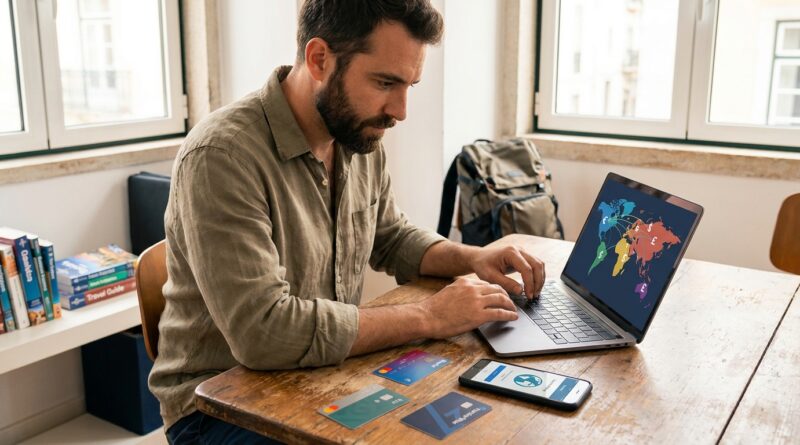
The New ‘Bank-From-Anywhere Stack’: How To Build A Borderless Money System Before You Go Nomad
You can plan the perfect nomad life, get the visa, book the cheap apartment, and still have everything fall apart because your money setup is held together with one debit card and a prayer. That is the part people do not talk about enough. The first frozen card overseas, the first delayed transfer, or the first time a bank asks you to verify a phone number tied to a SIM card you threw away six months ago, it stops feeling like a small admin problem. It feels like your whole life is fragile. A solid digital nomad banking setup fixes that. The goal is not to collect trendy apps. It is to build a simple, boring, reliable system that keeps working when you move countries, switch currencies, lose a card, or hit tax season. Think of it as your personal bank-from-anywhere stack. You want backups, clear roles for each account, and fewer points of failure.
⚡ In a Hurry? Key Takeaways
- A smart digital nomad banking setup uses at least three layers: a home base bank, a travel-friendly spending account, and a separate savings or emergency backup.
- Start before you leave. Open accounts, test transfers, set alerts, save backup cards, and make sure you can log in without relying on one phone number.
- The biggest risk is not fees. It is single-point failure. One frozen card or locked app should never strand you abroad.
Why one account is not a system
A lot of would-be nomads still run everything through one traditional bank account plus one fintech app they signed up for after seeing a YouTube ad. That is not a money system. That is a weak link.
Banks and payment apps all have blind spots. A traditional bank may be good for stability, but terrible for foreign ATM fees or overseas fraud checks. A fintech app may be cheap and fast, but less helpful when something breaks and you need a human. Some services are great for holding multiple currencies, but not ideal for cash withdrawals or receiving client payments.
You do not need dozens of accounts. You do need a plan where each account has a job.
The 4-part bank-from-anywhere stack
1. Your home base bank
This is your anchor. It is the account tied to your legal and financial life back home. Think paychecks, tax records, government correspondence, and the place you can point to when an institution asks, “Where do you bank?”
What you want here is boring reliability. Strong customer service. Clear fraud handling. Easy wire support if you need it. Stable online access. Good records.
This is usually not the card you swipe every day in foreign cafes. It is your foundation.
2. Your travel spending account
This is the account for day-to-day life on the road. It should have low or no foreign transaction fees, decent exchange rates, app-based controls, and easy card replacement.
This account protects your main money by creating distance. Instead of exposing your core bank account every time you buy dinner or pull cash from an ATM, you move over only what you need.
If this card gets skimmed or frozen, it is annoying. It should not be catastrophic.
3. Your emergency reserve account
This is the money you do not touch unless something goes wrong. Lost wallet. Medical issue. Apartment problem. A month where transfers lag and rent is due now.
Keep this separate from daily spending. Separate logins are even better. Some people keep it in a second bank. Others use a savings account with a linked debit card stored away as backup.
The point is simple. Emergencies should not compete with brunch money.
4. Your transfer and multi-currency tool
This layer helps you move money between countries, hold different currencies if needed, and avoid getting destroyed by bad exchange rates. For many nomads, this is where a modern fintech tool actually shines.
But do not confuse “useful tool” with “whole financial life.” These services are best treated as part of the stack, not the entire stack.
How to build your digital nomad banking setup before you leave
Step 1. Give every account one clear job
If one account receives income, spends daily, holds savings, and handles emergencies, you are asking for chaos. Split roles clearly.
- Home base bank: core financial identity
- Travel account: card spending and ATM use
- Emergency account: backup cash
- Transfer tool: moving and converting money
This makes problems smaller and easier to solve.
Step 2. Test everything while you are still at home
This part matters more than people think. Do not wait until you are in Lisbon or Medellín to learn your transfer limit is too low or your bank blocks foreign logins.
Before you leave:
- Send a small transfer between your accounts
- Use each debit card at an ATM and a point-of-sale terminal
- Turn travel notices and alerts on if your bank still uses them
- Make sure two-factor login does not depend on one dead phone number
- Check whether virtual cards are available
The best time to find a flaw is before your flight.
Step 3. Fix your phone number problem
This catches a lot of people. Your money can be perfectly fine, but you still get locked out because your bank sends security codes to a home-country number you no longer use.
Try to set up app-based authentication, hardware security keys where supported, or at least a long-term number you can keep active. Also make sure your backup email is current and secured.
If your whole banking life depends on one SIM card, that is a weak spot.
Step 4. Keep cards in different places
Never carry every card in one wallet. That sounds obvious, but many people still do it.
Keep one card on you. Keep one in your accommodation. If you travel with a partner, swap one backup card between bags. Also save card support numbers somewhere secure, not just inside the banking app that might be locked.
Step 5. Build a simple money flow
The best systems are easy to repeat. For example:
- Income lands in your home base account
- Monthly transfer goes to your travel spending account
- Emergency reserve stays untouched in a separate account
- Large currency conversions happen through your transfer tool only when needed
That flow reduces random transfers and lowers your chances of making a mistake when tired, jet-lagged, or under pressure.
What usually goes wrong abroad
Card freezes
Sometimes it is fraud protection doing its job. Sometimes it is a false alarm because your spending pattern changed too quickly. Either way, if you have one card, your day gets bad fast.
A proper digital nomad banking setup assumes one card will fail eventually.
Bad exchange rates hiding in plain sight
A lot of people obsess over monthly account fees and then quietly lose much more on poor conversion rates, dynamic currency conversion at checkout, or ATM operator charges.
Always pay in the local currency unless you know exactly why you are not. If a terminal asks whether you want to be charged in dollars or your home currency, local currency is usually the better choice.
Transfer delays
International transfers do not always move at app-store speed. Compliance checks, holidays, banking cutoffs, and mismatched account details can all slow things down.
Do not send rent money at the last possible minute. Leave margin.
Tax season confusion
This is where a messy setup turns expensive. If you have money scattered across personal accounts, apps, and currencies with no records, tax prep becomes a scavenger hunt.
Keep statements. Download transaction histories. Use one spreadsheet if you must. Future you will be grateful.
Do you need local bank accounts too?
Sometimes yes. Often no, at least not right away.
If you are staying somewhere long enough to need local bill pay, local payroll, or easier rent transfers, a local account can make sense. But many new nomads open accounts too early, in too many countries, and create paperwork they do not understand.
Start with a strong portable stack first. Then add local banking only when there is a clear reason.
If your plans include moving through several countries in one region, this matters even more. For example, if you are trying to connect a longer Latin America route into one practical financial plan, South America’s New Digital Nomad Corridor: How To Turn Uruguay, Argentina, Brazil, Colombia And Ecuador Into One FI Master Plan is useful because regional movement changes how often you will need cash, transfers, and backup options.
How many accounts is too many?
If you cannot explain your setup on an index card, it is probably too messy.
For most people, three to five financial tools is enough:
- One stable home bank
- One travel-friendly spending account
- One backup or emergency account
- One transfer or multi-currency tool
- Optional credit card for hotels, car rentals, and backup purchasing power
That is a system. Twelve random apps is a hobby.
Security habits that matter more than fancy features
Use separate passwords
Yes, it is annoying. Use a password manager. Banking logins should not share passwords with your email, airline account, or coworking app.
Lock down your email
Your email is often the reset key to everything else. If someone gets your email, they may not need to hack your bank directly.
Turn on alerts
Real-time transaction alerts help you spot fraud quickly. They also help you keep track of spending when moving through multiple currencies.
Keep a paper backup
Write down emergency numbers, partial account references, and your action plan if your phone is lost. Old-school beats locked-out when you are stressed.
A simple setup for most new nomads
If you want the plain-English version, here it is:
- Keep your main income and legal financial footprint in a solid home-country bank
- Use a separate low-fee travel account for spending abroad
- Hold emergency cash in another account you do not touch
- Use one trusted transfer tool for international moves and currency exchange
- Carry at least two cards from different issuers
That alone solves most of the chaos people stumble into.
At a Glance: Comparison
| Feature/Aspect | Details | Verdict |
|---|---|---|
| Single bank account | Simple at first, but one freeze, fraud alert, or login issue can shut down your whole money life abroad. | Too risky for long-term nomad life |
| Layered account setup | Uses separate tools for core banking, daily spending, emergency savings, and transfers. | Best balance of flexibility and safety |
| Too many fintech apps | Can lower fees in some cases, but often creates confusion, weak record-keeping, and more support headaches. | Only useful if each tool has a clear purpose |
Conclusion
A good digital nomad banking setup is not flashy. That is the point. It is meant to keep your life running when travel gets messy, cards fail, apps glitch, or tax paperwork catches up with you. Right now, there are more fintech launches, cross-border payment tools, and mobile-first banking options than ever. That is great news, but only if you turn them into an intentional system instead of a pile of accounts. Do that, and you can avoid hidden fees, reduce the chance of account freezes wrecking your budget, and protect the freedom you are trying to build in the first place. Your money should travel as well as you do.