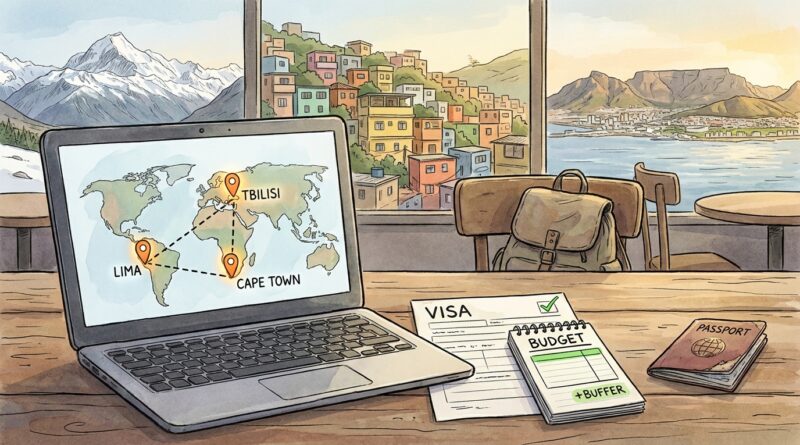
The New ‘Low‑Friction Nomad Triangle’: How To Use Georgia, Peru And South Africa To Cut Visa Paperwork And Stretch Your FI Runway
If you have been doom-scrolling Spain and Portugal visa forums, I get it. A lot of smart, solvent remote workers are hitting the same wall. The dream is simple. Earn online, live somewhere pleasant, stay legal, and keep your savings rate high. The reality has started to look like document apostilles, appointment shortages, tax surprises, and months of waiting for a maybe. That is why the new low-friction path matters so much right now. Fresh digital nomad index data shows a quieter trio rising to the top for 2026: Georgia, Peru, and South Africa. Not because they are trendy, but because they are practical. Less paperwork. Faster setup. More room to test a location before you commit your whole life to it. For anyone working toward financial independence, that is not a small detail. It can be the difference between a clean runway and an expensive detour.
⚡ In a Hurry? Key Takeaways
- Georgia, Peru, and South Africa are shaping up as the easiest digital nomad countries for 2026 if your goal is legal stays with less admin pain.
- Start with Georgia for the easiest landing, then use Peru and South Africa as seasonal or time-zone friendly second and third bases.
- The real savings are not just cheap rent. They come from avoiding visa delays, surprise tax residency, and lawyer-heavy applications.
Why this matters more than “cheap places to live” lists
Most nomad roundups focus on coffee shops, rent, and beach photos. Nice, but incomplete.
If you are building toward FI, friction matters just as much as cost. Every extra certified document, every consulate appointment, every month stuck in processing is time and money gone. It also adds stress, which has a way of making people make expensive decisions fast.
The newest Digital Nomad Friction Index is useful because it points to something experienced travelers already know. The biggest-name options are getting harder to enter and harder to model financially. Georgia, Peru, and South Africa look attractive because they let you start sooner and stay legal with fewer moving parts.
What “low-friction” actually means
Let’s make this plain. A low-friction nomad country usually gives you some mix of:
- Simple entry rules
- Reasonable proof-of-income demands
- Less waiting around for approval
- A realistic path to stay for months, not just a rushed holiday
- Lower odds of nasty tax surprises if you plan your days carefully
That last one matters a lot. You do not need the absolute cheapest country. You need the one where your legal status, tax position, and work schedule still make sense after the excitement wears off.
The Nomad Triangle: Why these three work well together
Georgia: Best first stop for a soft landing
Georgia has become the “just get moving” answer for a reason. For many nationalities, entry is simple compared with Western Europe. Setup is light. Daily costs can still be reasonable, especially outside the fanciest pockets of Tbilisi.
For a new nomad, Georgia is the easiest place in this triangle to test your systems. Can you work productively? Can you manage banking, calls, and client expectations? Can you live abroad without turning every week into a logistics project?
If your answer is “I want a legal base fast,” Georgia is the obvious first leg.
Peru: Good value and useful for Americas time zones
Peru is compelling if your income comes from North America or Latin America. It keeps you closer to client hours than Eurasia does, and for many people it offers a better balance of cost and lifestyle than overhyped alternatives.
It also works as a reset point in the triangle. If Georgia becomes too far from your client base or your sleep schedule starts to suffer, Peru can bring your workday back into line.
South Africa: Strong lifestyle upside with a better work rhythm for Europe and parts of the US
South Africa is often overlooked by people who default to Europe first. That can be a mistake. For many remote workers, especially those serving UK or EU clients, South Africa offers a time-zone sweet spot, strong city infrastructure in key areas, and a lifestyle that feels bigger than the price tag.
It is not the cheapest stop in every category, and you need to be sensible about neighborhood choice and security habits. But from a workability point of view, it belongs in this conversation.
How to use the triangle without stumbling into tax residency
This is where people get sloppy. They assume “nomad” means “tax free.” It does not.
The safer mindset is this: every country has day-count rules, local definitions, and practical enforcement quirks. A common planning idea is to avoid staying long enough in any one country to trigger tax residency under that country’s basic day test, often around the 183-day mark. But that is only the start, not the full answer.
Some countries look at your center of life, local income source, or other ties too. So use this triangle as a planning frame, not a magic spell.
A simple low-drama model
- Georgia for 3 to 4 months
- South Africa for 2 to 4 months
- Peru for 2 to 4 months
- Buffer travel or home-country time for the rest
This kind of spread can help you avoid overcommitting to one jurisdiction while keeping your year flexible. But before you book a whole loop, check your passport privileges, current visa rules, and where you remain tax resident on paper.
What income level makes this realistic?
You do not need startup-founder money. You do need enough margin that a surprise flight, short-term rental premium, or coworking bill does not wreck the month.
Rough reality check
- Lean but workable: $2,000 to $2,800 per month if you live modestly, pick apartments carefully, and avoid constant flights.
- Comfortable solo: $3,000 to $4,500 per month in most versions of this triangle.
- Very comfortable or couple-friendly: $5,000+ per month, especially if you want nicer neighborhoods, regular flights, and more private space.
Georgia is often the easiest place to make the budget work. Peru can also be very manageable. South Africa can swing wider depending on city, transport choices, and housing standards.
If your FI plan depends on saving 40 to 60 percent of your income, do the math based on your dull, normal month. Not your fantasy month.
Time zones: the hidden make-or-break factor
This is one of the most underappreciated parts of nomad life.
You can survive mediocre furniture. You can survive average Wi-Fi for a week. What wears people down is taking client calls at 1 a.m. for months.
Best fit by client base
- US and Canada clients: Peru is usually the easiest.
- UK and Europe clients: South Africa is often excellent. Georgia can also work, especially for later-day schedules.
- Mixed global clients: Georgia is decent if you can cluster meetings and keep boundaries.
One smart way to use the triangle is to match each leg to your busiest quarter. If Q1 is US-heavy, be in Peru. If Q2 is Europe-heavy, move to South Africa. If you need a lower-friction admin base while you regroup, go to Georgia.
Where to keep your banking and “real” residency
This is where a lot of people accidentally create mess. Living somewhere and anchoring your financial life somewhere are not always the same thing.
If your home-country banking works, your brokerage is stable, and your tax residency is clear, do not rush to rebuild everything just because you moved abroad. For many FI-minded nomads, the better move is to keep:
- Your main banking in a stable home or existing tax-resident country
- Your brokerage where reporting is familiar
- Your emergency fund in a boring, reliable setup
- Only day-to-day spending flows moving through travel-friendly cards or multi-currency tools
The goal is simple. Keep your money life boring, even if your geography is not.
What each country is best for
Choose Georgia if you want:
- The easiest first step
- Less paperwork stress
- A useful base to test long-term travel routines
- Good value while keeping options open
Choose Peru if you want:
- Better alignment with the Americas
- Solid value for day-to-day living
- A practical stop that does not feel overprocessed
Choose South Africa if you want:
- A strong work-life setup for Europe-facing schedules
- Big lifestyle upside
- A base that feels more settled and spacious
The catches you should not ignore
None of these countries are magic. A low-friction option is still a real country with real rules.
- Georgia: Rules can change, and what feels easy on entry still needs proper tax and compliance thinking if you stay longer.
- Peru: Immigration practice can feel less predictable than a polished government portal suggests, so check current on-the-ground reports.
- South Africa: Location choice matters. Workability is high in the right areas, but you should take safety and transport planning seriously.
And one more thing. If your work contract bans foreign work, none of this helps until you fix that first.
A practical 2026 game plan
If you are stuck and need a clean next move, here is the simplest route.
- Start with Georgia as your test base.
- Stay long enough to stabilize your work routine, not so long that you drift into tax confusion without a plan.
- Move to Peru if your client base is mostly in the Americas.
- Use South Africa when you need better overlap with Europe or want a higher-quality lifestyle stop.
- Keep your banking and tax home as stable as possible unless you have a strong reason to change it.
- Track your days carefully. Use a spreadsheet. Do not trust your memory.
That is the real value of the triangle. It is not about collecting passport stamps. It is about buying back certainty.
At a Glance: Comparison
| Feature/Aspect | Details | Verdict |
|---|---|---|
| Paperwork and setup | Georgia is the easiest entry point of the three, with Peru and South Africa also looking lighter than Spain or Portugal for many remote workers. | Best reason to start with Georgia. |
| Time-zone fit | Peru works best for Americas clients. South Africa shines for UK and Europe. Georgia is flexible for mixed schedules if you manage your hours well. | Use the triangle based on client geography, not just lifestyle hype. |
| FI friendliness | The big win is lower admin drag, fewer delays, and better odds of avoiding costly visa and tax mistakes when planned carefully. | Strong option for people protecting their savings rate. |
Conclusion
The big story here is not that Georgia, Peru, and South Africa are suddenly perfect. It is that they look refreshingly workable at a moment when many famous nomad destinations feel slower, heavier, and harder to model. The new Digital Nomad Friction Index simply put numbers to what plenty of remote workers already felt. Georgia now stands out as the easiest launch pad, with Peru and South Africa close behind, while Portugal and Spain slip under the weight of backlogs and tax complexity. For anyone chasing financial independence, that matters. Losing three months to visa limbo, or getting surprised by avoidable charges, can wreck a carefully built runway. The good news is that you do not need to wait for a miracle program or pay a small fortune for legal hand-holding just to start. With a sensible triangle, careful day counting, realistic income expectations, and a stable banking setup, you can build a legal, lower-stress nomad year that still supports your FI plan instead of draining it.