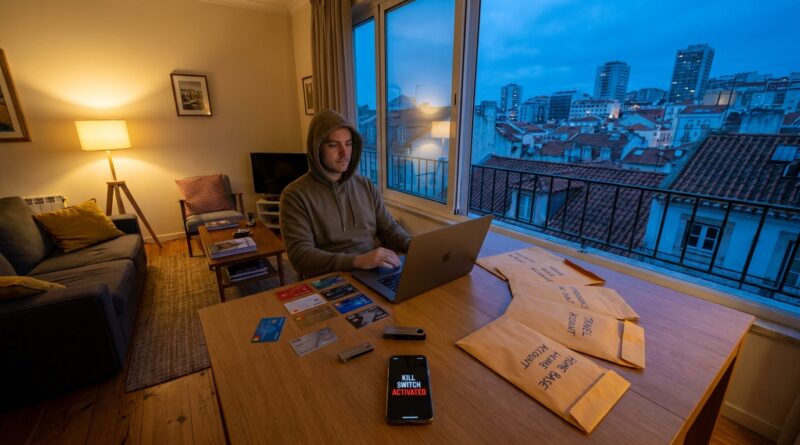
The New ‘Nomad Banking Kill Switch’: How To Lock Down Your Money In 60 Minutes When A Platform Fails Or Gets Hacked
Your bank app works. Your card works. Your exchange account looks fine. Until one morning it does not. That is the part many digital nomads learn too late. A platform gets hacked, a compliance bot freezes your account, or a DeFi protocol suddenly pauses withdrawals. Now your rent, flight, coworking pass, and client payments are all stuck behind a support ticket. It is frustrating, and honestly a little scary, because the whole point of working from anywhere is supposed to be freedom, not begging a chatbot to release your own money. A good digital nomad banking safety plan is not about paranoia. It is about having a simple fallback system you can switch on fast. If one money rail breaks, another needs to be ready. The goal is to lock down your finances and reroute your cash flow within 60 minutes, before a bad day turns into a full travel crisis.
⚡ In a Hurry? Key Takeaways
- Do not keep your income, spending, savings, and emergency cash on the same platform or in the same country risk bucket.
- Build a 60-minute shutdown plan now: backup bank, backup card, backup payment route, and written steps for moving bills and client payments.
- “More apps” is not enough. Real safety comes from separation, tested access, and cash you can reach even if one provider locks you out.
Why “I use several apps” is not the same as being safe
A lot of nomads think they are diversified because they use a fintech app, a crypto exchange, and maybe one traditional bank back home.
That sounds sensible. Sometimes it is not.
If all three depend on the same phone number, the same email account, the same debit card, or the same legal address, one problem can spread fast. Lose your phone, get your identity flagged, or fail a sudden verification check, and your whole setup starts wobbling.
This is why a real digital nomad banking safety plan focuses on separation, not just variety.
What can go wrong?
Usually one of five things:
- A bank or fintech freezes transfers for a compliance review.
- A card issuer blocks foreign spending after “suspicious activity.”
- A crypto platform pauses withdrawals or suffers a hack.
- You lose access to your main phone number or authenticator app.
- A client sends money to an account you can no longer use.
None of these are rare anymore. They are normal modern money risks.
The 60-minute kill switch idea
Think of this as a shutdown and reroute drill for your financial life.
If your main platform fails, you should be able to do four things in under an hour:
- Stop new money from landing in the wrong place.
- Make sure you can still pay for the next 7 to 30 days.
- Protect whatever funds are still accessible.
- Switch your regular spending to backup rails.
You do not need a giant spreadsheet or ten bank accounts. You need a small, boring, well-tested system.
Your core setup: the four-bucket method
The simplest way to make this manageable is to split your money jobs into four buckets.
1. Income bucket
This is where clients, salary, or platform payouts arrive first. It should not be the same place you use for daily spending if you can help it.
Why? Because if your spending card gets skimmed or your everyday app is locked, your incoming money is still protected.
2. Bills and spending bucket
This covers rent, food, transport, subscriptions, and normal life. Keep enough for near-term expenses, not your whole net worth.
3. Emergency cash bucket
This is the money you can reach fast if the rest of your setup breaks. Ideally it lives in a separate institution and is reachable through a different card or withdrawal path.
4. Long-term reserve bucket
This is your larger savings, investment float, or stable reserve. It should be harder to touch casually, but not impossible to reach in a real emergency.
If part of your income is crypto, you should also read The New ‘Crypto Paycheck Buffer’: How To Survive Volatile Markets As A Nomad Without Torching Your FI Plan. It fits nicely with this setup because volatility and access risk are two different problems, and you need a plan for both.
How to build your digital nomad banking safety plan in 60 minutes
Set a timer if it helps. The point is to finish, not overthink.
Minute 0 to 10: List every money rail you use
Open a note and write down:
- Bank accounts
- Fintech apps
- Crypto exchanges and wallets
- Debit and credit cards
- Payment processors
- Where clients currently send money
- Where rent and major bills are paid from
Next to each one, mark what job it does. Income, spending, emergency, or long-term reserve.
You will probably spot overlap right away.
Minute 10 to 20: Find your single points of failure
Now ask these simple questions:
- If this account froze today, what would stop immediately?
- Does more than one service depend on the same card?
- Does more than one service use the same phone number for login recovery?
- Do I have two ways to access cash locally?
- Would client payments still reach me next week if my main app disappeared?
Anything that creates a chain reaction is a weak point.
Minute 20 to 35: Set your backup routes
This is the meat of the plan.
You want at least:
- One backup bank or fintech account in active working order
- One backup payment method not linked to your main account
- One backup card stored separately from your wallet
- One emergency cash reserve you can reach within 24 hours
If possible, avoid keeping everything inside one company family. Different logos do not always mean different risk.
For example, if your main bank account, spending card, and savings pocket all live under the same provider, that is convenience, not resilience.
Minute 35 to 45: Write the actual shutdown script
This is where most people stop. Do not.
Write the steps you would follow if your main platform failed today:
- Pause card use on affected account.
- Move any still-accessible balance to backup institution.
- Update client invoice details and payment links.
- Switch rent and core bills to backup funding source.
- Transfer 2 to 4 weeks of spending money into your active spending account.
- Check login security on email, phone, and authenticator apps.
Keep this in a secure note you can access from more than one device.
Minute 45 to 60: Test one small transfer and one payment
This part matters more than people think.
Send a small amount to the backup account. Make one small purchase with the backup card. Log in from a second device. Confirm you can still receive a payment through the alternate route.
A backup you have never tested is just a comforting idea.
Where emergency cash should actually sit
Emergency money has one job. Be available when your normal system is not.
That means the best place is not always the place with the best yield.
Good emergency cash characteristics
- Separate institution from your main spending account
- Fast access
- Low drama during transfers
- Not exposed to market swings you cannot control
- Reachable without one single device
What to avoid
- Keeping all emergency funds in one exchange wallet
- Locking all short-term cash into products with withdrawal delays
- Depending on one app-based card for every local purchase and ATM withdrawal
This is not about avoiding crypto or fintech tools. It is about being honest about what they are good at, and what they are not.
Client payments need a reroute plan too
Many nomads focus on savings and forget the front door. Income.
If a platform fails, future payments can keep landing in a blocked place unless you change instructions quickly.
Create a payment reroute kit
Prepare these in advance:
- A backup invoice template with alternate payment details
- A short message you can send clients in two minutes
- A second payment processor or bank route already verified
- A note showing which clients use which payment method
Something as simple as “Please use the updated bank details on this invoice going forward” can save days of stress if the account is already ready to receive funds.
Do not forget the access layer
A lot of money disasters are really login disasters.
Your financial system is only as strong as your email, phone number, and two-factor setup.
Access checks to do today
- Make sure your main email has a strong password and two-factor protection
- Store backup codes securely
- Use an authenticator app, not only SMS, where possible
- Have a second trusted device able to log in
- Keep a secure offline record of key account contacts and recovery steps
If your phone gets stolen abroad and every financial login depends on that phone, your plan is not finished yet.
How much should each bucket hold?
This depends on your life, but a practical starting point looks like this:
- Income bucket: enough to receive and clear incoming funds, then move excess out regularly
- Spending bucket: 2 to 4 weeks of normal expenses
- Emergency cash bucket: 1 to 3 months of lean living costs
- Long-term reserve bucket: everything else based on your investing and FI plan
If your income is irregular or part of it arrives in crypto, keep a bigger buffer than feels “efficient.” Smooth and boring beats clever and fragile.
At a Glance: Comparison
| Feature/Aspect | Details | Verdict |
|---|---|---|
| All-in-one money app | Easy to manage, but income, spending, and savings can all freeze together if the account is flagged or hacked. | Convenient, but risky as a sole setup |
| Four-bucket system | Separates income, spending, emergency cash, and long-term reserves across different rails and institutions. | Best balance of safety and simplicity |
| Untested backup accounts | Looks reassuring on paper, but can fail when needed because of login issues, expired cards, or incomplete verification. | Not enough. Test before you trust |
Conclusion
You do not need to predict the next hack, shutdown, or random account review. You just need a calm plan for the day it happens. That is the real value of a digital nomad banking safety plan. DeFi vault shutdowns, custody scares, and frozen accounts are no longer weird exceptions. They are part of the landscape now. The good news is that a lot of the pain can be avoided with a simple structure, a backup path for income, reachable emergency cash, and a written reroute plan you can use within an hour. That means fewer people stuck in foreign cities with dead cards, fewer panic sales, and fewer expensive last-minute loans just to get through the month. Build the system while things are working. Future you will be very glad you did.