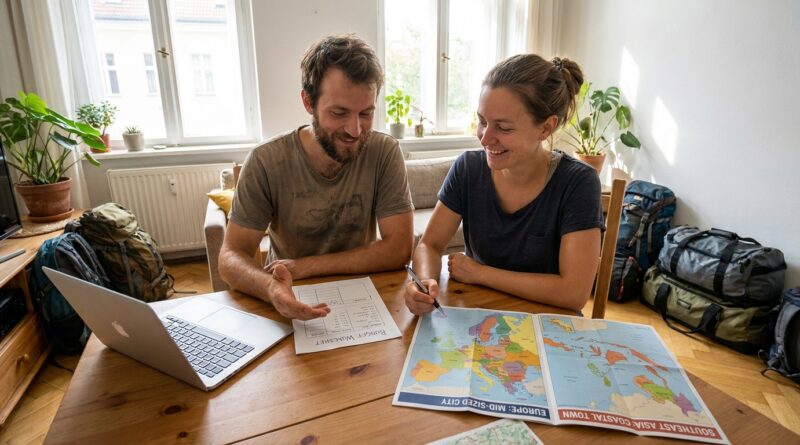
The New ‘Two-Hub Nomad Life’: How To Split Your Year Between Just 2 Cities And Still Hit FI On A Normal Income
You can waste a shocking amount of time trying to build the “perfect” nomad life. One spreadsheet says Lisbon. A Reddit thread says Mexico City is over. Someone on YouTube swears you need six countries a year to do it right. Meanwhile, you still have a job, parents who may need help, a budget that is not magic, and a very real desire to reach financial independence before you are 70. That tension is why so many would-be nomads get stuck. The good news is you do not need a nonstop passport-stamping lifestyle to make this work. A two hub digital nomad strategy for financial independence is often the smarter move. You pick one lower-cost base for savings and one higher-comfort or family-friendly base for stability, then split your year between them. Fewer flights. Less stress. Better routines. And yes, much cleaner FI math on a normal income.
⚡ In a Hurry? Key Takeaways
- A two-hub setup lets you enjoy location freedom without the cost, burnout, and admin mess of moving every month.
- Start with one “money hub” and one “life hub,” then build your calendar around rent, visa limits, taxes, and family needs.
- The goal is not to look adventurous online. It is to save more, stay legal, protect your income, and keep your FI plan on track.
Why two hubs beat full-time bouncing
A lot of people imagine digital nomad life as a constant world tour. It looks fun for about ten minutes. Then real life shows up.
You need solid Wi-Fi. You need to sleep. You need to work without spending every third week hunting for apartments, SIM cards, laundromats, and quiet Zoom corners.
Moving too often creates friction everywhere. Flights add up. Short-term rentals cost more. Productivity drops. Your savings rate starts leaking from a hundred little cuts.
That is why the two-hub model makes sense. You reduce transition costs while still getting the best part of geo-arbitrage. You live part of the year in a cheaper place that helps you save aggressively, and part of the year in a place that feels easier for relationships, health care, climate, language, or simple comfort.
Think of it as a middle path. Not backpack chaos. Not staying planted forever. Just enough movement to improve your life and your balance sheet.
What a two hub digital nomad strategy for financial independence actually looks like
Hub 1: The money hub
This is the place that makes your FI numbers work. It is usually lower cost, with decent infrastructure and a housing market that does not punish you for staying a few months.
Your money hub should ideally offer:
- Affordable monthly rent
- Reliable internet and backup work spots
- Good day-to-day food and transport costs
- Reasonable visa access
- A lifestyle you can repeat without getting miserable
This is where you do your deep work, keep spending under control, and stack savings.
Hub 2: The life hub
This is the place that supports the rest of your life. It might be near family. It might have better health care. It might be your home country for part of the year. It might simply be the place where you feel most human.
Your life hub may cost more. That is okay. The point is not to choose the absolute cheapest option every month. The point is to build a life you can keep doing for years.
If your setup is so optimized that you are lonely, stressed, and tired all the time, it is not optimized. It is fragile.
Why this works better for FI than constant travel
Financial independence is mostly a math problem with a behavior problem attached.
The math side is simple. Spend less than you earn. Invest the gap. Repeat for a long time.
The behavior side is the hard part. You need a system you can maintain without going off the rails every few months.
Two hubs help because they lower the hidden costs that wreck savings plans:
- Fewer flights and baggage fees
- Lower rent from longer stays
- Less coworking and transport churn
- Fewer “I deserve a treat” spending spirals after travel fatigue
- More stable work output, which protects income
If you earn a normal remote salary, stability matters almost as much as low costs. One missed contract renewal or one quarter of poor performance can do more damage than saving $300 a month on rent.
How to choose your two hubs
Start with your real constraints, not fantasy travel goals
Before you compare countries, write down what is actually true about your life.
- Your income and how stable it is
- Your passport and visa options
- Whether you need to stay near family part of the year
- Your health care needs
- Your tax situation
- Your tolerance for heat, noise, language barriers, and long flights
This part is boring. It is also where good plans come from.
Pick roles first, then cities
Do not start by saying, “I want Barcelona and Bali.” Start by saying, “I need one hub that helps me save and one hub that helps me sustain this lifestyle.”
Then test cities against those roles.
Examples:
- Money hub: Chiang Mai, Tbilisi, Bansko, Medellín, Da Nang
- Life hub: your home city, a family base, a more comfortable EU city, or a place with stronger medical access
The right answer depends on your passport, your work hours, and your personal life. There is no trophy for copying someone else’s map.
Check visa and stay rules early
This is where many plans fall apart. People pick cities based on vibes, then discover they can only stay briefly, need expensive paperwork, or trigger tax headaches.
If you are trying to pair a tougher destination with an easier one, it is worth reading The New ‘Visa Threshold Barbell’: How Nomads Can Pair One High‑Bar Country With One Easy Win To Keep Moving In 2026. The basic idea fits perfectly here. One hub can be your dream spot with more hoops. The other can be your low-friction fallback that keeps the overall plan flexible.
The simple budget logic behind the model
Here is the core FI idea. You do not need both hubs to be cheap. You need the average cost of your year to stay low enough that your savings rate remains strong.
For example:
- 6 months in a money hub at $1,500 per month all-in
- 6 months in a life hub at $2,800 per month all-in
Your blended monthly spend is about $2,150.
That is very different from spending all 12 months in the higher-cost city. It is also very different from moving every month and paying peak short-stay pricing all year.
The blended approach is where the magic really happens. Not glamorous magic. Spreadsheet magic. The useful kind.
How to keep housing from eating your gains
Stay long enough to get monthly pricing
The biggest financial win usually comes from avoiding nightly or weekly rates. If you can stay 2 to 6 months in each hub, your housing costs often drop fast.
Accept “good enough” over “Instagram perfect”
A stunning apartment with a rooftop pool is nice. It is also easy to normalize luxuries and quietly drift into a lifestyle that slows FI by years.
Look for:
- Walkability
- Reliable internet
- Quiet for work
- Safe area
- Kitchen and laundry access
Everything else is a bonus.
Keep a small overlap fund
Sometimes you will need a week of double housing during transitions. Build that into your annual budget from the start. If you ignore it, it will still happen. It will just feel like a surprise.
Taxes, residency, and boring stuff that matters a lot
This is the section nobody wants, and it may be the most important one.
A two-hub plan is easier than a six-country shuffle, but it still needs care. Time spent in each place can affect tax residency. So can where you maintain a home, where your bank activity is centered, and where your personal ties are strongest.
You do not need to become a tax lawyer. You do need to stop assuming “I travel a lot” means “tax rules do not apply to me.”
At a minimum:
- Track your days in each country
- Know your home country’s filing rules
- Check whether your chosen hubs have clear remote work or tourist rules
- Talk to a cross-border tax professional before you lock in a long-term pattern
Good FI plans survive contact with paperwork. Bad ones collapse the first time a government asks for details.
How to keep your job while living this way
Remote workers often focus so much on location that they forget the machine funding the lifestyle. Your income comes first.
A two-hub setup helps because it creates routine. Better routine usually means better work.
Build a repeatable work setup in both places
- Know your backup internet option
- Have a proper desk or coworking fallback
- Keep your time zone plan realistic
- Use the same core gear in both hubs
If every arrival turns into a three-day struggle to work normally, your plan is too messy.
Use transfer weeks, not transfer days
Do not schedule a big move the night before major meetings. Give yourself buffer. One calm transition can save a week of stress and sloppy work.
Who this model is especially good for
The two-hub approach tends to fit people who want freedom but also want structure.
- Remote employees who need steady performance
- Freelancers who want lower overhead without total instability
- People supporting family or visiting aging parents regularly
- Couples who need compromise between cost and comfort
- Anyone chasing FI who is tired of all-or-nothing advice
It is a grown-up version of nomad life. That is not an insult. It is a compliment.
Common mistakes that make the two-hub model fail
Choosing both hubs emotionally
If both places are expensive, your “smart compromise” becomes regular life with more flights.
Ignoring seasonality
Your ideal city in February may feel very different in August. Weather, crowds, and rent spikes matter.
Treating travel days as free
They are not free. They cost money, focus, and energy.
Overcomplicating the plan
If you need twelve apps, four bank accounts, and a color-coded visa wall chart to survive, simplify.
Trying to maximize every variable
Do not optimize for taxes, cost, climate, social life, food, beaches, airport access, and dating all at once. Pick what matters most for this season of life.
A sample framework you can copy
If you want a simple way to start, try this:
- Choose one city where you can save well and work smoothly.
- Choose one city where you can maintain relationships, comfort, or practical life support.
- Test each for 2 to 3 months before making it a yearly pattern.
- Build an annual budget using blended monthly spending, not best-case spending.
- Track your savings rate and your stress level. Both matter.
If the numbers work and your life feels calmer, you are on the right track.
At a Glance: Comparison
| Feature/Aspect | Details | Verdict |
|---|---|---|
| Cost control | One lower-cost hub can pull down your yearly average spend, especially if you stay long enough for monthly rent deals. | Strong for FI if you keep the expensive hub from taking over the whole budget. |
| Lifestyle stability | Fewer moves mean better routines, stronger work performance, easier health care, and less travel fatigue. | Much easier to sustain than hopping countries every few weeks. |
| Admin and legal risk | Two hubs simplify visas, taxes, and planning, but you still need to track stay limits and residency rules carefully. | Safer than chaotic travel, but only if you do the paperwork homework. |
Conclusion
The internet loves extremes. Sell everything and live out of a carry-on forever, or stay put and grind until traditional retirement. Most people need something more realistic. That is where the two-hub model shines. It gives you a practical middle path that works with normal salaries, family obligations, and stricter visa and tax rules. You get the upside of geo-arbitrage and remote work without burning yourself out or wrecking your FI math. That is the real value here. Not fantasy. A system you can actually live with. If your goal is freedom, not chaos, two well-chosen hubs may get you there faster than a dozen passport stamps ever will.