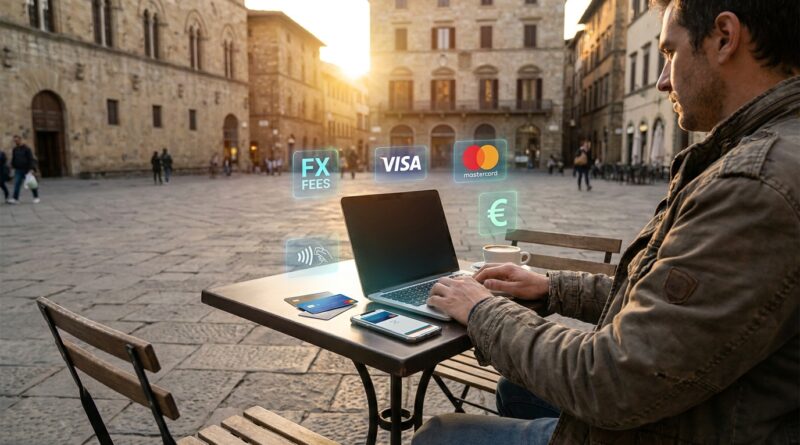
The New ‘Payment-Sovereign Nomad’: How To Cut Hidden FX Fees And Card Risks In Europe Before The Digital Euro Arrives
You know the feeling. You tap your card for a €4 coffee in Lisbon, book a coworking desk in Berlin, pay for an Airbnb in Split, and somehow your bank balance drops faster than your travel spreadsheet says it should. It is maddening because the leak is tiny each time, but constant. Foreign transaction fees, bad exchange rates, ATM charges, and random card blocks can quietly skim 2 to 5 percent off your budget. Over a long trip, that is real money. If you are trying to reach financial independence, it can wipe out a big chunk of the savings you worked so hard to build. The good news is that this is fixable. And it matters more now, because Europe’s payment system is changing. With talk of a digital euro and new local payment rails, smart nomads should start cleaning up their payment setup now, before the rules, fees, and privacy trade-offs shift again.
⚡ In a Hurry? Key Takeaways
- To answer how digital nomads can avoid foreign transaction fees in Europe, use at least one debit card and one credit card with 0% foreign transaction fees, and always pay in euros, not your home currency.
- Keep a simple three-layer setup: primary card, backup card from a different network or bank, and a local cash option for places where cards fail.
- This is not just about saving money. It also lowers the risk of account freezes, surprise declines, and too much payment data ending up in one place.
Why Europe is quietly expensive for card users
Most nomads assume the big costs are rent, flights, and insurance. Fair enough. But small payment costs can be just as sneaky.
Here is where the money usually disappears:
1. Foreign transaction fees
Many banks still charge around 1 to 3 percent every time you buy something in another currency. It often shows up on the statement later, so you do not feel it at the till.
2. Bad exchange rates
Even if your card says “no foreign transaction fee,” you can still lose money if the bank uses a poor exchange rate. That spread can add another 1 to 2 percent, sometimes more.
3. Dynamic currency conversion
This is the classic trap. The terminal asks, “Pay in USD or EUR?” It sounds helpful. It usually is not. If you pick your home currency, the merchant or terminal provider often gives you a much worse rate than your card network would.
4. ATM operator fees
Even with a good travel card, the ATM itself may add a local fee. In tourist-heavy areas, these can be absurd.
5. Fraud flags and random declines
Cross-border spending patterns can look suspicious to banks. A card that worked yesterday in Prague may suddenly fail in Vienna. If that is your only card, your “cheap lunch” problem becomes a “can’t check into my apartment” problem.
The simple playbook: build a payment stack, not a single point of failure
The biggest mistake I see is people traveling with one “good travel card” and calling it a day. That is not a payment strategy. That is wishful thinking.
A better setup is a payment stack. Think of it like packing layers for changing weather.
Your ideal stack has three parts
Primary spending card. This should have no foreign transaction fee and solid exchange rates. Use it for everyday purchases.
Backup card. Use a second card from a different bank, and ideally a different network if possible. If your first card is Visa, make the backup Mastercard, or the other way around. This helps if one issuer blocks you or one network has an outage.
Cash access option. Have one debit card meant mainly for ATM withdrawals, with low or reimbursed ATM fees. Keep a modest amount of local cash for taxis, markets, or card outages.
That one change alone cuts a lot of stress.
How digital nomads can avoid foreign transaction fees in Europe
If you only remember five things, make it these.
Always pay in euros, or the local currency
If the payment terminal offers to convert the charge into your home currency, say no. Choose euros in eurozone countries, or the local currency in places like Poland, Hungary, or the Czech Republic.
This is usually the fastest way to avoid a bad deal at checkout.
Pick cards with 0% foreign transaction fees
Read the fee sheet, not just the marketing page. “Travel-friendly” means nothing if the issuer still adds a 3 percent fee outside your home currency.
Check for:
- 0% foreign transaction fee
- Competitive exchange rate
- No annual fee, or benefits that justify it
- Easy in-app card freeze and unfreeze controls
Separate spending from cash withdrawals
The best card for purchases is not always the best one for ATMs. Some debit cards are excellent for cash access but weaker for fraud handling or purchase protections. Keep those roles separate.
Avoid Euronet-style tourist ATMs when possible
Not every independent ATM is bad, but many high-visibility tourist ATMs are fee-heavy and push poor exchange choices. Bank branch ATMs are often safer and cheaper.
Turn on app alerts for every card transaction
This sounds minor. It is not. Instant alerts help you catch double charges, card skimming, and subscription renewals before they become a headache.
What to do before you land in Europe
Most payment problems are easier to prevent than fix.
1. Add a travel notice if your bank still uses them
Some banks no longer need travel notices, but some still care. Check before you leave.
2. Raise or review card limits
Your daily ATM cap or purchase limit may be too low for deposits, train tickets, or last-minute hotel bills.
3. Set up two-factor login methods that work abroad
If your bank insists on sending codes to your home phone number, that can become a mess. Use an authenticator app where possible. If SMS is unavoidable, make sure your number stays active.
4. Store card details securely
Do not keep everything in your wallet. Keep a secure backup record of card numbers, emergency contact details, and freeze hotlines in a password manager.
5. Add cards to a mobile wallet
Apple Pay and Google Wallet are not perfect, but they can save you if your physical card is lost, demagnetized, or trapped by an ATM.
Privacy matters too, not just fees
The coming digital euro gets framed as a payments story. It is also a privacy story.
Right now, many cross-border card payments in Europe still run through large international networks and layers of banks, processors, and apps. Europe wants more regional control, lower dependency, and more resilience. That makes sense at a system level.
But for everyday people, the question is simpler. Who sees your payment data, and how much of your life can be inferred from it?
You do not need to become a privacy extremist to care about this. Just do the basics:
- Do not put every payment through one app or one bank
- Use virtual cards for online bookings when available
- Keep a separate card for subscriptions and travel websites
- Review app permissions for finance tools and budgeting apps
The less concentrated your payment life is, the less damage a single breach, freeze, or tracking-heavy service can do.
Why the digital euro could change day-to-day spending
The digital euro is still a developing project, not something you need for tomorrow’s museum ticket. But the direction of travel is clear. Europe wants more local payment infrastructure and less reliance on outside networks for everyday transactions.
That could eventually mean faster settlement, more local wallet options, and new rules about authentication, privacy, and merchant acceptance.
For nomads, the practical takeaway is not “go open five new accounts.” It is this. Stay flexible.
What flexibility looks like
- Use banks and cards that are transparent about FX rates and fees
- Avoid locking your whole life into one closed finance app
- Keep at least one option that works well across borders today
- Be ready to test local or regional payment methods as they become useful
If Europe’s payment rails get more fragmented before they get smoother, the people with backup options will have the easiest ride.
A good “nomad payment stack” example
You do not need the exact brands below. The point is the structure.
Example setup
- Card 1: Main credit card with 0% foreign transaction fees for daily spending
- Card 2: Backup debit or credit card from another issuer for emergencies
- Card 3: ATM-focused debit card with low withdrawal fees
- Mobile wallet: Same cards loaded into your phone
- Cash: Enough for one to three days of basics
Keep one card on you, one stored separately in your accommodation, and one in your mobile wallet. If your bag goes missing, you are inconvenienced, not stranded.
Red flags that mean your current setup needs work
- You do not know whether your card charges foreign transaction fees
- You only travel with one usable card
- You often choose your home currency on card terminals
- You use whatever ATM is nearest without checking fees
- Your bank app does not show real-time transaction alerts
- You cannot log into your bank easily without your home SIM card
If two or three of those sound familiar, this is worth fixing before your next border crossing.
At a Glance: Comparison
| Feature/Aspect | Details | Verdict |
|---|---|---|
| Paying in home currency vs local currency | Home-currency checkout usually uses a worse merchant-set rate. Local currency lets your card network handle conversion. | Choose local currency almost every time. |
| One card vs two-card backup setup | A single card is easy until it is frozen, lost, or declined. Two cards from different issuers reduce that risk a lot. | Two or more payment options are worth it. |
| Tourist ATM vs bank ATM | Tourist ATMs often add extra fees and push bad conversion offers. Bank ATMs are usually clearer and cheaper. | Use bank ATMs when you can. |
Conclusion
The smartest payment setup is not the fanciest one. It is the one that quietly saves you money, works when you need it, and does not expose more of your financial life than necessary. Europe’s payment world is shifting. The digital euro, new regional schemes, and changing rules around cross-border payments could improve things over time, but the transition may be messy in spots. That is why this matters now. If you tighten up your card choices, pay in local currency, keep a backup, and think a bit about privacy, you get more predictable budgets, less risk of being stranded by a frozen card, and a much smoother path through whatever Europe’s payment landscape looks like next. Small fixes here can keep a surprising amount of money in your pocket.