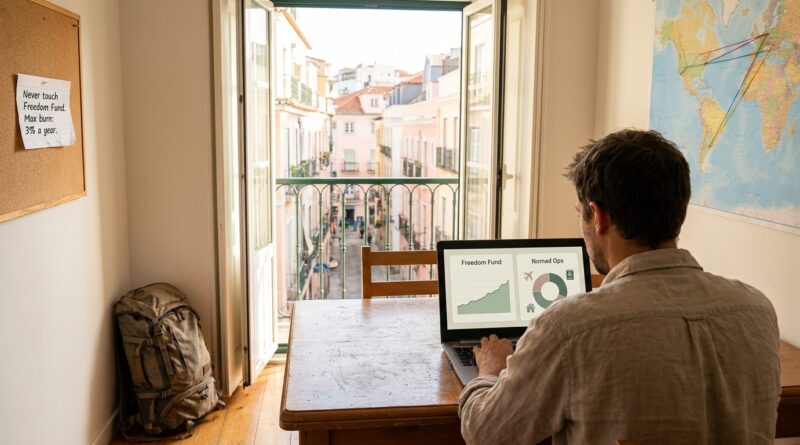
The New ‘Two-Account Nomad Safety Net’: How To Travel The World Without Ever Touching Your Core FI Stash
You can do everything “right” with money for years, then feel weirdly guilty buying a flight to Mexico City or paying a visa fee for Spain. That feeling is real. For a lot of would-be nomads, the problem is not finding cheap apartments or a better bank card. It is the fear that everyday travel spending will quietly eat into the pile of money meant for financial independence. If every airport transfer and Airbnb deposit feels like stealing from your future self, you are not being dramatic. You are noticing a design problem. The fix is a simple digital nomad budget system to protect financial independence. Keep two worlds separate. One account system is for your long-term FI stash. The other is for your active nomad life. When those two buckets stop mixing, travel gets calmer, spending gets clearer, and decisions stop feeling like tiny financial emergencies.
⚡ In a Hurry? Key Takeaways
- A two-account setup lets you travel without dipping into your core FI investments for routine nomad costs.
- Use one protected “do not touch” FI account and one separate travel operating account funded monthly or quarterly.
- This setup reduces stress, limits overspending, and protects long-term compounding from one messy travel year.
The real problem is not the plane ticket
Most advice for nomads talks about cheaper cities, tax tricks, card rewards, and which visa just lowered its income threshold.
Useful stuff, sure. But it misses the bigger emotional problem.
If your brokerage account, emergency fund, travel card, and daily spending cash are all mentally lumped together, every purchase feels loaded. You are not just buying lunch. You are “slowing down FI.” You are not just paying a deposit. You are “messing with compounding.”
That is why smart, financially careful people stall for months or years. Not because they cannot afford to travel, but because their money system makes travel feel unsafe.
What the “two-account nomad safety net” actually is
The idea is simple.
You create a hard wall between:
- Your core FI stash
- Your nomad operating money
Account 1: The core FI account
This is your long-term money. Think retirement accounts, index funds, your main wealth-building pile, and maybe part of your true emergency reserve.
Rules for this account are strict:
- No flights
- No Airbnb bookings
- No visa fees
- No “just this once” laptop replacement
- No ATM withdrawals abroad
This account exists to grow. That is it.
Account 2: The nomad operating account
This is your working travel money. Rent, transport, coworking, SIM cards, food, border runs, gear replacement, insurance, all of it comes from here.
This account is meant to move. It is your active life bucket.
The key is that you decide ahead of time how much goes into it. Once funded, that is your travel runway. If you spend less, great. If you spend more, you adjust your travel style, not your FI base.
Why this system works so well
Money is math, but sticking to a plan is mostly behavior.
The two-account system helps on both fronts.
1. It protects compounding
Compounding gets damaged most when you interrupt it. Selling investments or slowing contributions to cover lifestyle drift can hurt more than people think, especially early on.
When nomad spending comes only from a separate operating pool, your long-term assets stay invested and boring. Boring is good.
2. It gives you a clear travel ceiling
Instead of asking, “Can I afford this?” ten times a day, you ask, “Does this fit inside the nomad account?”
That is a much calmer question.
3. It lowers decision fatigue
Travel already comes with enough moving parts. New city. New payment system. New visa rules. New apartment host asking for a deposit in some strange way.
A clean account structure cuts stress because not every choice has to be a referendum on your whole future.
4. It exposes your true burn rate
Many people underestimate what travel really costs because they mix one-off setup costs with normal life spending.
A dedicated operating account makes your real monthly nomad burn visible fast.
How to build the system in real life
You do not need a perfect finance spreadsheet or ten fancy apps. Start with a structure you will actually use.
Step 1: Define your untouchable FI base
Pick the amount and accounts that are off-limits.
This might include:
- Retirement accounts
- Tax-advantaged investments
- Core index fund holdings
- A separate emergency reserve you only use for true emergencies
If you want, rename these accounts mentally or in your notes as “Do Not Touch for Travel.” Sounds simple, but labels matter.
Step 2: Calculate your nomad runway
Next, estimate the total amount you want available for travel operations.
Include:
- Flights
- Visa and residency fees
- Housing deposits
- Insurance
- Coworking
- Local transport
- Food
- Phone/data
- Buffer for surprises
Be honest here. Underestimating is what sends people back to the FI bucket.
Step 3: Keep one to three months of extra buffer inside the travel side
This is the safety net inside the safety net.
Travel is lumpy. Some months are cheap. Some punch you in the face. A new laptop, emergency flight home, denied apartment, or extra visa paperwork can hit all at once.
Build that mess into the system on purpose.
Step 4: Set a refill rule
This part matters a lot.
How does money get into the nomad account?
Common options:
- Monthly transfer from current income
- Quarterly transfer from a cash reserve
- Fixed annual travel budget divided into monthly chunks
The rule should be automatic and boring. If you have freelance or remote income, send a set amount to the nomad account and leave the rest for savings, taxes, and investing.
Step 5: Stop using your FI-linked cards for daily travel spending
This is where people slip.
If your “safe” long-term account still has a card sitting in your wallet or Apple Pay, the wall is not real.
Use cards linked only to the operating account for routine spending.
If you want to tighten this up even more, read The New ‘Payment-Sovereign Nomad’: How To Cut Hidden FX Fees And Card Risks In Europe Before The Digital Euro Arrives. Hidden FX charges and messy card setups can quietly inflate your travel burn rate, which is exactly what this firewall is trying to prevent.
A simple example
Let’s say you have $250,000 invested toward FI.
You also have remote income and want to spend a year abroad.
Old system:
- Everything sits in a few mixed accounts
- You swipe whatever card works
- Bigger expenses get covered “for now” from savings
- You hope income catches up later
New system:
- $250,000 stays invested and mentally locked
- $12,000 goes into a dedicated nomad operating account
- You add $1,500 a month from remote income
- You keep a separate $3,000 travel buffer inside the operating side
Now your day-to-day choices are shaped by the travel pool, not by whatever happens to exist in your net worth.
That is the point. Constraints create safety.
Common mistakes that break the firewall
Treating “temporary” dips as harmless
“I’ll just pull $2,000 from investments and replace it next month” sounds small. But temporary has a way of turning permanent, especially while moving around.
Using one giant emergency fund for everything
There is a difference between “I need a root canal in Bangkok” and “I found a better apartment and need a bigger deposit.” One is an emergency. One is travel operating friction.
Keep those separate if you can.
Forgetting setup costs
The first months of nomad life are usually the most expensive. Flights, gear, insurance, deposits, local paperwork, backup cards, and occasional duplicate housing costs all show up early.
Not adjusting after the first 60 days
Your initial budget is a guess. Your first two months give you real numbers. Use them. If your operating account is draining faster than expected, fix the travel style now. Cheaper neighborhood. Slower travel. Fewer short stays.
Who should use this system
This works especially well for:
- People close to Coast FI or Lean FI
- Remote workers who want to try nomad life without panic
- Early retirees who do not want lifestyle drift to creep into withdrawals
- Anyone sitting on savings but afraid to start traveling
If your biggest block is not desire but fear of making a costly financial mistake, this system is for you.
What if your income is irregular?
Then this setup gets even more useful.
When income bounces around, mixed accounts become chaos fast. A separate nomad account lets you see whether your current travel style matches your current earnings.
A good rule is to fund the operating account based on your low-end average month, not your best month. If income rises, great. You can top it up. If income dips, your spending target was already conservative.
This is not about being cheap
It is about making travel sustainable.
You can stay in nice places, work from good coworking spaces, and book a direct flight when it makes sense. The goal is not to suffer through travel so your spreadsheet looks pure.
The goal is to spend from the right bucket.
That one shift changes the emotional feel of the whole experience.
At a Glance: Comparison
| Feature/Aspect | Details | Verdict |
|---|---|---|
| Core FI stash | Long-term investments and protected reserves stay separate from travel spending. | Best way to protect compounding. |
| Nomad operating account | Covers flights, rent, visas, food, transport, and the normal friction of life on the road. | Makes spending visible and manageable. |
| Refill and buffer rules | Pre-set monthly or quarterly top-ups plus a built-in cushion for expensive months. | Reduces panic and prevents raids on FI assets. |
Conclusion
There is nothing silly about being afraid to damage savings you worked years to build. That fear is often the exact reason people never start. The good news is you do not need to choose between “travel now” and “protect your future.” A digital nomad budget system to protect financial independence can do both, if you split your money into a protected FI side and a separate operating side for life on the road. Trending posts are full of cheap-city lists, visa updates, and budget hacks, but the deeper issue is what one sloppy year of spending can do to a decade of compounding. A clear firewall solves that. It turns financial independence from a distant number on a chart into a daily system you can trust. And that makes it much easier to move now, while the opportunities are here, instead of waiting for some perfect someday.