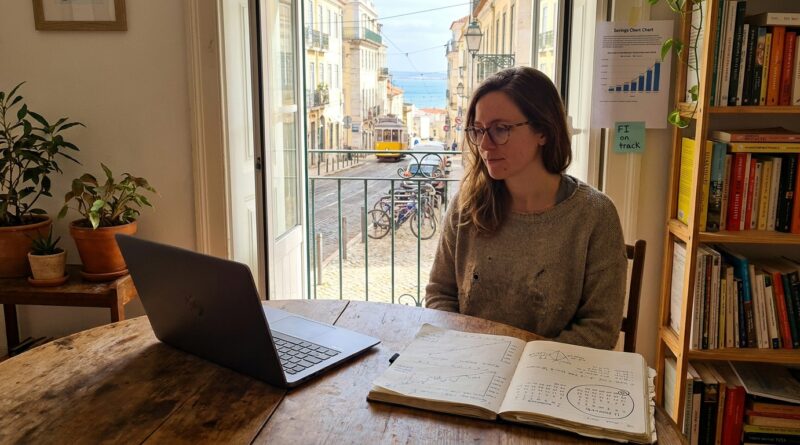
The New ‘Slow Nomad Safety Window’: How To Pause Your Travels For 12 Months Without Derailing Your FI Plan
You can get tired of airports, short leases and goodbyes without “failing” at nomad life. A lot of people want one calm year. They want a kitchen that feels familiar, friends who know their coffee order, maybe a relationship that lasts longer than a visa stamp. The fear is real, though. Stay put too long and maybe your taxes change. Maybe rent eats your savings rate. Maybe your financial independence plan slips. So people keep moving every 60 or 90 days even when they are completely worn out. The good news is that slowing down does not have to mean drifting. If you build a 12-month slow nomad safety window, you can test one home base on purpose, with clear limits, backup options and numbers that still work. Think of it less like “settling down forever” and more like a controlled experiment that protects your cash flow, your legal position and your sanity.
⚡ In a Hurry? Key Takeaways
- A digital nomad can slow down for 12 months without hurting financial independence if they set a fixed budget, check tax and visa triggers early, and treat the year as a planned test.
- Start with a “safety window” plan that covers residency rules, housing costs, healthcare, income stability and a clear exit date before you sign anything long term.
- The biggest risk is not slowing down. It is doing it casually, without understanding local rules or how one year in one place changes your FI math.
Why so many nomads are craving a pause
By 2026, the shine has worn off for a lot of full-time travelers. Not because travel is bad. Because constant motion is work.
Every move has hidden costs. Flights. Deposits. Coworking passes. SIM cards. Replacing things you gave away. Lost focus days. The weird expensive week between leases. That all adds up.
Then there is the human side. You may want community. Routine. Better sleep. A doctor you can actually see twice. A gym where you stop being “new” after three days.
None of that is anti-FI. In many cases, it supports FI because burnout is expensive. Poor work output is expensive. Emotional chaos is expensive too.
What a “slow nomad safety window” actually is
A slow nomad safety window is a pre-planned 12-month stay in one place, built around guardrails.
It is not a random decision to just “hang out somewhere for a while.” It is a temporary structure with rules.
The five parts of the safety window
Here is the basic idea:
- Time boundary: You set a defined start and end, usually 9 to 12 months.
- Legal boundary: You check visa, tax residency and work permission before you arrive.
- Money boundary: You cap your all-in monthly cost and compare it with your travel average.
- Career boundary: You confirm your employer or clients can live with the arrangement.
- Exit boundary: You decide in advance what would make you leave early or extend.
That last part matters more than people think. When you do not define an exit rule, a “one year pause” can quietly turn into an expensive muddle.
Step 1. Run the FI math before you fall in love with the city
This is where most people get tripped up. They pick the dream neighborhood first, then try to force the numbers later.
Do the opposite.
Use your true travel baseline
Take your last 12 months of nomad spending and build a real average. Not your fantasy budget. The real one.
Include:
- Flights and trains
- Short-term rentals
- Hotels during gaps
- Insurance
- Coworking
- Visa runs and admin fees
- Eating out more because you lacked a stable kitchen
- Lost workdays during moves
Now compare that to your proposed slow-base budget.
Build a “base life” budget, not a vacation budget
Your slow-year budget should include:
- Rent
- Utilities
- Internet
- Transport
- Groceries
- Health care
- Social life
- One or two trips out of town
- A cushion for setup costs
If that total is equal to or lower than your real travel average, great. If it is slightly higher but makes your work stronger and your stress lower, it may still be worth it.
The point of FI is not to worship a spreadsheet. The point is to build a life with enough margin that you can choose well.
Set a minimum savings floor
Pick a number you refuse to go below for the 12 months. For example:
- Save at least 20 percent of net income.
- Invest at least a fixed monthly amount.
- Keep emergency cash at six months of expenses.
If your proposed base makes that impossible, it is not your safety window. It is a lifestyle upgrade you cannot really afford yet.
Step 2. Check the tax and visa tripwires early
This is the part people avoid because it feels messy. Fair enough. It is messy. But guessing is worse.
If you want to know how to slow down as a digital nomad without hurting financial independence, this is the center of it. A cheap apartment is not cheap if it triggers avoidable tax trouble.
Know the difference between common sense and legal status
You may feel like “I am just staying for a while.” Governments may see it differently.
Check:
- Days that trigger tax residency
- Rules about remote work on your visa type
- Registration requirements after arrival
- Lease paperwork that can create residency ties
- Whether local banking or utility setup changes anything important
If you are employed, your company may have rules too. Some bosses are fine with remote work until legal risk shows up. If that sounds familiar, read The New ‘Stealth Nomad’ Crisis: How To Protect Your FI Plan When Your Boss Bans Remote Travel. A 12-month pause is much easier when your employer is informed and your risk is lower.
Do not build your year around gray-area optimism
A lot of nomads quietly rely on “nobody checks.” That can work. Until it does not.
Your safety window should be boring on paper. You want something understandable, stable and easy to document if needed.
If the place you love only works through wishful thinking, keep looking.
Step 3. Pick a city that supports stable living, not just pretty weekends
Some places are wonderful for two weeks and frustrating for twelve months.
Look for these signs of a good slow base
- Reliable long-stay housing stock
- Predictable local bureaucracy
- Walkability or cheap transport
- Access to healthcare
- Strong internet without drama
- Communities not built only around churn
- Rent that has not gone completely feral
You do not need the cheapest city. You need one where daily life works.
Watch the rent curve, not just the current listing price
One of the biggest 2026 problems is that people lock into a “reasonable” apartment in a hot city, then discover renewal prices, utility costs or seasonal spikes are brutal.
Before you commit, ask:
- What have rents done in the past 18 months?
- Are foreigners paying a premium?
- Can landlords raise rates mid-term?
- What are the move-in costs, deposits and fees?
A safety window only works when your base cost is stable enough to trust.
Step 4. Design your year in phases
This is the trick that makes slowing down feel safe instead of scary.
Do not commit to the full year all at once unless the legal setup and housing market strongly support it.
Phase 1: The landing period, 30 to 60 days
Get a flexible place. Learn the neighborhoods. Open your routines. Test transport, noise, healthcare access and work rhythm.
This phase is for observation, not nesting.
Phase 2: The core stay, 6 to 9 months
Once the city passes the first test, move into your main housing. Set up your systems.
- Automate investing
- Track expenses weekly
- Set workout and work schedules
- Build local friendships
- Reduce “travel brain” spending
Phase 3: The review window, final 60 days
Near the end, review everything with fresh eyes.
Ask:
- Did my savings rate hold?
- Did my work improve?
- Did this place support the life I wanted?
- Do I want another year, a shorter extension or a return to movement?
This stops you from sleepwalking into a second year just because moving again sounds tiring.
Step 5. Protect the parts of FI that matter most
Financial independence is not one giant number. It is a few important habits done consistently.
Automate your “must keep” systems
Before the slow year starts, make these nearly automatic:
- Monthly investing
- Tax set-asides
- Emergency fund top-ups
- Retirement contributions where relevant
- Income tracking
Then your slower lifestyle does not depend on constant discipline. The plan keeps moving even while you rest a bit.
Keep your runway healthy
A 12-month base is not the time to let cash get thin because life feels more “normal.” Normal life still throws surprises at you.
Have:
- A relocation fund
- An emergency travel fund
- Backup work equipment money
- At least one housing fallback option
Freedom feels better when you can leave if the city, landlord, politics or visa rules suddenly shift.
Step 6. Make room for the whole point of slowing down
This may sound obvious, but many nomads pause travel and then keep living like stressed tourists.
They work too much. They keep taking weekend escape trips. They say yes to every expat event. They never actually become local enough to enjoy the pause.
Your slow year should buy you these things
- Better health habits
- Deeper friendships
- Lower decision fatigue
- Higher quality work
- Time to think about what you want next
If you do not get at least some of that, the year may still have been useful. But it was not really a slow safety window. It was just stationary chaos.
Red flags that your 12-month pause is drifting off course
Watch for these early:
- Your monthly costs are now higher than your travel average by a wide margin.
- You still have no clarity on tax position halfway through the year.
- Your employer is getting nervous about compliance.
- You are furnishing a place like you have already decided to stay forever.
- You are investing less and calling it “temporary.”
- You are not happier, healthier or more productive than before.
If two or three of these show up together, stop and review the plan.
A simple safety window checklist
Before you commit to one place for a year, try to answer yes to most of these:
- Do I understand the visa and tax basics for my intended stay?
- Can I maintain my minimum savings floor?
- Does my employer or client setup support this?
- Have I budgeted setup costs honestly?
- Do I have six months of cash runway?
- Do I know what would make me leave early?
- Am I slowing down for a real reason, not just because I am too exhausted to think?
If the answer is mostly yes, you are not derailing your FI plan. You are making it sturdier.
At a Glance: Comparison
| Feature/Aspect | Details | Verdict |
|---|---|---|
| Cost impact | A one-year base can lower flight, booking gap and short-stay costs, but only if rent and setup expenses stay controlled. | Usually positive for FI if you budget from real numbers. |
| Tax and visa risk | Staying longer can trigger residency, registration or employer compliance issues if you do not check rules in advance. | Manageable, but never something to wing. |
| Lifestyle payoff | You get more routine, deeper community, better work rhythm and less travel fatigue when the city truly supports daily life. | Often the strongest reason to do it. |
Conclusion
There is nothing weak or unambitious about wanting one year of steadier ground. Right now digital nomad news is full of new visas, changing renewal rules and tired people quietly admitting they cannot keep sprinting forever. What is missing is a simple process for slowing down without blowing up your financial independence math. That is where the slow nomad safety window helps. It gives you a repeatable way to pause on purpose, with numbers, limits and backup plans. This is not about gaming calendars, chasing tax loopholes or polishing your nomad image. It is about a very normal 2026 question. How do I stop moving for a while and still feel like I am moving toward freedom? If you set the legal checks, keep the budget honest and define the year as a test, you can slow down and still stay on track.