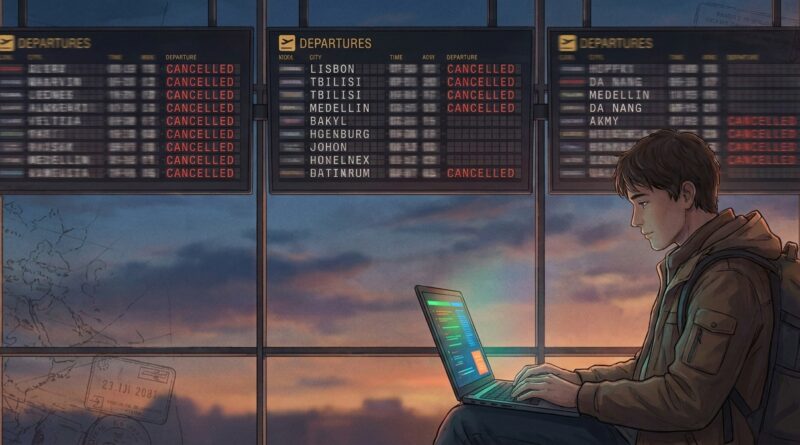
The New ‘Visa Freeze Contingency Plan’: How To Keep Your Nomad Life Moving When Governments Slam The Brakes
You can follow every rule, pay every fee on time, line up housing, movers, flights, pet paperwork and health insurance, then wake up to an email saying your visa interview is postponed indefinitely. That is the part nobody warns you about. The real risk of the nomad life is not just bad Wi-Fi or a landlord who ghosts you. It is government whiplash. One policy pause, one consular backlog, one sudden rethink of foreign remote workers, and your whole move can stall while your money keeps leaking out.
If you need a digital nomad visa contingency plan right now, the goal is simple. Stop building your life around a single approval date. Build backup routes for housing, banking, work legality, documents and cash flow so one frozen appointment does not freeze your autonomy too. You are not being paranoid. You are finally planning for the part of international life that feels random because, too often, it is.
⚡ In a Hurry? Key Takeaways
- Do not plan a move around one visa outcome. Always keep a Plan B country, Plan B housing option and 3 to 6 months of access to cash.
- Delay major nonrefundable spending until the visa is issued, then book in stages instead of all at once.
- Your safest setup is flexible, documented and boring. Copies of paperwork, cancellable bookings, backup income access and clear exit dates reduce panic fast.
Why this suddenly matters more than ever
When a government slows or freezes visa processing, it does not just affect paperwork. It hits real life. Leases start. Storage bills stack up. Flights become use-it-or-lose-it. Your employer or clients still expect you to work. Your current landlord still wants notice. If you shipped boxes ahead, they can end up sitting in customs or storage while you wait for an answer that never comes on schedule.
That is why a digital nomad visa contingency plan needs to cover more than the visa itself. It should protect your timeline, your money and your ability to keep moving if the official route jams up.
Start with one mindset shift
Do not treat your next country as the only possible country.
That sounds obvious, but many people plan as if approval is a formality. It often is not. Even when a country actively courts remote workers, rules can tighten, appointments can disappear and local politics can change the mood overnight.
Your move should have layers.
Think in three tracks
Track 1: Your preferred country and visa.
Track 2: A backup country you can enter more easily or on shorter notice.
Track 3: A temporary hold pattern, either staying where you are now or moving to a nearby place for 30 to 90 days while things settle.
If you only have Track 1, you do not really have a plan. You have a hope.
The 7-part digital nomad visa contingency plan
1. Keep your money liquid
This is the least glamorous advice and the most useful. If your visa timeline slips, cash solves problems faster than frustration does.
Try to keep these buckets separate:
- Relocation fund: flights, deposits, transport, temporary housing
- Emergency buffer: 3 to 6 months of living costs
- Government friction fund: repeat medicals, courier fees, translation, new application fees, extra document requests
If possible, hold money in at least two accounts and two payment methods. One debit card and one app is not enough when you are crossing borders. Accounts get flagged. Cards get blocked. Banks ask questions at the worst time.
2. Stop making early nonrefundable commitments
A lot of relocation pain comes from spending too early. People lock in year-long leases, pet transport, shipped belongings and long-haul flights before the visa is actually stamped.
A safer order looks like this:
- Prepare documents.
- Submit application.
- Wait for real approval, not hopeful signals.
- Book cancellable lodging first.
- Then book flights.
- Only then commit to shipping, storage release or long leases.
Yes, this can cost a little more up front. It often saves far more later.
3. Build a “soft landing” housing plan
Your first 2 to 6 weeks in a new country should be flexible. That means hotels, aparthotels, month-to-month rentals or furnished stays with clear cancellation policies. It is not the moment to chase the perfect apartment from abroad.
Your housing backup should answer three questions:
- If the visa is delayed, can you extend where you are now?
- If you must leave your current place, where can you live for 30 days without a long lease?
- If you arrive but your long-term plan falls through, can you afford a temporary stay without panic?
Soft landings buy time. Time reduces expensive mistakes.
4. Split your belongings into “must travel” and “can wait”
Do not send your whole life ahead unless your legal status is settled.
Use three categories:
- Carry-on critical: passport, spare photos, work laptop, chargers, medicines, hard-copy documents, a small emergency wardrobe
- Checked bag useful: extra work gear, backup phone, a few comfort items
- Ship later only: furniture, bulk household goods, sentimental items you cannot replace
If a visa freeze leaves you stuck, the last thing you want is your essentials trapped in another country or warehouse.
5. Keep your documents ready for a fast pivot
Many nomads lose weeks not because rules changed, but because their paperwork is scattered. You want a grab-and-go file that works for more than one destination.
Create a secure folder with:
- Passport scans
- Visa application receipts and appointment notices
- Proof of income and bank statements
- Employment or client contracts
- Health insurance proof
- Police certificates, if needed
- Birth and marriage certificates, if relevant
- Passport photos in digital and printed form
- Proof of residence in your current country
Keep one encrypted digital copy, one cloud copy and one printed packet. It feels old-school. It works.
6. Choose a backup country before you need one
A proper digital nomad visa contingency plan includes a shortlist, not a shrug.
Your backup country should be chosen using boring criteria, not Instagram energy:
- Entry ease
- Average processing time
- Proof-of-income thresholds
- Cost of living
- Tax exposure
- Internet reliability
- Healthcare access
- Time zone fit for your work
Have at least two alternatives. One should be a place you can reasonably afford for 60 to 90 days if your first plan collapses.
7. Make your work setup location-resistant
Your visa can wobble. Your income should wobble less.
That means:
- Tell clients or your employer about a possible date range, not one exact move date
- Avoid promising availability during appointment windows or travel days
- Use cloud backups for all active work
- Keep a spare phone or eSIM plan for banking and two-factor authentication
- Make sure payroll, invoicing and tax tools still work if you stay put longer than planned
Mobility is not just where you can sleep. It is whether you can keep getting paid while plans change.
What to do the moment a visa freeze or appointment pause hits
Step 1. Confirm what actually changed
Do not make major moves based on rumors in expat groups. Read the consulate notice, embassy updates and official visa pages. Sometimes a “pause” applies to one visa class, one embassy or one step in the process, not all of them.
Step 2. Freeze optional spending immediately
Pause furniture purchases, prepaid co-living, domestic connections and anything tied to a fixed arrival date.
Step 3. Extend your runway
Contact your current landlord, host or family option. Ask about extending by 2 to 8 weeks. You do not need perfect certainty. You need breathing room.
Step 4. Move to temporary mode
Shift your planning from “move day” to “30-day survivability.” Focus on legal stay, affordable housing, income continuity and document readiness.
Step 5. Price out Plan B today
Even if you never use it, get real numbers for backup flights, short stays and visa options. Unknowns feel bigger than they are. A spreadsheet calms the nervous system.
Common mistakes that make government whiplash worse
- Giving notice too early on your current home
- Shipping valuables before approval
- Booking nonrefundable flights to save a small amount
- Assuming “appointment scheduled” means “all set”
- Keeping all money in one bank account
- Relying on one SIM, one device or one payment card
- Not checking whether your health coverage works during delays
- Confusing social media anecdotes with legal guidance
Most of these are understandable. They come from wanting certainty. But cross-border life rarely gives certainty on demand. It rewards flexibility instead.
A simple contingency checklist you can use this week
If you are in the middle of planning a move, do these before Friday:
- Pick two backup destinations
- List every nonrefundable expense and delay any you still can
- Build a 90-day emergency budget
- Download and print your key documents
- Set up a second payment method
- Find one temporary housing option in your current location
- Find one temporary housing option in your target region
- Write a one-page “if delayed” plan with dates, costs and contacts
That one-page plan matters more than people think. Stress makes memory unreliable. A written fallback plan keeps you from making expensive decisions at midnight.
At a Glance: Comparison
| Feature/Aspect | Details | Verdict |
|---|---|---|
| One-country plan | Everything depends on one visa, one timeline and one arrival date | High risk. Too fragile. |
| Flexible booking strategy | Cancellable lodging, staged bookings and delayed shipping until approval | Best value. Slightly higher upfront cost, much lower disaster cost. |
| Backup country plus cash buffer | Alternative destination, 3 to 6 months of funds, duplicate documents and payment options | Strongest setup for staying mobile and calm. |
Conclusion
The hard truth is that visa systems can stall even when you have done everything right. That is not a personal failure. It is the reality of building a life that depends, at least in part, on government timing. With the U.S. State Department freezing immigrant visa interviews worldwide and countries like Indonesia publicly revisiting how they treat foreign digital nomads, location-dependent plans have rarely felt this shaky. The good news is that a solid digital nomad visa contingency plan can absorb a lot of that chaos. Keep your money flexible, your documents ready, your housing soft and your next move wider than one country. Do that, and a sudden policy shift becomes a headache, not a life derailment.